
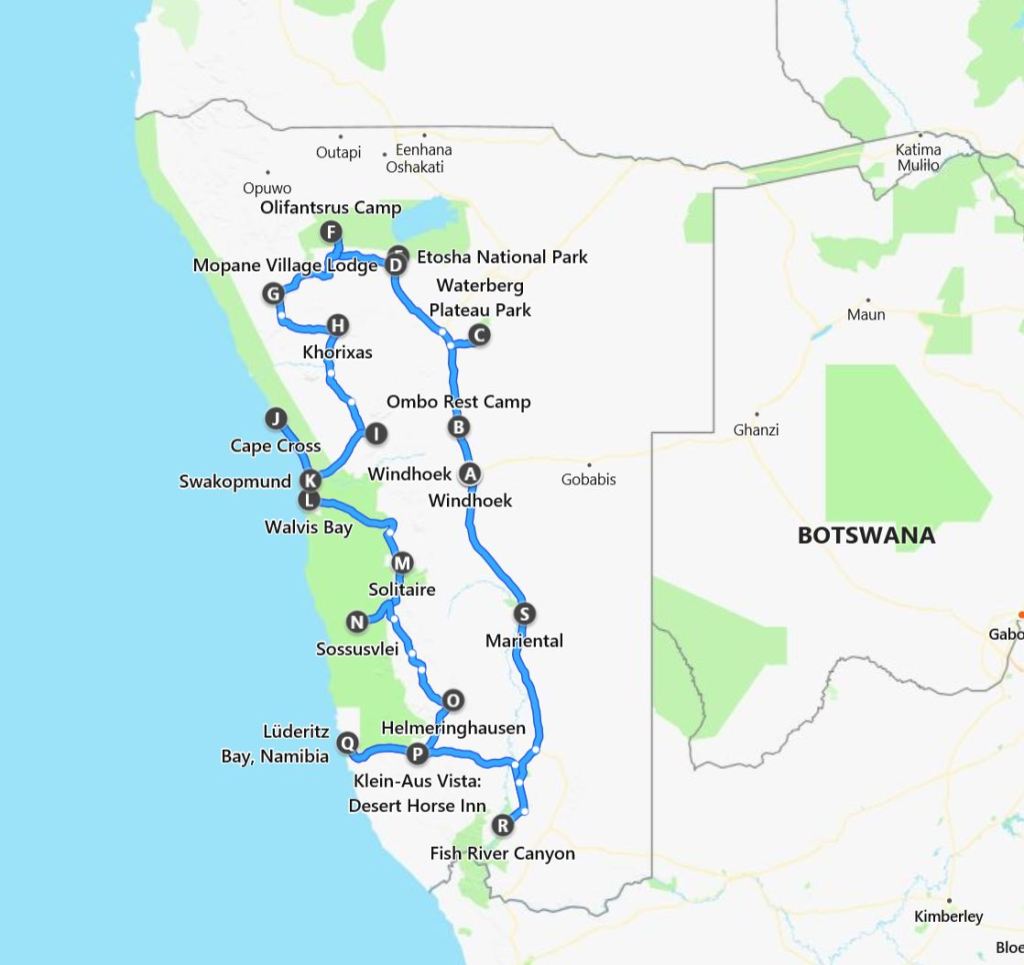
Day 1 – Windhoek to Ombo Rest Camp – November 29
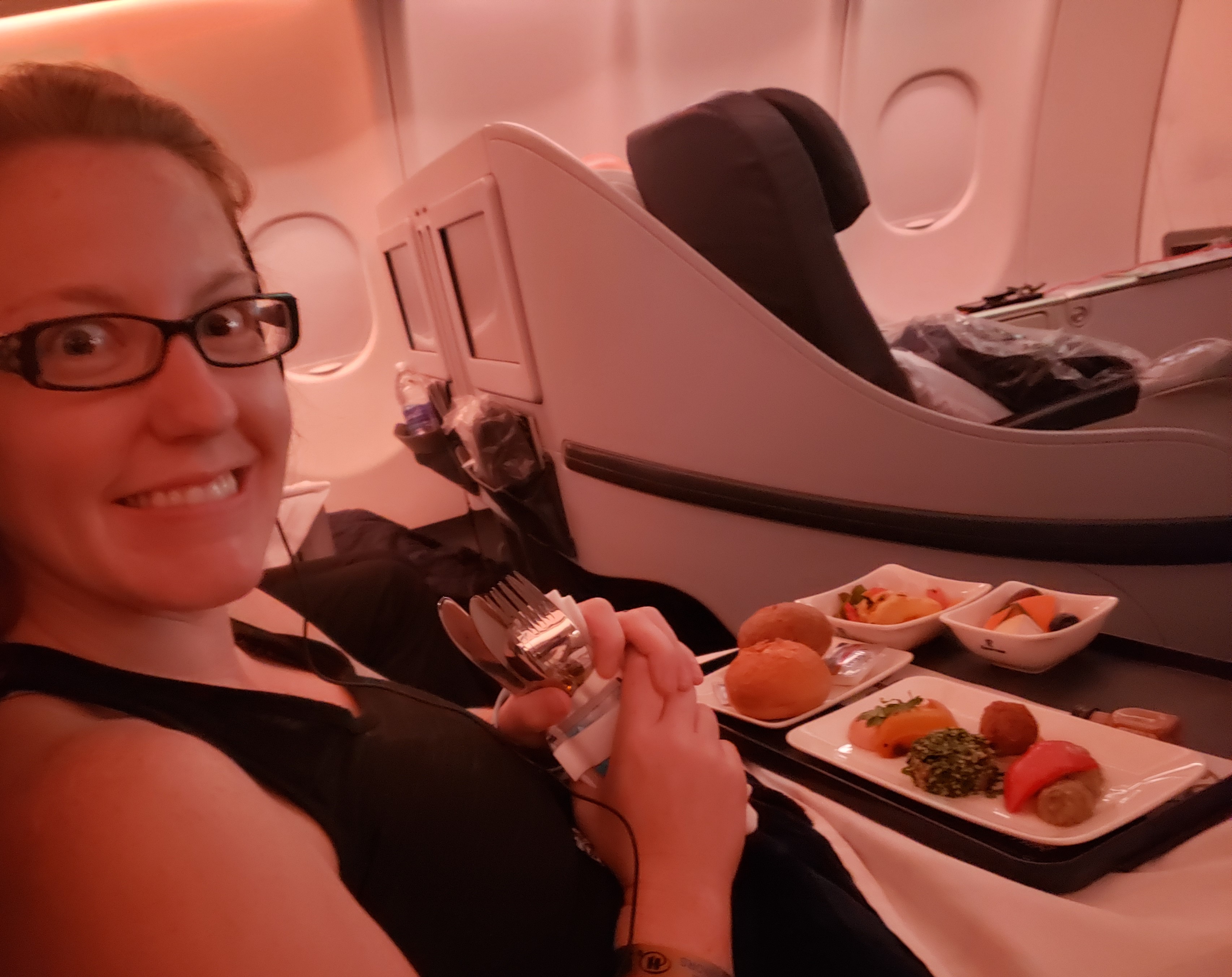
On our long night flight from Cairo to Johannesburg we were able to get business class tickets for only 50K United points. We think they were so cheap because the seats didn’t lay completely flat, but like 85% flat so you kind of slid down your seat the whole night. Ryan adapted better than Elizabeth. Or maybe Egyptians don’t do a lot of business in South Africa and they needed to fill some seats. We left at 11 pm and landed in Johannesburg at 7 am. The lounge in Johannesburg was excellent, Ryan even got to take a shower. On both our flights around southern Africa the flight attendants walked up and down the aisle spraying permethrin into the air, to help eliminate the spread of diseases like zika and malaria. Our final flight from Johannesburg to Windhoek was 2 hours and the landing was the bumpiest Elizabeth has ever encountered. The pilot warned us coming in that the hot air would make it turbulent and he didn’t lie.
We had to separate at passport control and Elizabeth was asked zero questions while Ryan was grilled with at least 10, but they let us through nonetheless. We found our pick-up driver, an old white man named Surel. We finally found a place where our Google phone plan doesn’t work, so we bought a SIM card and headed off to get our car. We’d barely gotten on the highway and we saw our first bit of wildlife. Baboons are like deer here and hang out along the side of the highway. Surel told us how he is a born and bred Nambian and his ancestors were Dutch and German. Namibia was an old German colony prior to WW1. During our drive it started to sprinkle and he was quite excited about the rain. Namibia is experiencing its worst drought in the last 130 years, which has lasted over 5 years. The country needs water desperately and he told us we’d notice how skinny the animals look.
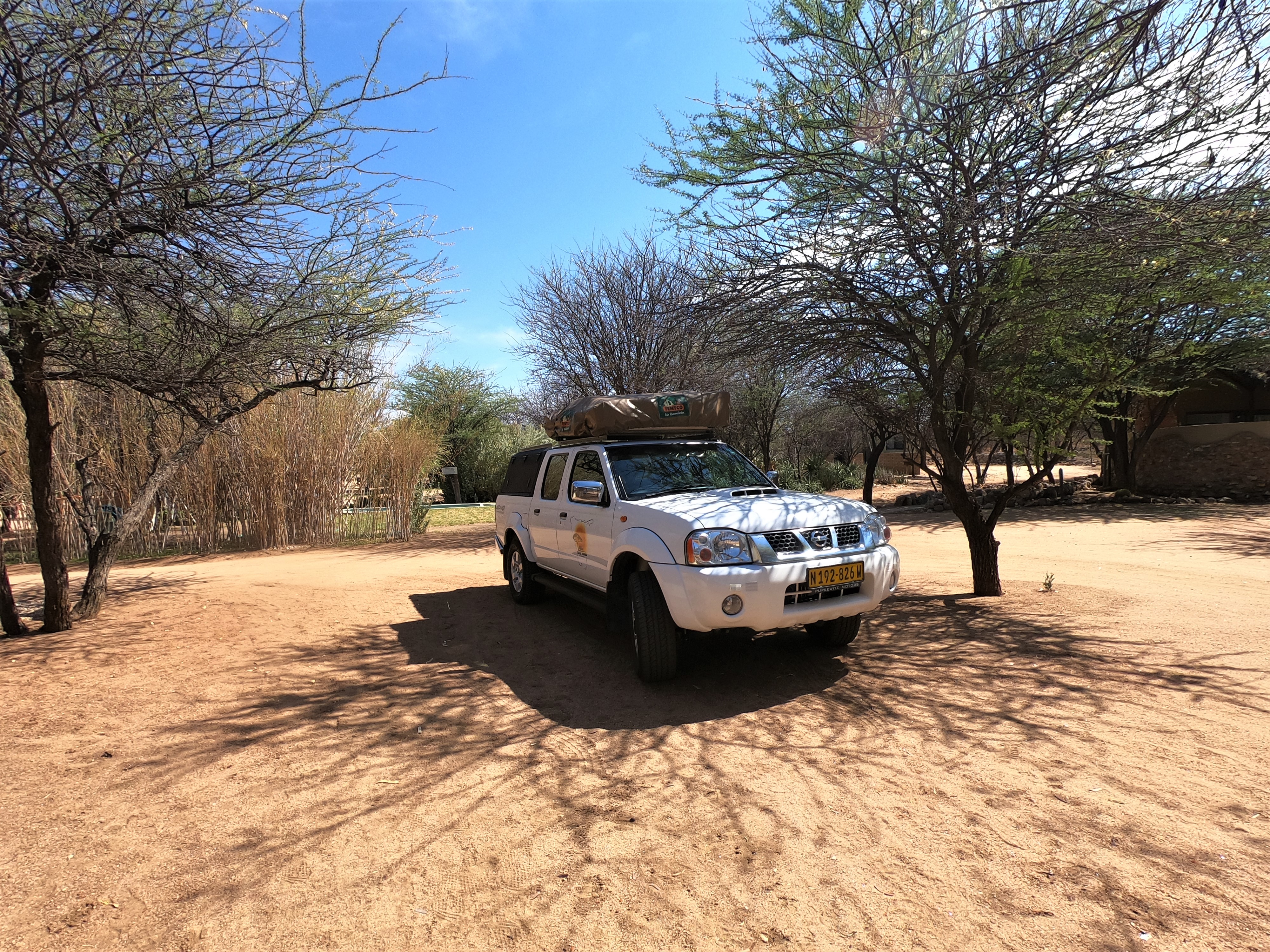
We assumed we were renting from some sort of large company, but as he pulled into a neighborhood then up to a house, we started having suspicions to the contrary. We got the best deal with Namibia 4×4, who are a family run company, the children of Surel, and they own just 6 cars. It was starting to get hot as they explained everything about the 4×4 truck and how to use the tent and all the camping supplies. People must think that cars here are unbreakable because they told us horror stories about people driving up sand dunes, into animals, into rivers and even the ocean. Yikes. We finally set off to the grocery store around 2 pm.
We hadn’t slept much on our flight and were starting to feel sleep deprived. We filled two shopping carts with fruits, veggies, grains, dairy, and meat trying to stock up before leaving their biggest town. Our car has a 40 L refrigerator in the bed of the truck. We picked up a few packs of beer then loaded it all in the car. Our first camp site was an hour north of Windhoek called Ombo Rest Camp. As we drove along the interstate, on the left hand-side, we passed a lot of people living in tarps under trees and in small houses made of cardboard. The wealth gap in Namibia seems to be quite substantial. We also passed a lot of goats, more baboons, and what appeared to be pheasants all hanging out along the highway.
We arrived around 5:15 and it was time to set up camp. The tent and everything came down pretty easy and we spent a couple hours doing laundry, organizing our food and clothes in the cab. We walked down to the watering hole to see what animals were around and saw springbok, an antelope, pheasants, and turtles. On our walk back we stopped by the only other camper car on-site, owned by an older Austrian couple. They were just finishing their 3-week trip traveling the loop in the opposite direction. They gave us some tips and we said goodnight.
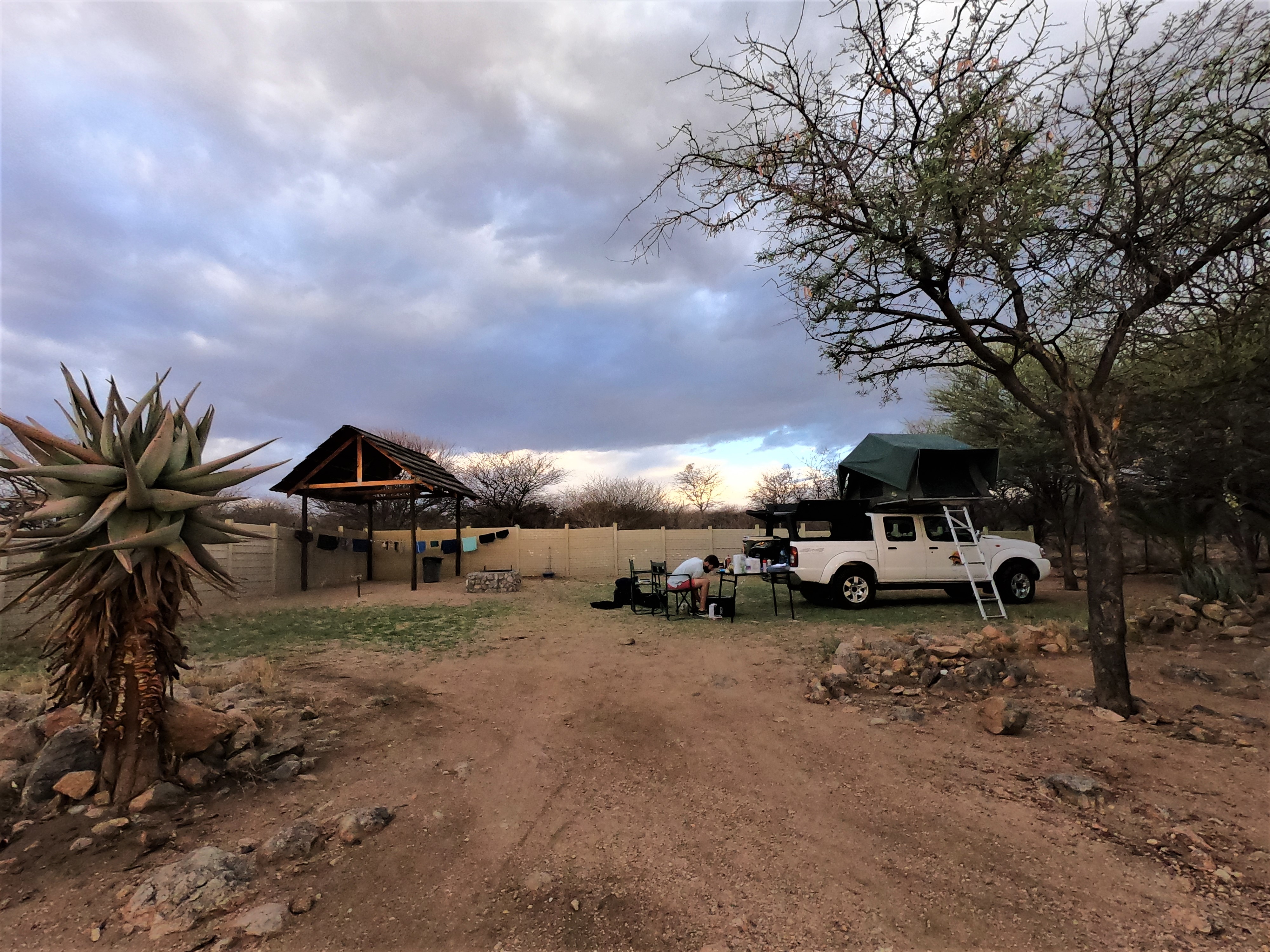
We were a little late making dinner and learned a valuable lesson: don’t cook in the dark. The bugs were crazy after the sun set but Ryan still managed to make us some sausage and pasta. We were sleeping near a group of trees that you had to go under to reach the restroom, whenever we walked through, we’d scare the birds who would violently fly out of the trees and scare us in return. The girls’ bathroom was also housed a giant flat brown spider, we will Google what it is when we have internet, but it looks threatening. Welcome to Africa.
Day 2 – Waterberg Plateau – November 30
Sunlight came pouring into our tent around 6 am after a not so restful night of sleep. We’d parked as level as we could but the slight angle slid us to the bottom of the tent all night. Elizabeth went to fill up the water to make tea and a bunch of ants poured out of the spigot into the pot. When not full of ants, the water in Namibia is all drinkable which is a nice change of pace from Egypt as it all comes straight from water wells.
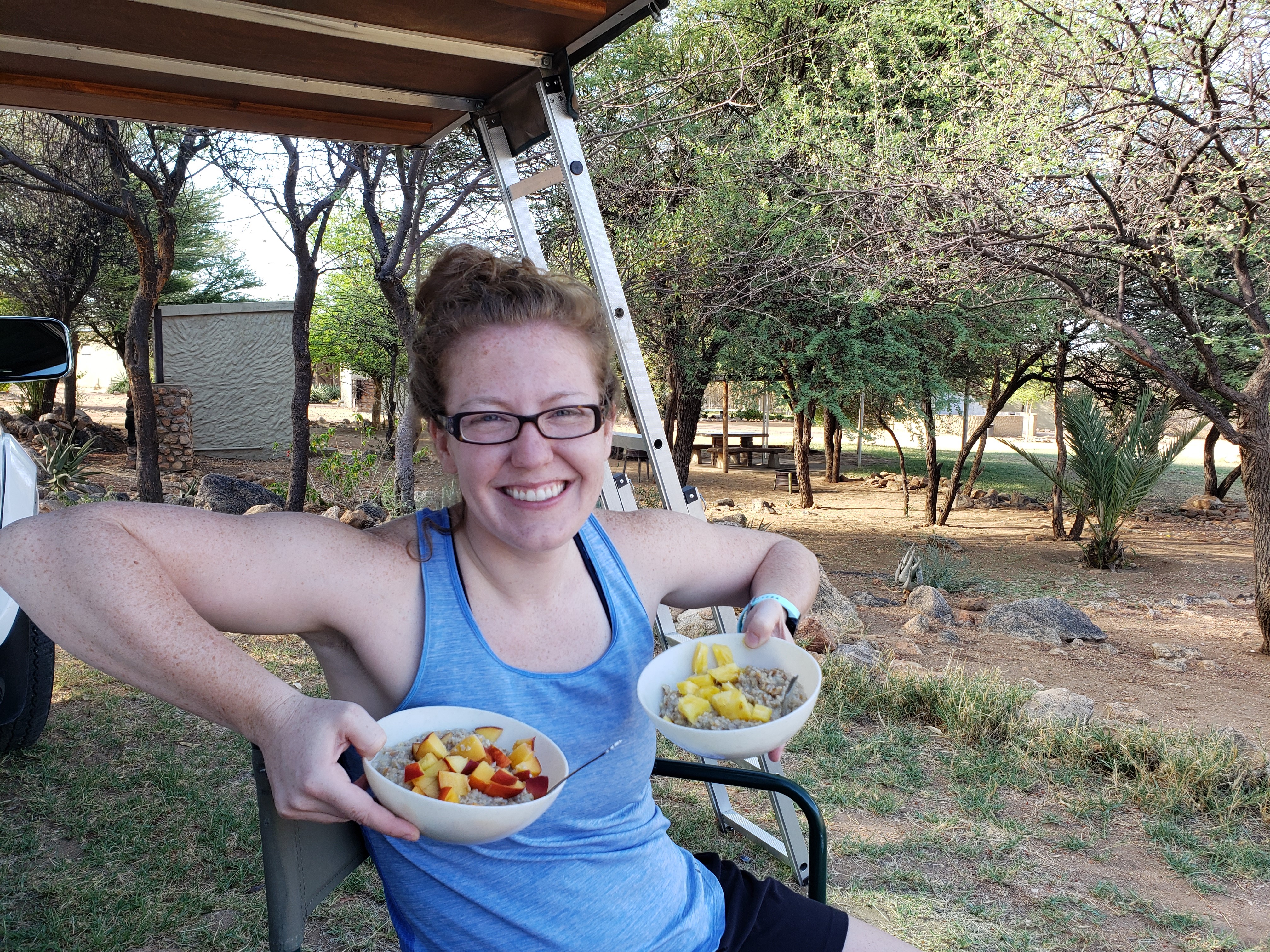
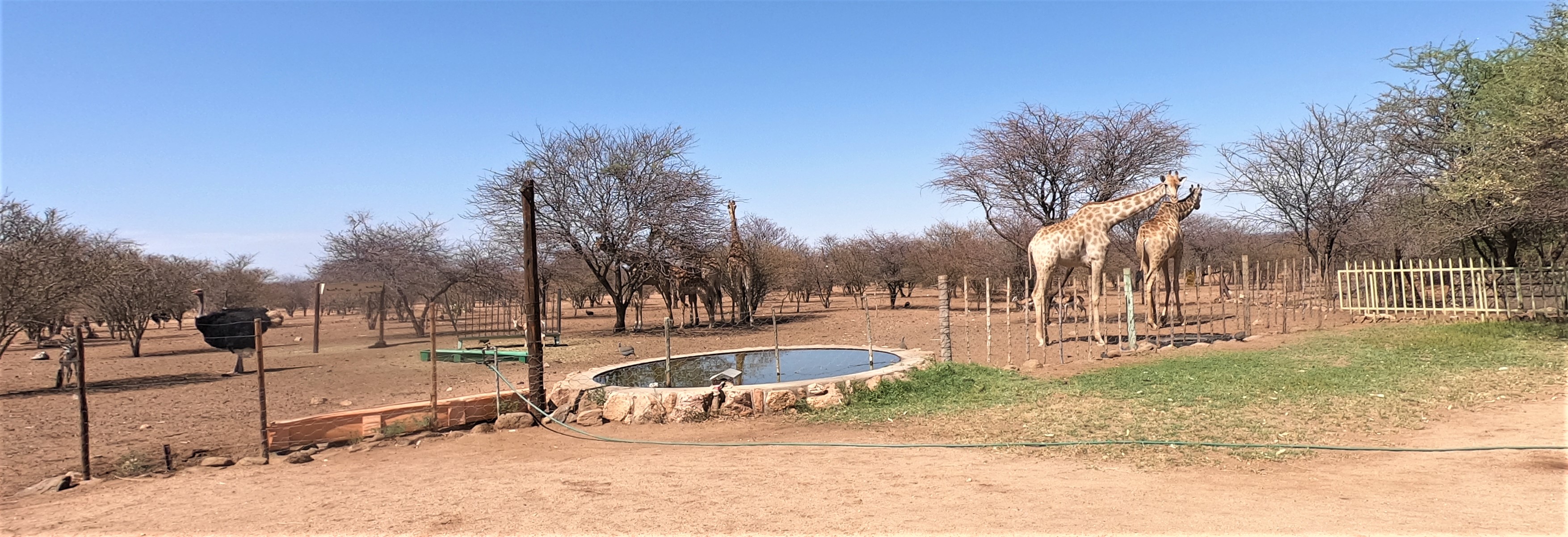
Ryan made a delicious breakfast of oatmeal and fruit. We spent the morning organizing again, the car doesn’t have a lot of space and it’s easiest to know where everything is at all times. We walked back over to the watering hole and were delighted to also see giraffe and ostriches. Giraffe trying bend down to drink water is one of the funniest things we’ve ever seen.
Finally, it was time to get back on the road. We drove back south to go to a gas station to collect the things we’d forgotten from the night before. The small shopping center was a mad house. They have Black Friday in Namibia, but they have no Thanksgiving and they were surprised to hear we have it in America too, and everyone rushes to the discounts. We fought our way through the store and checkout line. After getting back to our car Ryan literally had to push a guy out of the car door who was trying to sell us a carved tree seed.
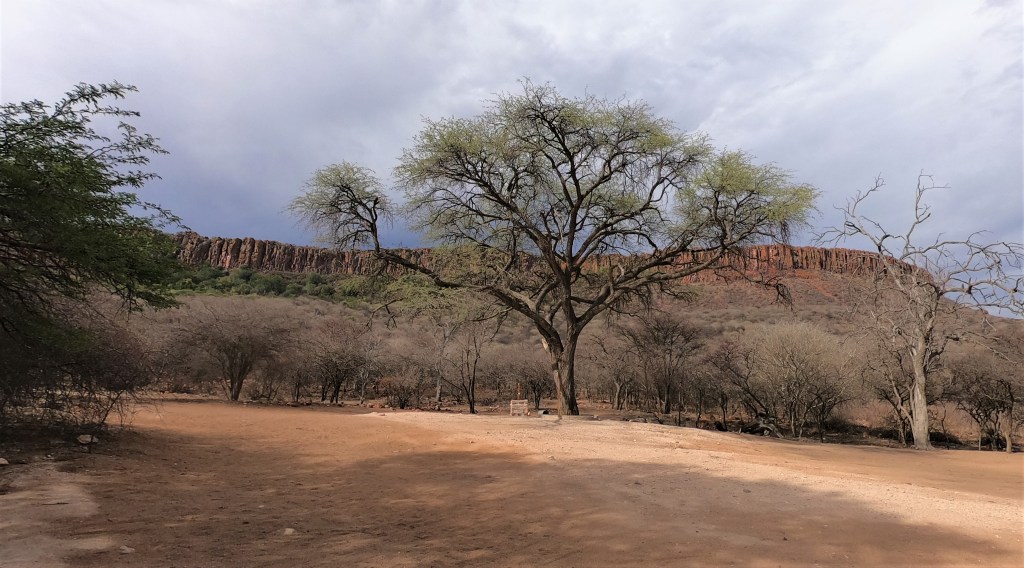
We were back on the road and vowed never to stop for groceries on a Black Friday/Saturday ever again. We had about a 2.5-hour drive to our next campsite at Waterberg Plateau National Park. Along the way we saw a ton of warthogs eating the grass at the edge of the highway. They were so skinny you could see all of their ribs. We arrived at the park and headed into the campsite to pick a spot. A huge group of Namibian kids were camping at the front so we naturally drove to the back for a little peace and quiet. It’s so beautiful here, we have incredible views of the red plateau face. We arrived during a thunderstorm, so we had to wait it out before setting up camp.
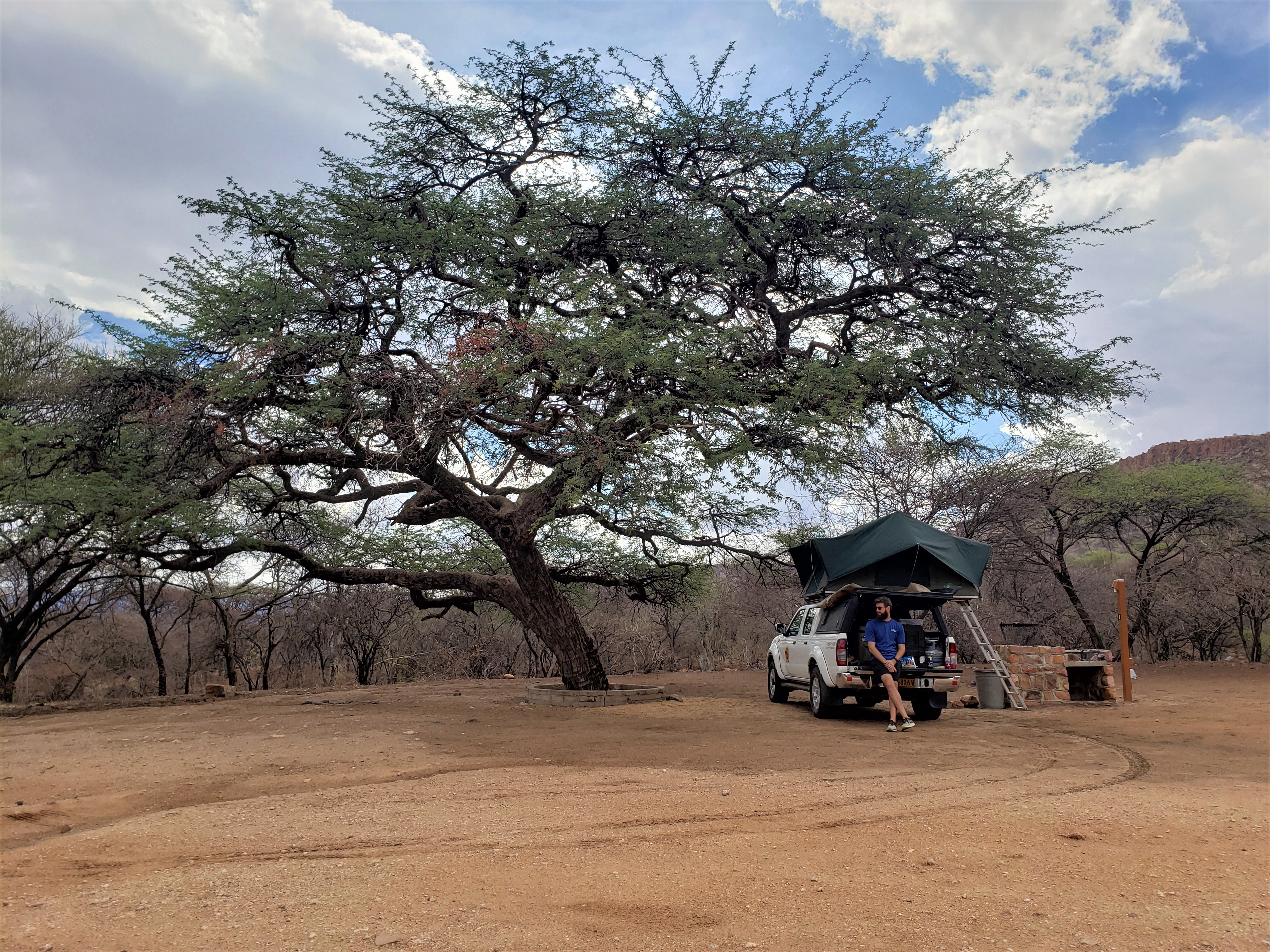
The rest of the afternoon we lounged, did more laundry, and enjoyed the view of the cliffs. We went for a walk around the park hiking towards the pool and restaurant then back down the giant hill. It was pretty hot out and we were sweaty. For dinner that night Ryan had our first braai (see southern African BBQ – which we are told is different, but we’re not quite sure how) of sausage, mushrooms and onions plus we sautéed some more mushrooms and onions to get our butter fix. We drank beer and chatted, excited to be done with dinner and clean up before the sun went down.
Day 3 – Waterberg Plateau – December 1
We were awoken the next morning at 6 am with the rising sun and loudest bird squawks we’d ever heard. We heard the cry of baboons then a huge troop came pouring in through the camp screeching, running amok and knocking over all the metal trashcans. They tore through the campsite then back into the forest. Finally, a park ranger came around carrying a trash bag and sling shot to clean up their mess. We watched her scare off a few, very effective.
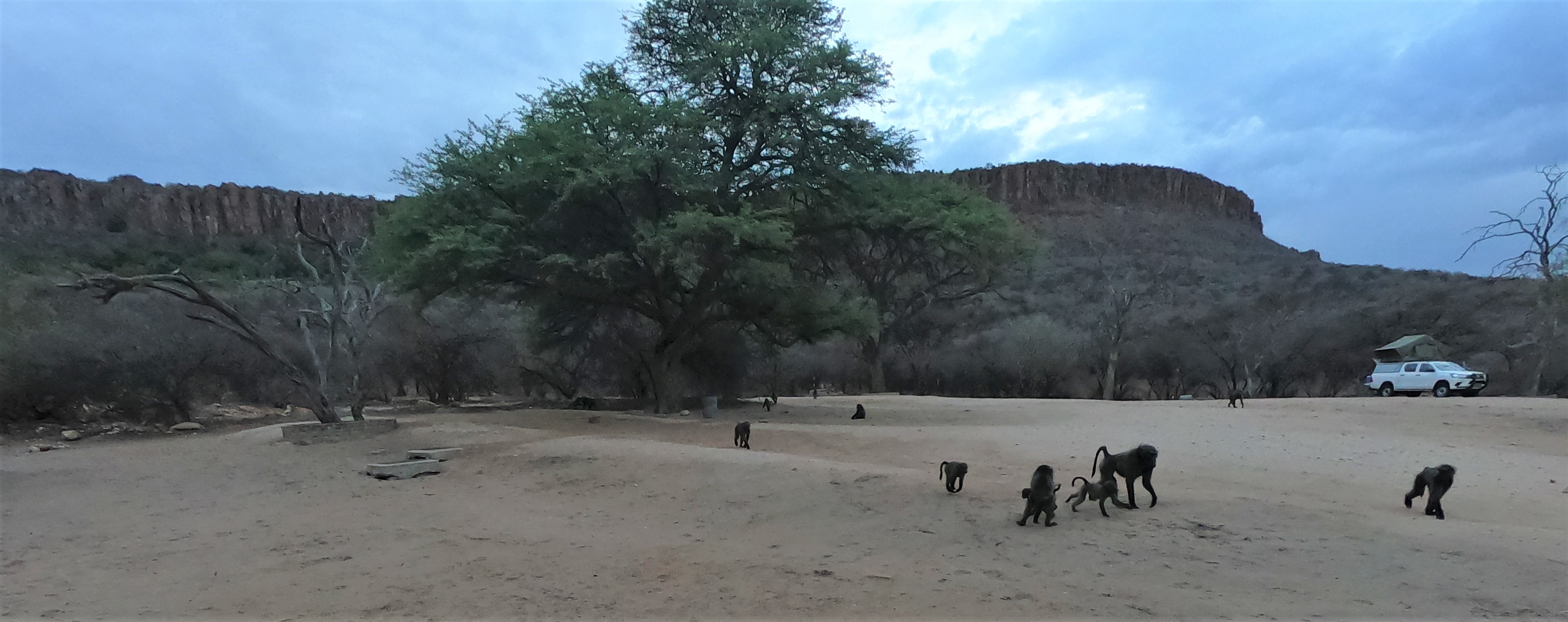
For breakfast we made omelets, bacon, and cereal. We planned to hike the ridge trail today called Mountain View and wanted to get a head start before it got too hot. We set off around 9 and first walked up the long, paved road passed the pool and the rooms and lodges, where people not on a budget, were sleeping. We saw more warthogs and baboons and the trail up through the forest. The beginning of the trail we were attacked by all sorts of flying bugs; as we climbed a little higher the bugs died out and we had to scramble up the boulders. We were careful where we put our hands and feet as we climbed but luckily only saw lizards. Elizabeth is convinced she is going to get stung or bit.
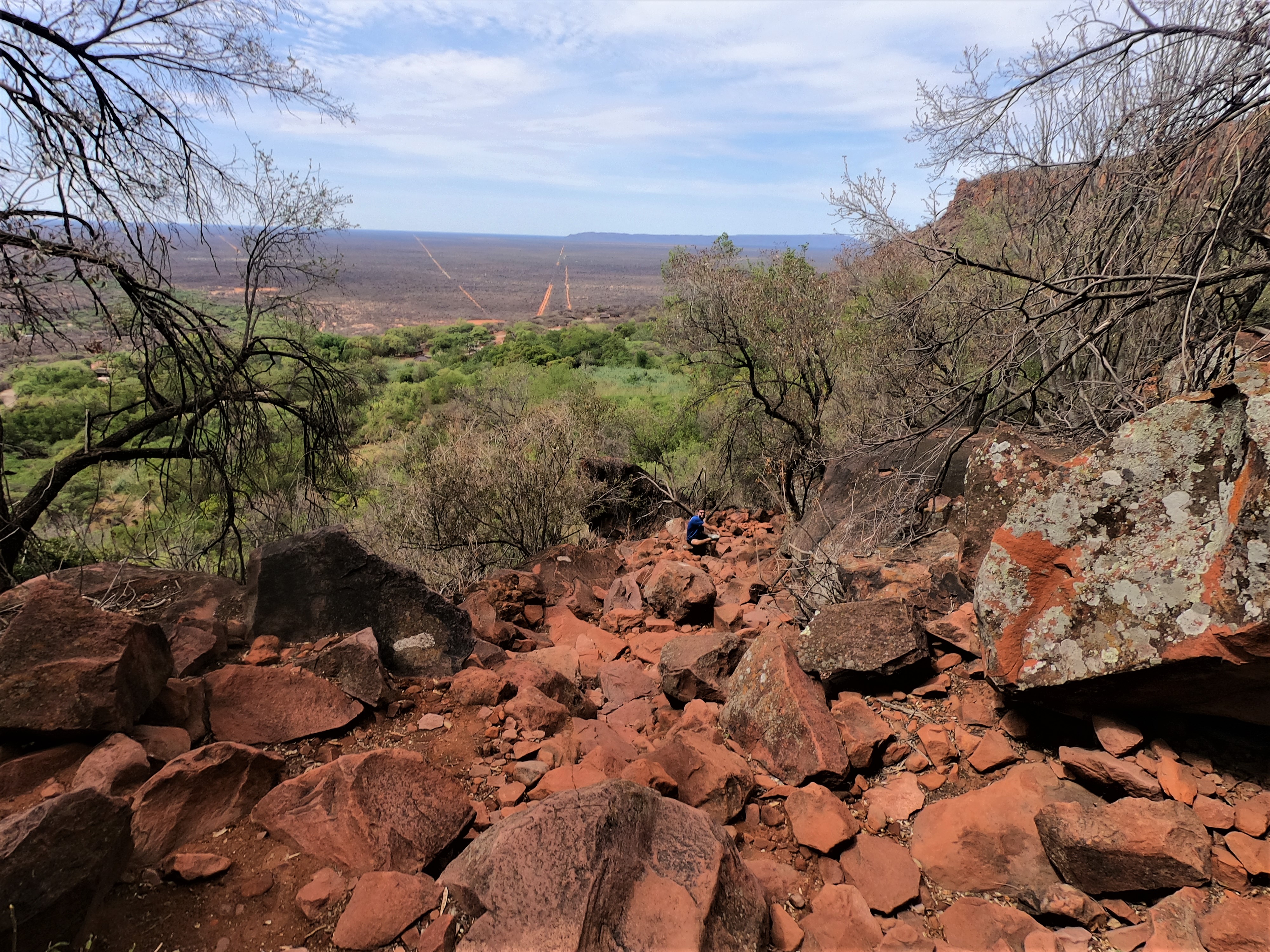
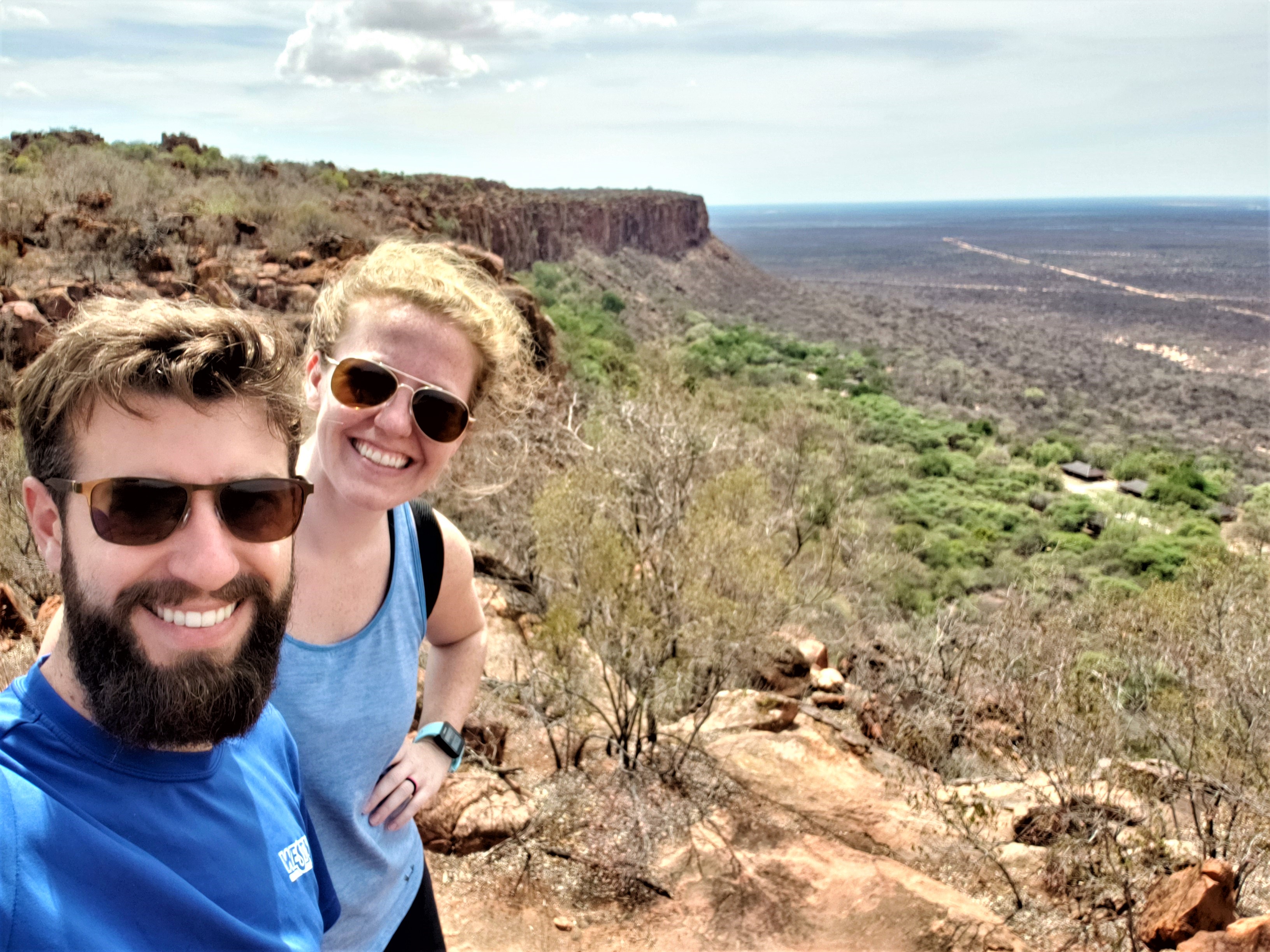
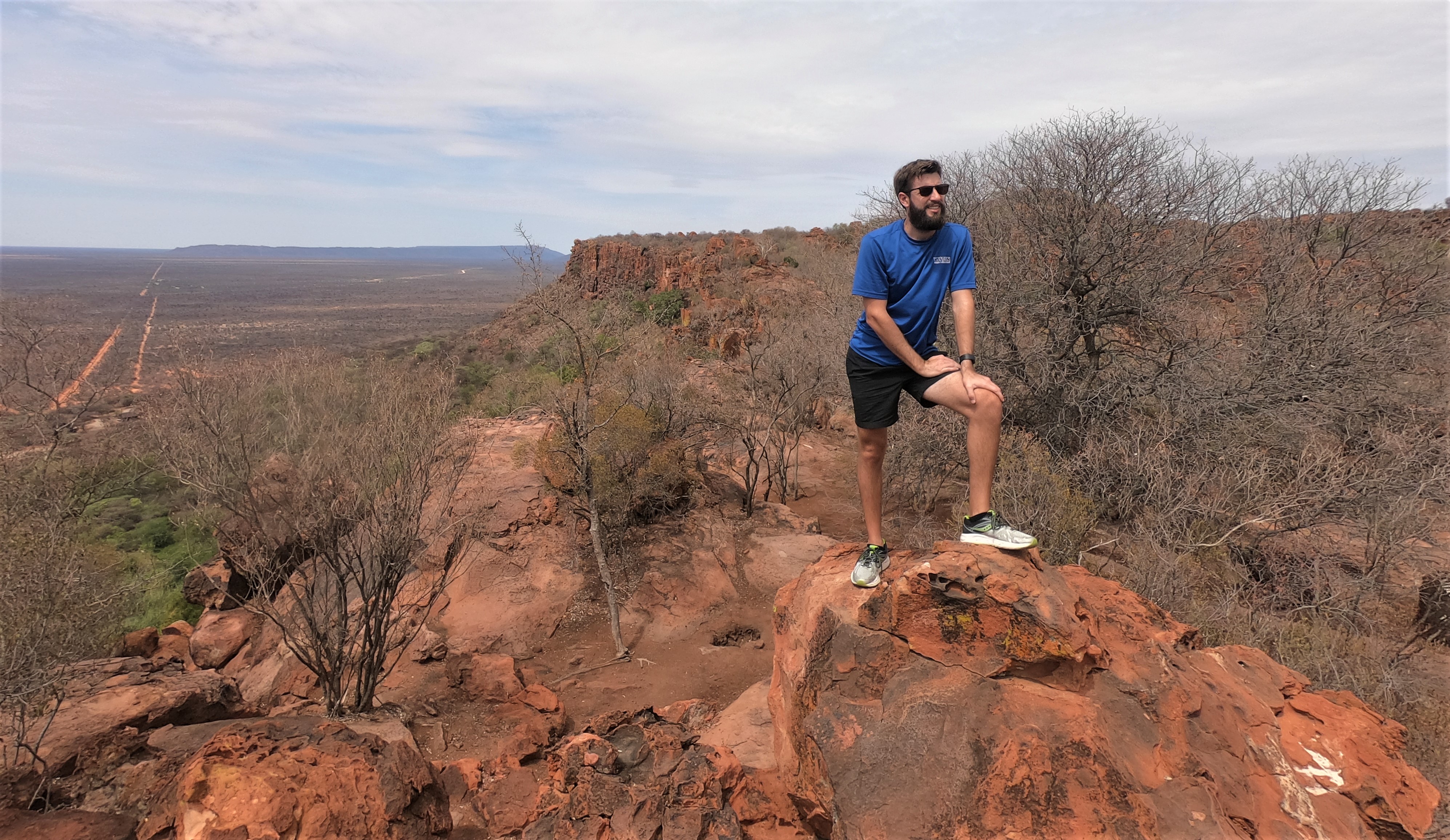
The top was absolutely gorgeous and you could see out far onto the plain and the surrounding cliffs of the plateau. We actually got decent internet service on the top so we booked our campsite for the following night. After enjoying the view and being careful not to fall off the edge we began to look for the way down. The trail is supposed to be a loop and we’d been following white foot step markers the whole way up. We looked for probably 20 minutes, trying different routes and rock cuts but never found the next set of footprints. We decided to just hike down the way we came to avoid getting lost.
Back at the bottom we were hot and sore from all the rocks, our bodies are getting old. We walked back to camp and reheated the leftover food from the night before. We are using both wood fires and a giant propane tank to do all our cooking. After more lounging and laundry and watching storms roll passed us, we decided to head to the pool and cool off. The pool is actually pretty large, smelled of chlorine, but had green, cloudy water. There were a bunch of kids already swimming and playing around and we jumped right in to cool off.
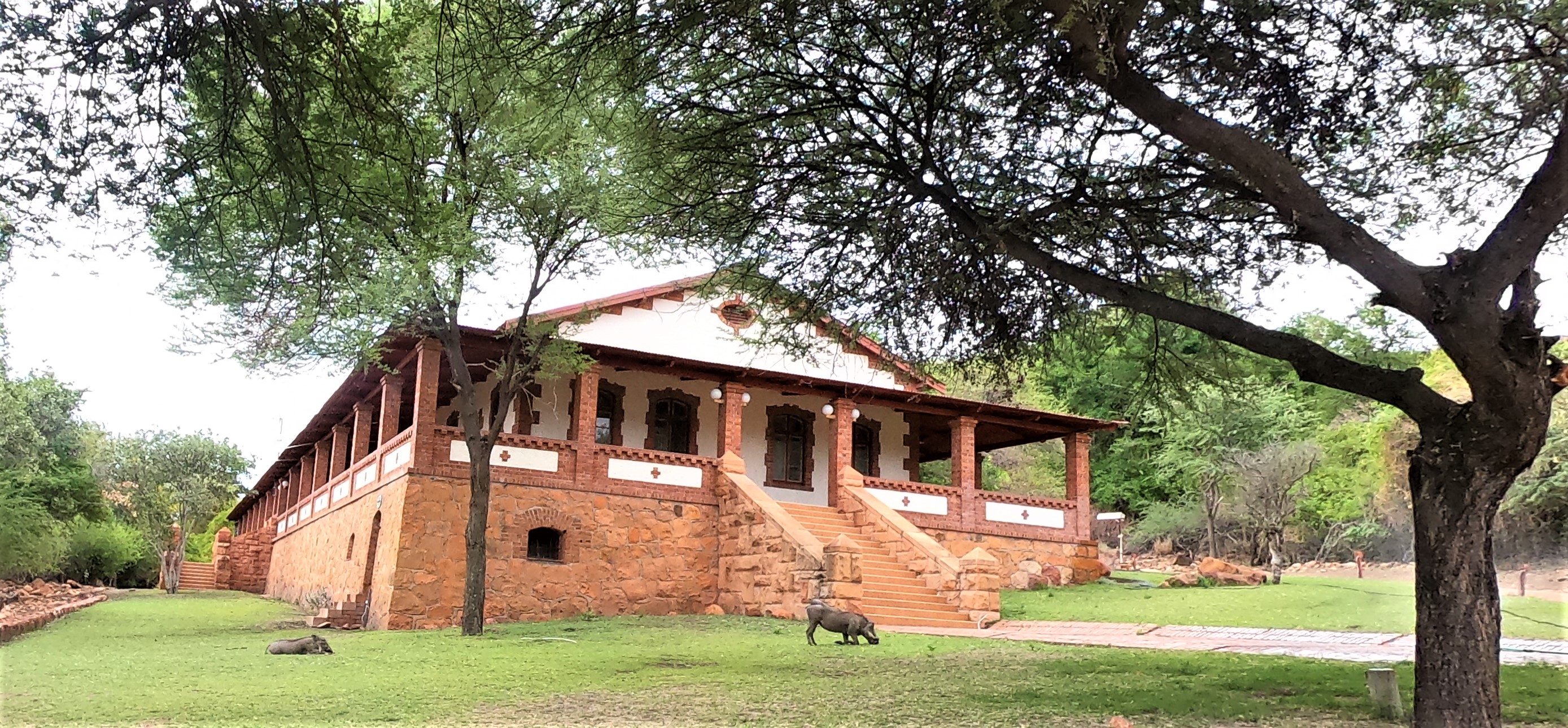
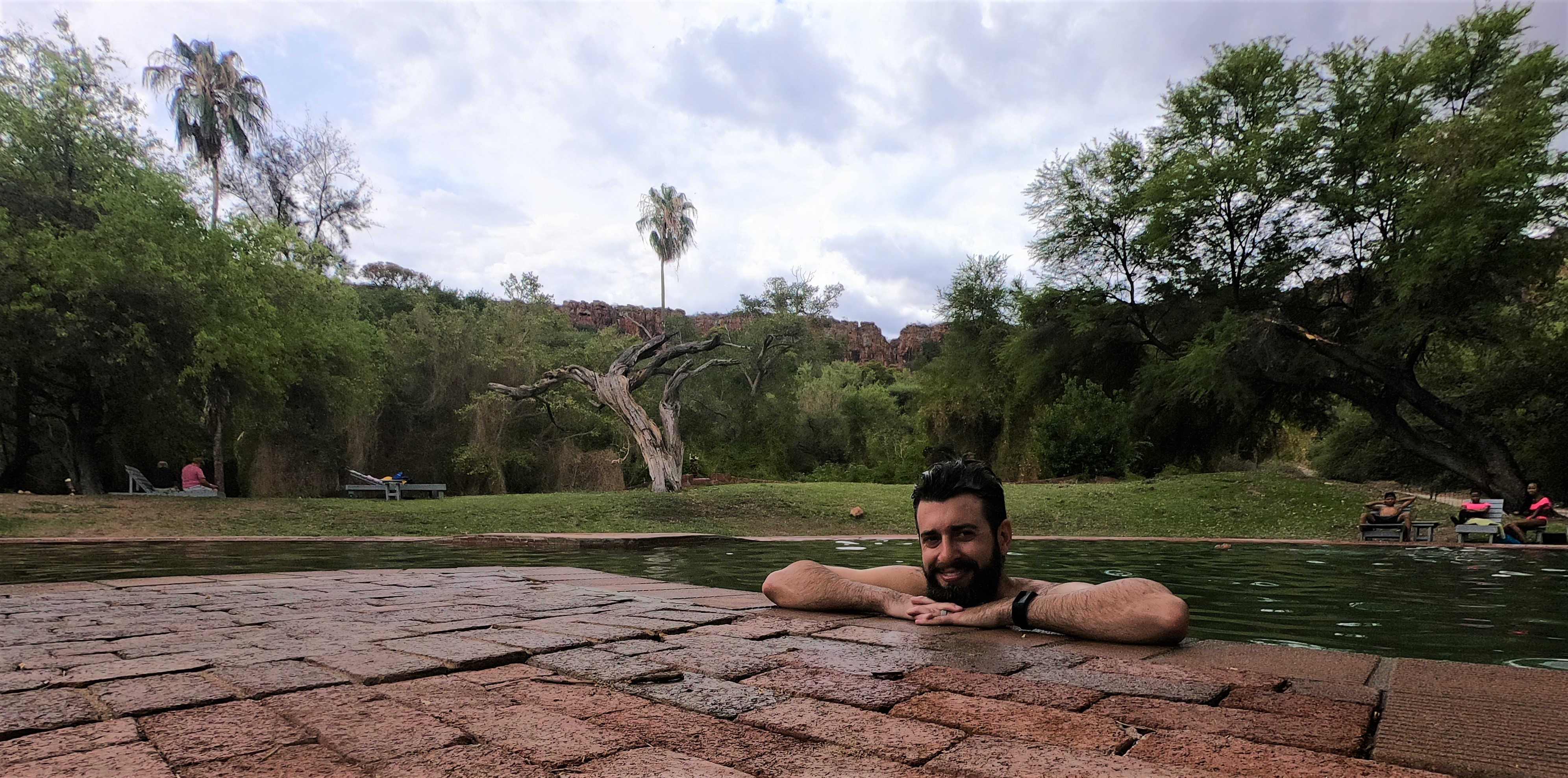
We stayed and lounged for about an hour before the clouds darkened and began to threaten rain. We hurriedly packed up and headed back to camp. We spent the rest of the evening in our tent watching Out of Africa while rain and heavy wind whipped the walls of our tent. We managed to find a break in the rain long enough to run out and make bowls of cereal for dinner. We’ve decided to try to reset our bodies to their circadian rhythms, which means waking up and going to sleep with the sun. It was dark around 8:15 and we were asleep by 8:30. At 9 pm a loud bang roused us only to discover a baboon was knocking over our metal trashcan, Elizabeth tried to scare him off with yells and a flashlight but he couldn’t have been less fazed. The rest of the night passed smoothly.
Day 4 – Mopane Village – December 2
The next morning the birds began squawking around 6 again, it wouldn’t be such a horrible wake up if it didn’t sound like they were doing it right in our tent. By 6:15 the baboons were on their tirade through the site. It was still windy and a little chilly the next morning, but we climbed down when they were gone and began to pack up and prepare breakfast. We didn’t realize they’d returned and before we knew what was happening a huge baboon snuck up behind Ryan and stole the bananas we had sitting on the tailgate. Ryan was right there cooking; these monkeys are bold.
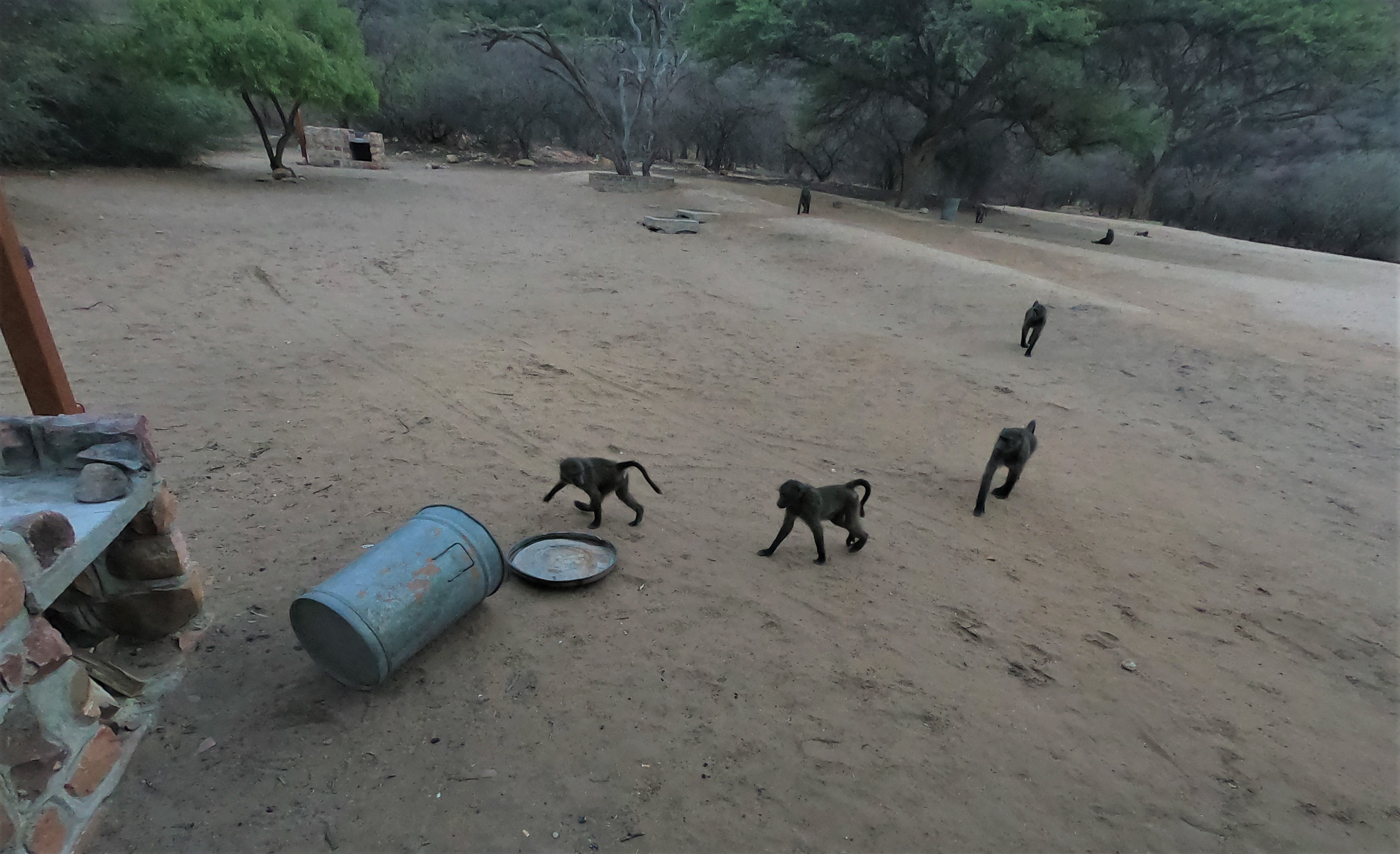
The whole morning was spent chasing monkeys around with our small shovel while the other cooked breakfast. The guy camping across from us left his cooler out and the monkeys threw it open and ran off with a bag of uncooked rice. By the time slingshot lady arrived we were happy to see her. Unlike yesterday her 3 rocks didn’t faze the baboons, they kept coming back and she had to continue to shot at them. Ryan thinks it would been an amazing job to walk around picking up trash and shooting baboons.
We showered and packed up as another storm rolled in, then it was back on the long sand/gravel road to get to the highway. On our way up north, we stopped at a gas station to fill up. Our truck has an auxiliary fuel tank so we can carry 120 liters of fuel and hopefully go 1200 km between refuels. We also popped in another grocery store to pick up a few last-minute items and more beer and cookies.
We drove about another hour and a half up north to the southern edge of Etosha National Park. Staying inside any national park grounds is about twice as expensive as staying outside it. We are spending the next three nights in the park and this first night right outside the front entrance at a campsite called Mopane Village Resort. We pulled up to reception and received a warm welcome. Apparently, we are the only guests in the entire resort. We found a cute camping spot with an outdoor toilet and shower then set up our tent.
It was early afternoon and pretty hot so we walked back to reception to swim in the pool and use their Wi-Fi. The pool was pretty small and full of dust and dead bugs, but the cool water was worth it. After a long dip the clouds became overcast again and we tried to use the weak Wi-Fi to figure out our Namibian travel path.
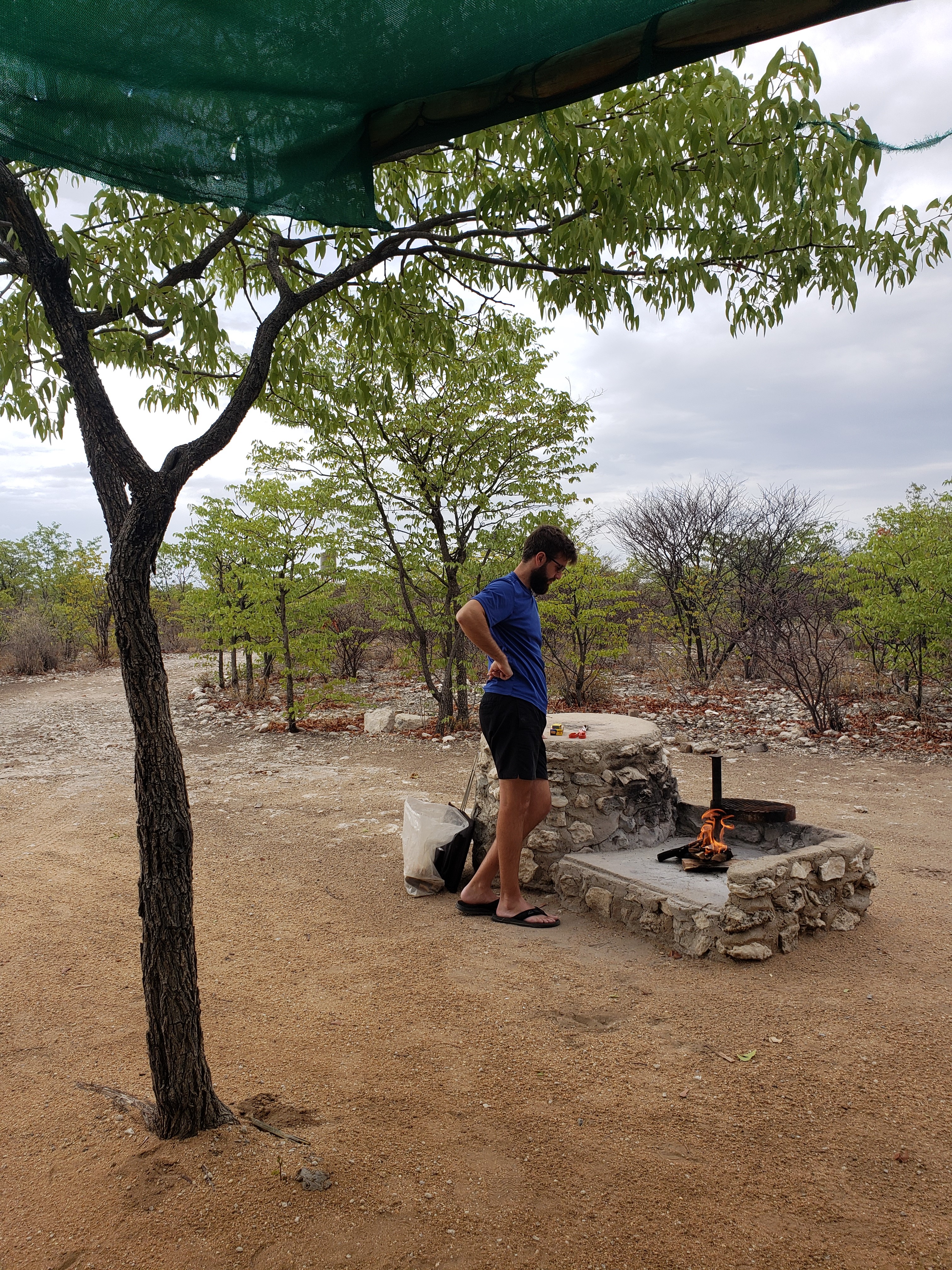
For dinner Ryan BBQed chicken with Peri Peri sauce and corn on the cob. We sautéed more onions and bell pepper with garlic. Everything was delicious, Elizabeth said she’s never eaten such good camp food. The camp site was eerily quiet with no monkeys or birds to disturb us.
Day 5 – Etosha Park – December 3
We had more oatmeal and nectarines for breakfast before tearing down our camp. We’ve gotten pretty good at unloading and loading, but it’s more work than we’d both remembered. Even doing the dishes takes longer. Finally, we got back on the road to Etosha Park one of the largest national parks in Namibia. Etosha means “Great White Place” and was named for the 4,731 km2 (1,827 mi2) salt pan (seasonally dry lakebed) in the middle of the park. We entered through the Anderson Gate to the south and headed to Okaukuejo the main reception area. We booked three nights in the far western campsite called Olifantsrus and we were hoping to split our time between the west and eastern portions of the park.
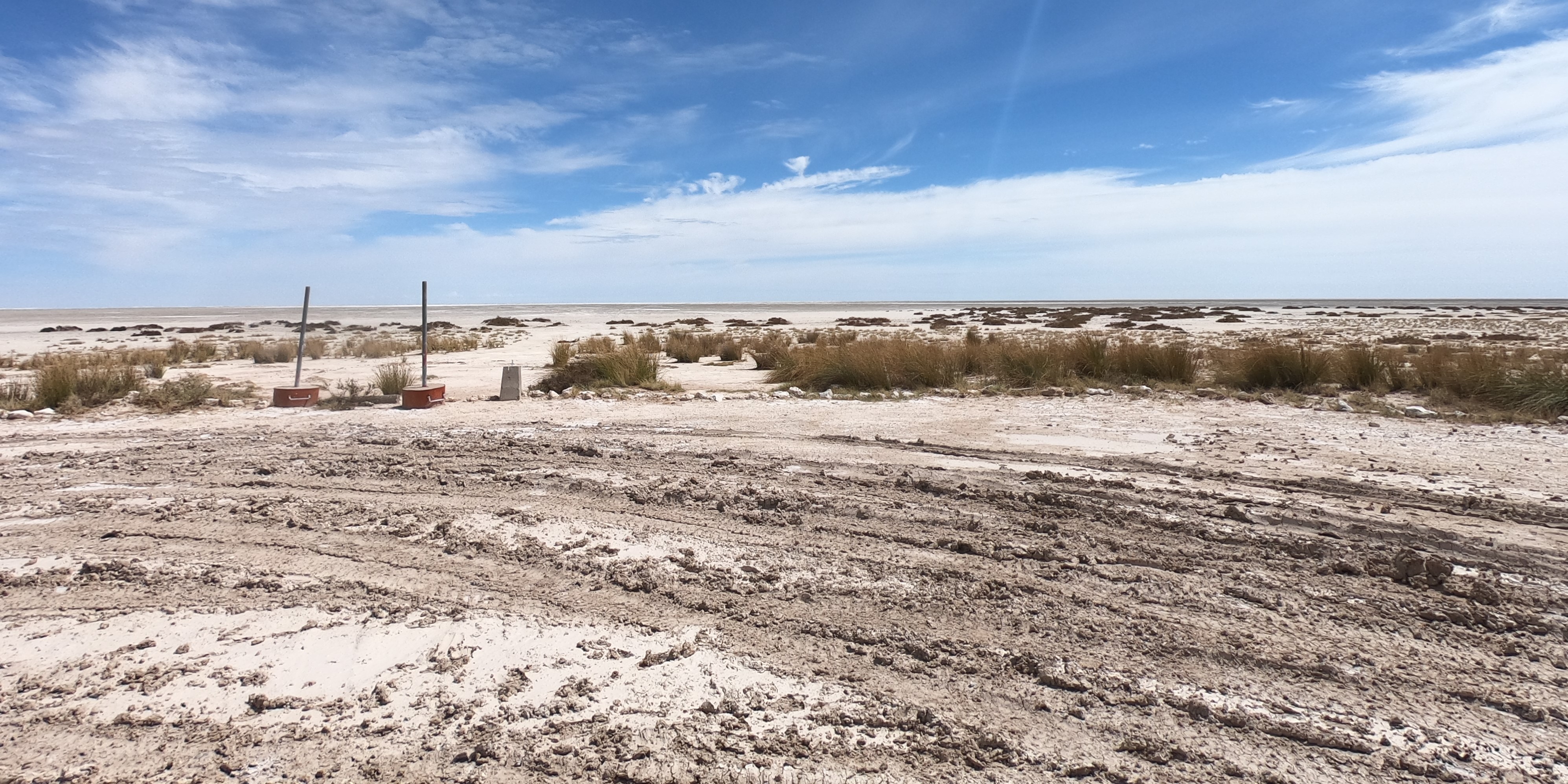
They are in low season, just between the wet and dry seasons, and there are very few tourists. Still the national park staff wouldn’t work with us to split our campsites and really didn’t have a great attitude overall. Apparently, their national parks spots aren’t as coveted as in the US. We bought a map book which also has pictures of all the animals you can find in the park. We decided to drive a little east to an overlook called Pan. The roads aren’t super well marked and everything is gravel. On our drive out to the Etosha Pan (an old lake that formed millions of years ago) we saw a bunch of springbok, steenbok, ostrich, and oryx.
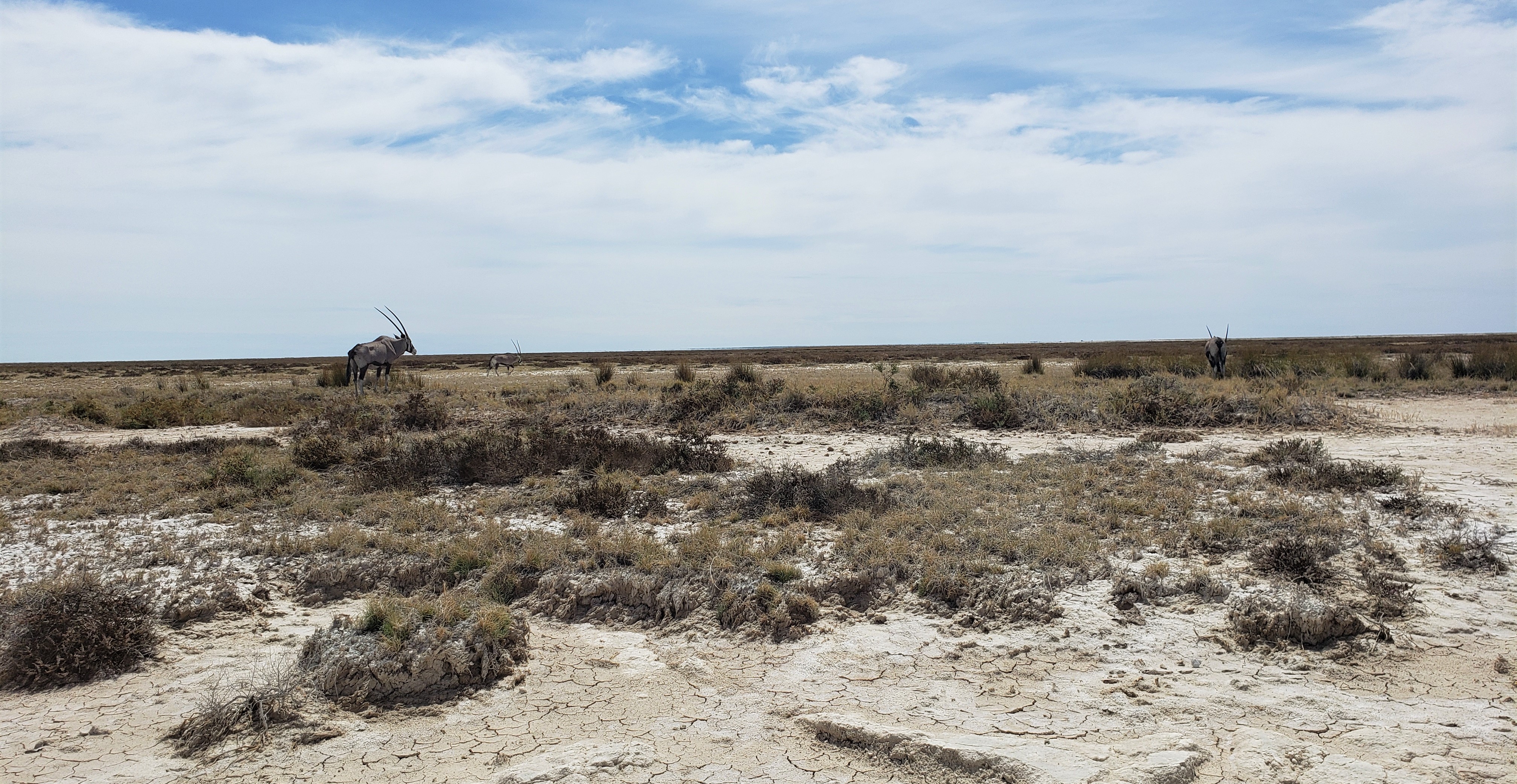
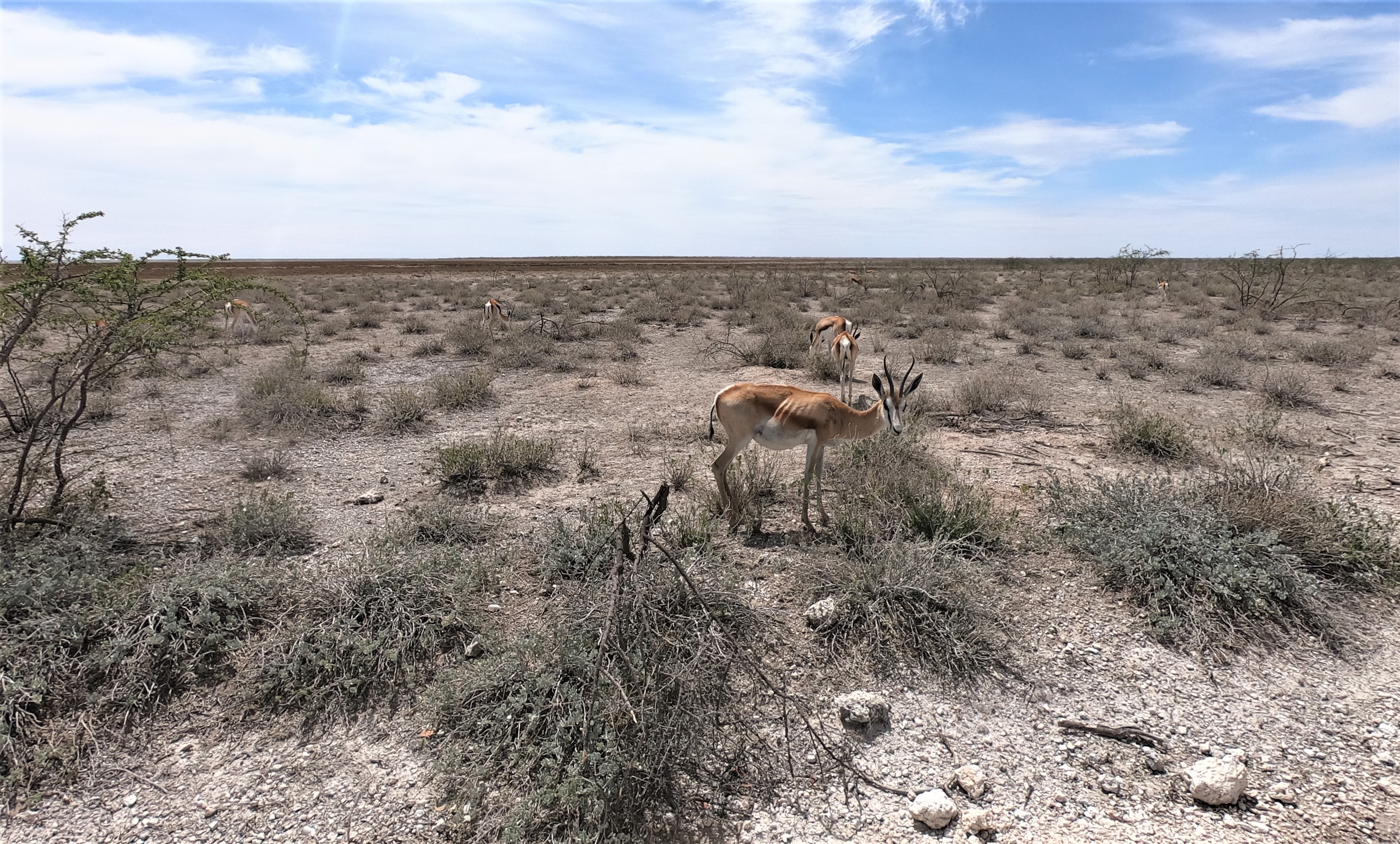
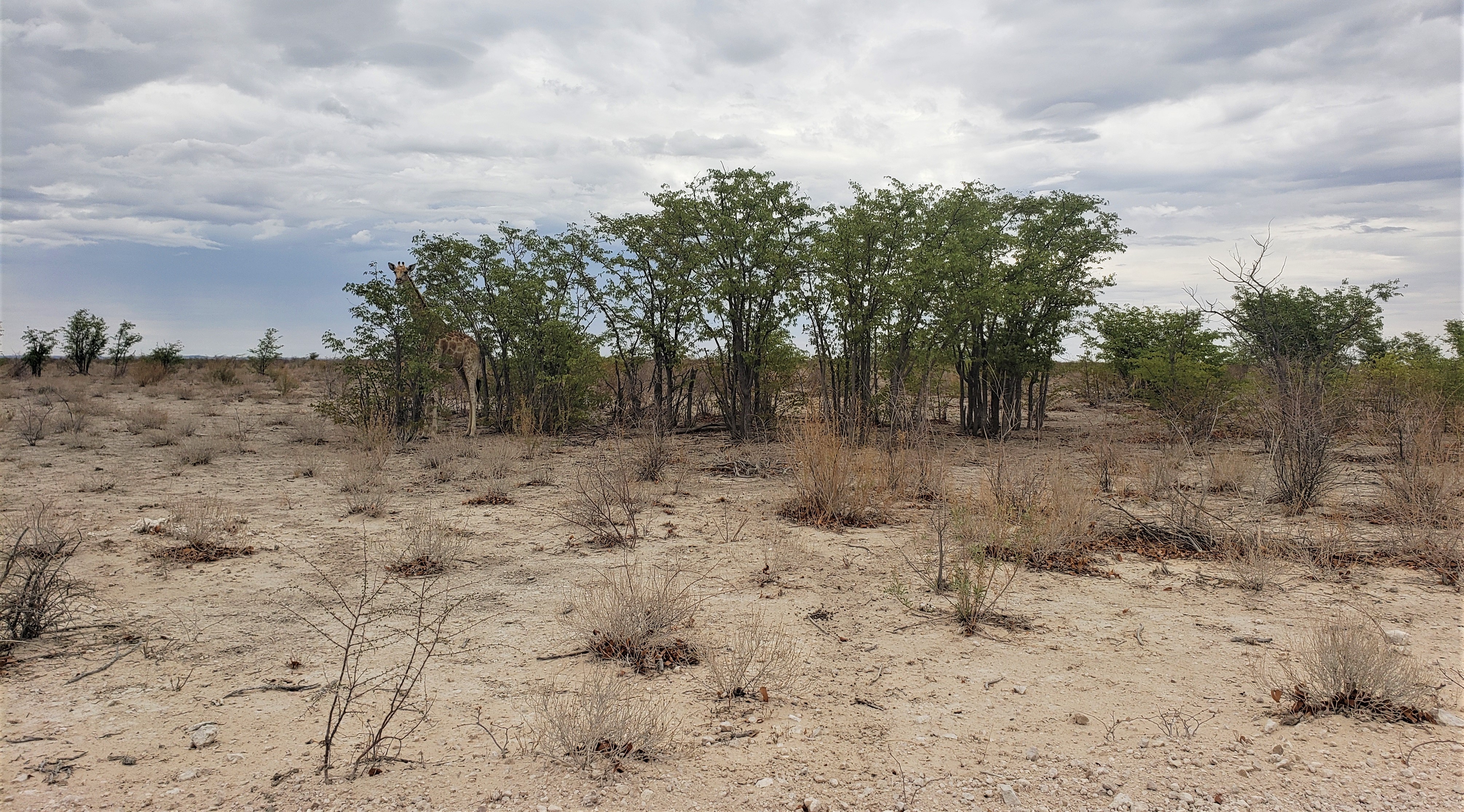
After a quick ice cream break, we began our long trek west to get to our campsite. We tried to go down some secondary roads hoping to catch sight of a rhino or lion but, unfortunately, we weren’t successful. We saw a giraffe along the side of the road grazing, then stopped at our first man-made watering hole called Ozonjutji M’Bari. This was a very exciting stop, there were 6 elephants, wildebeest, springbok, ostriches, and a cape fox. We pulled our car up and enjoyed watching the elephants throw water and mud on themselves to cool off.
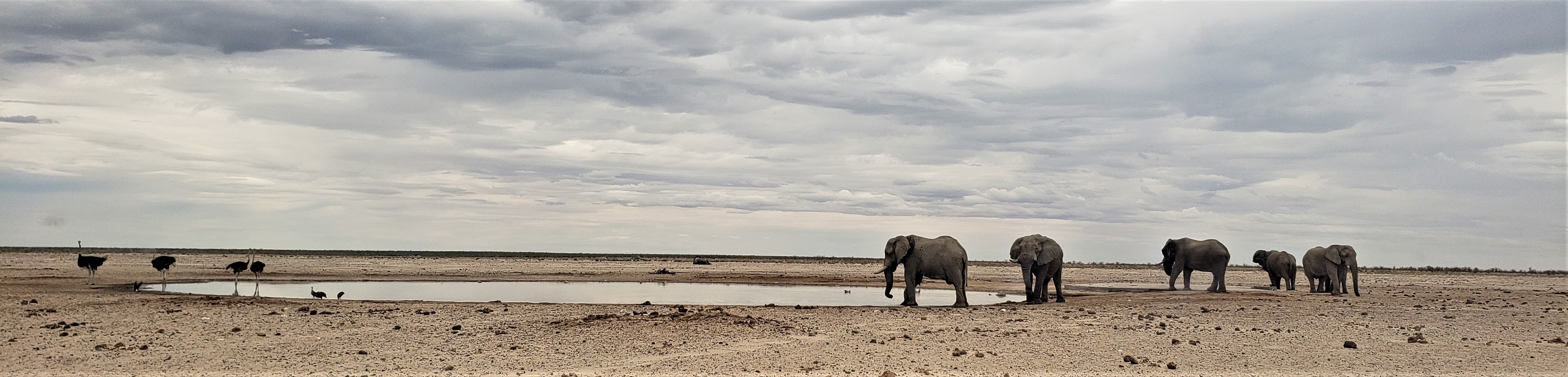
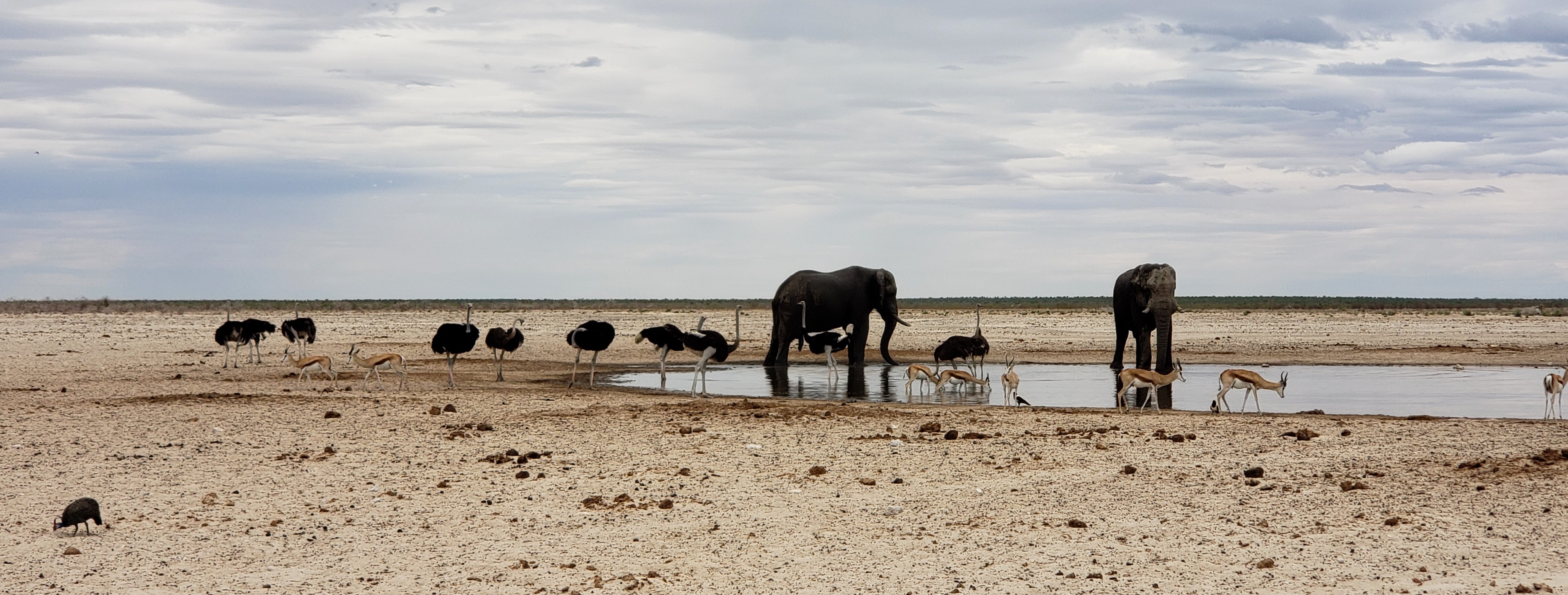
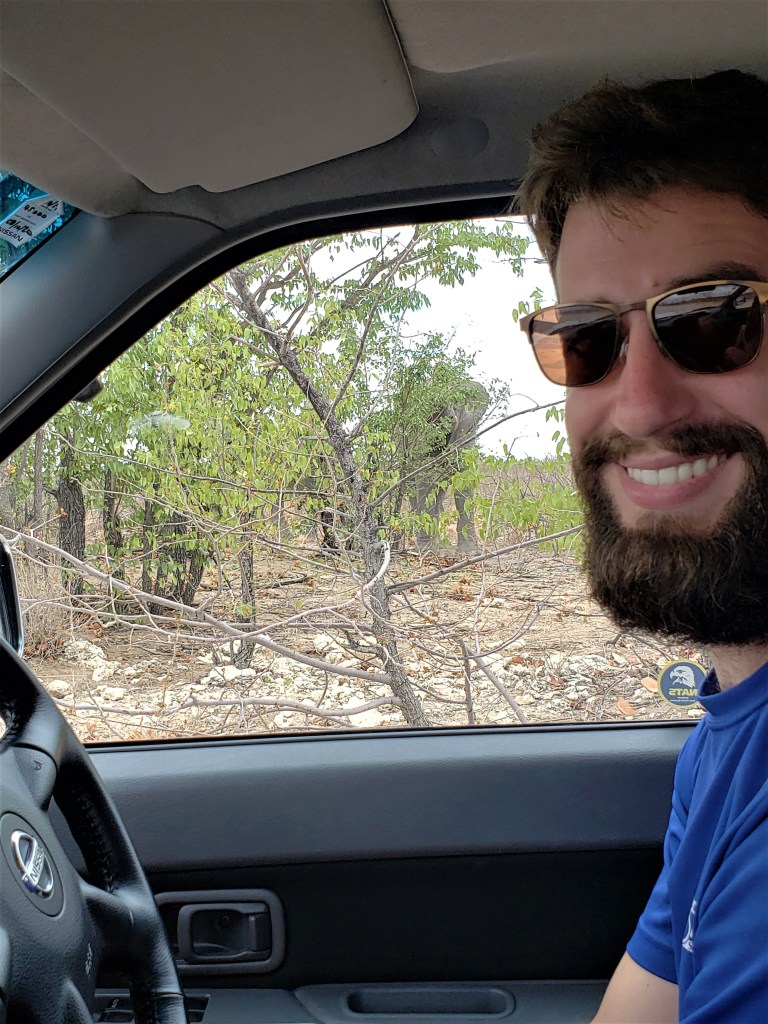
Back on the road we saw herds of zebra crossing the road and running in the plains. We saw both the plains zebra and the Hartmann’s mountain zebra. At the next watering hole, called Sonderkop, we saw more elephants and other animals in the water. And on the final stretch to our campsite we stopped by some elephants grazing right next to the road.
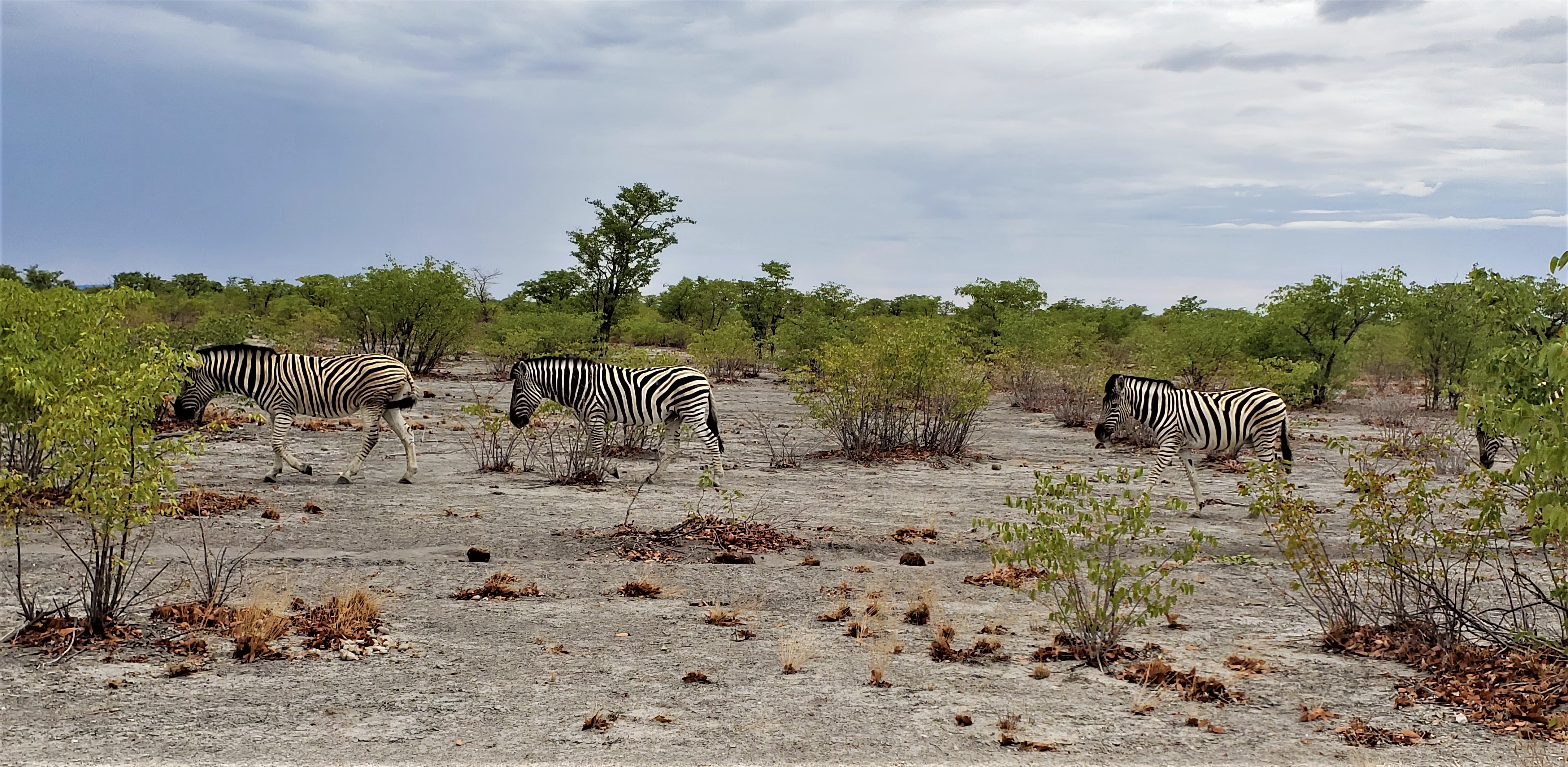
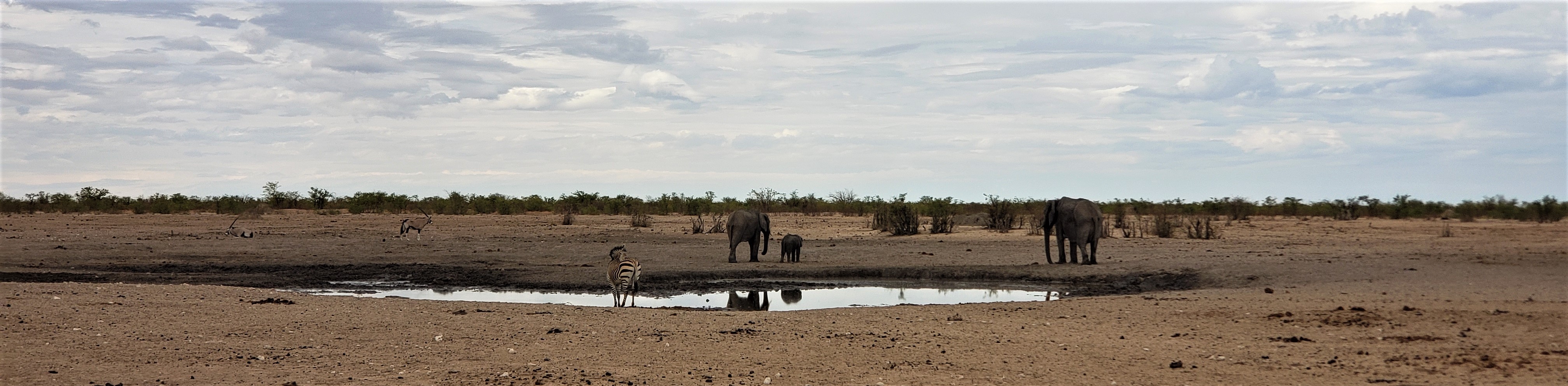
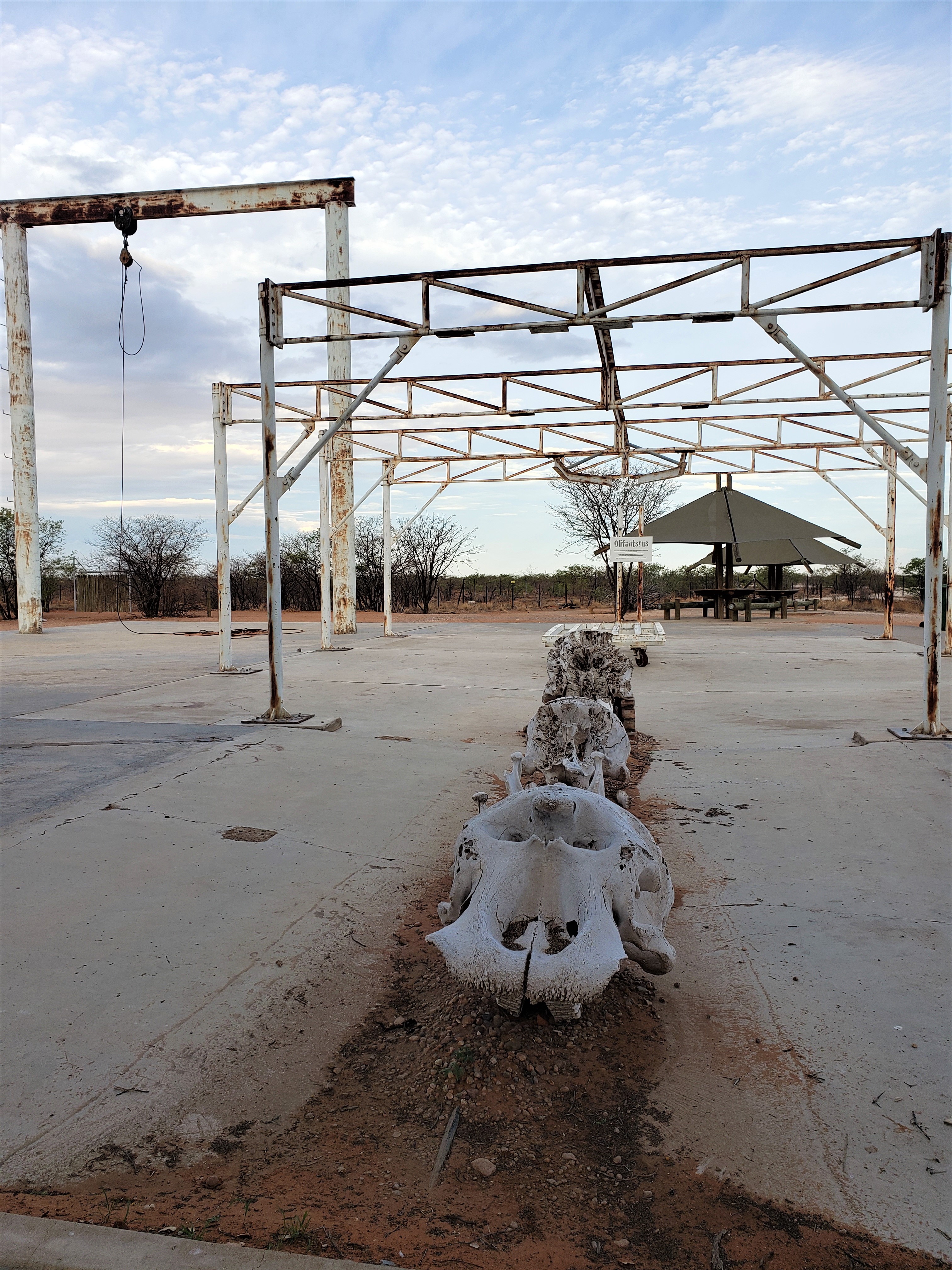
Our campsite is called Olifantsrus and is the site of elephant culling back in the early 1980s. The park was having an issue with large elephant populations overgrazing the land and threatening the biodiversity of the park. The kicker is the unusually large herds of elephants migrating into the park were fleeing poaching from the north and south. Sadly, the decision had to be made to reduce the population. They followed three rules: entire families had to be killed together and quickly to not traumatize the animals, all the meat needed to be used, and all the elephants would be used for scientific research. In all they killed 524 elephants. The metal bars they used to string them up are still standing along with some elephant skulls.
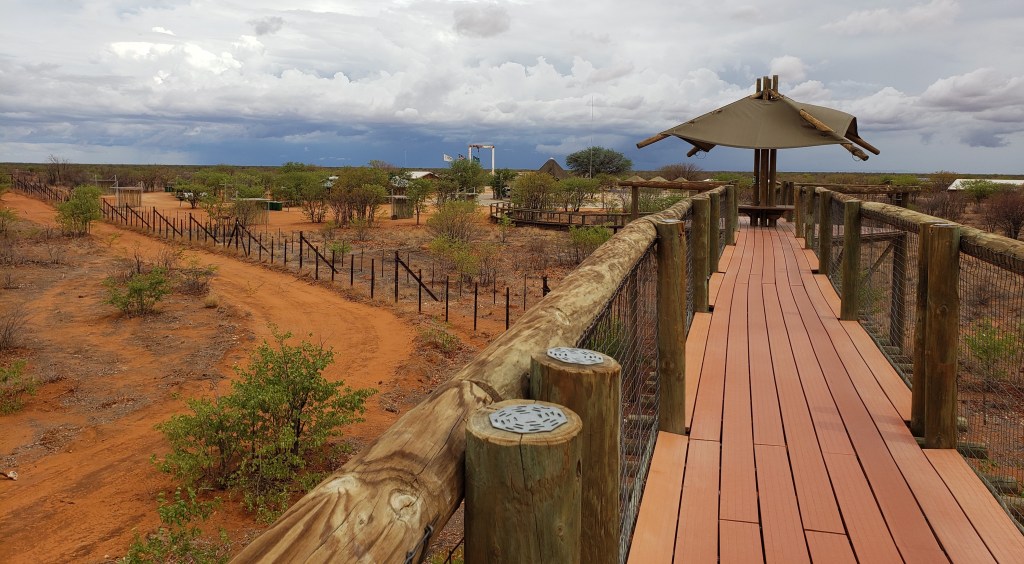
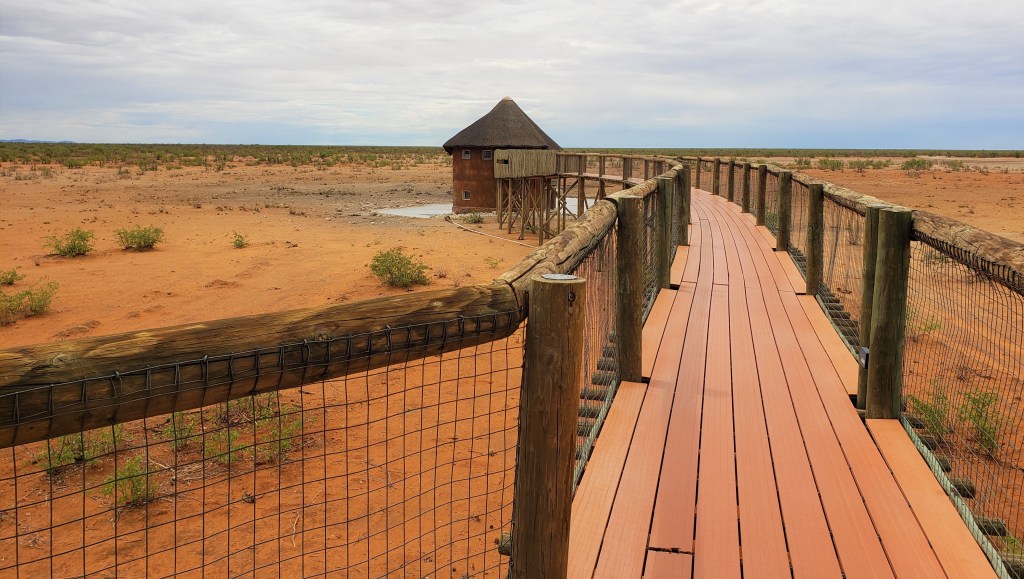
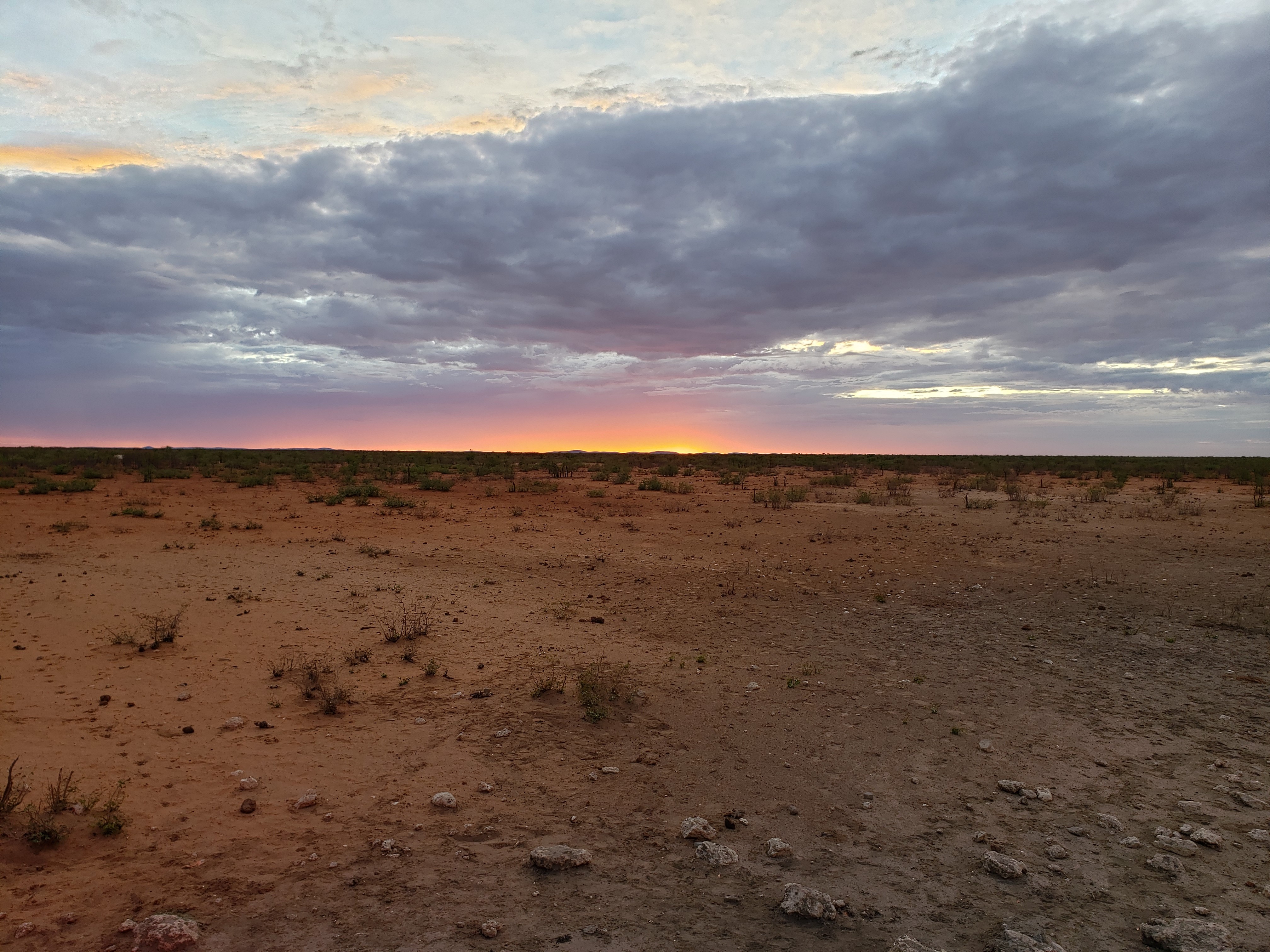
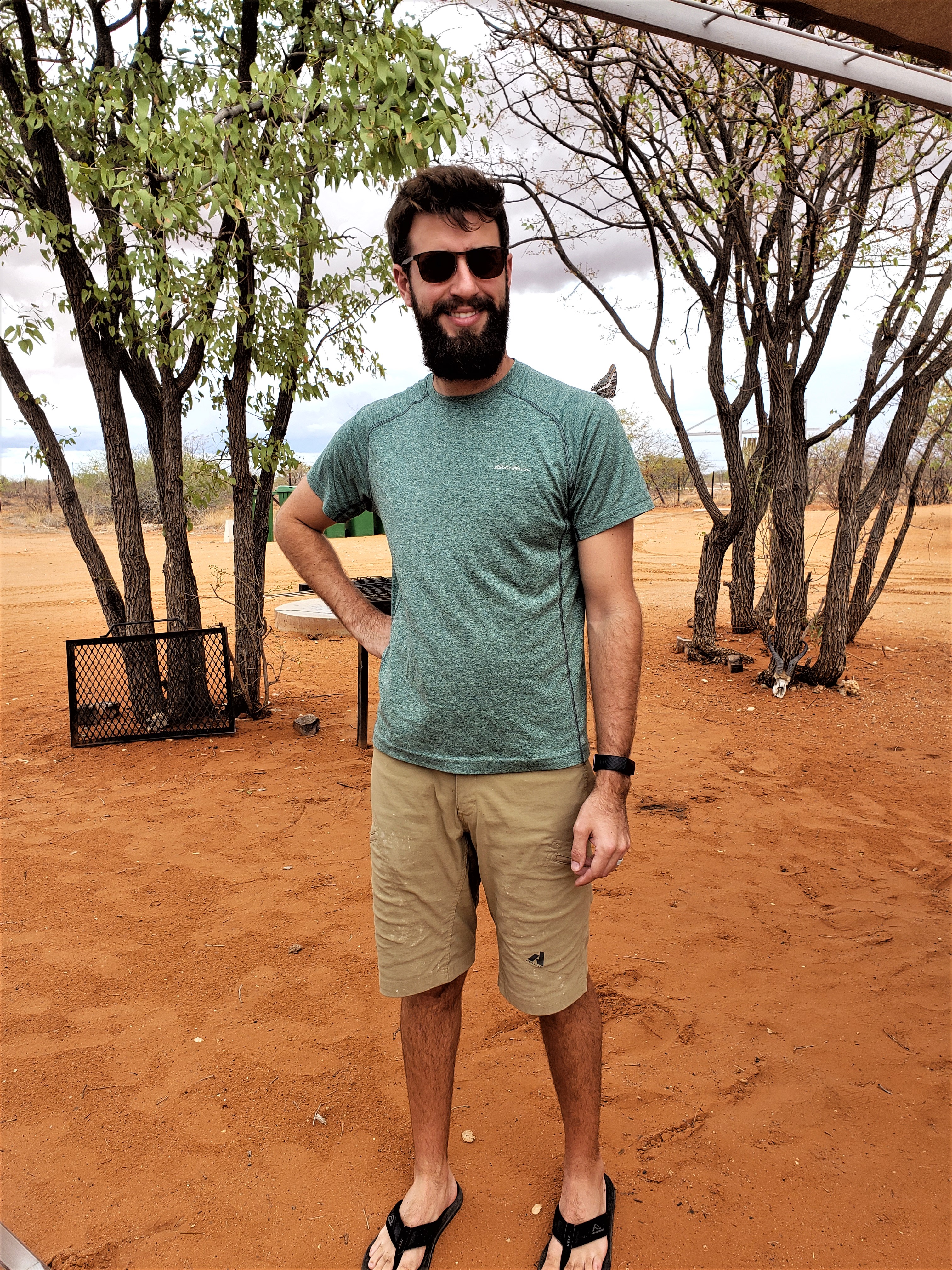
We pulled up and unloaded camp. The entire facility is surrounded by an electric fence and barbed wire, so we shouldn’t be afraid to go to the bathroom in the middle of the night. The camp also has a manmade waterhole and hide. You walk over a large elevated platform, over the electric fence, into a two-story building immediately adjacent to the watering hole. The bottom floor is all glass, while the second floor consists of large open windows. We watched the sun set but didn’t see any animals. For dinner Ryan made curry sausage and fried potatoes, another delicious meal. While cooking, a butterfly wouldn’t leave him alone and would just hang out on his shoulder while he worked. Just like a Disney princess. We slept well that night, it even got a little chilly.
Day 6 – Etosha Park – December 4
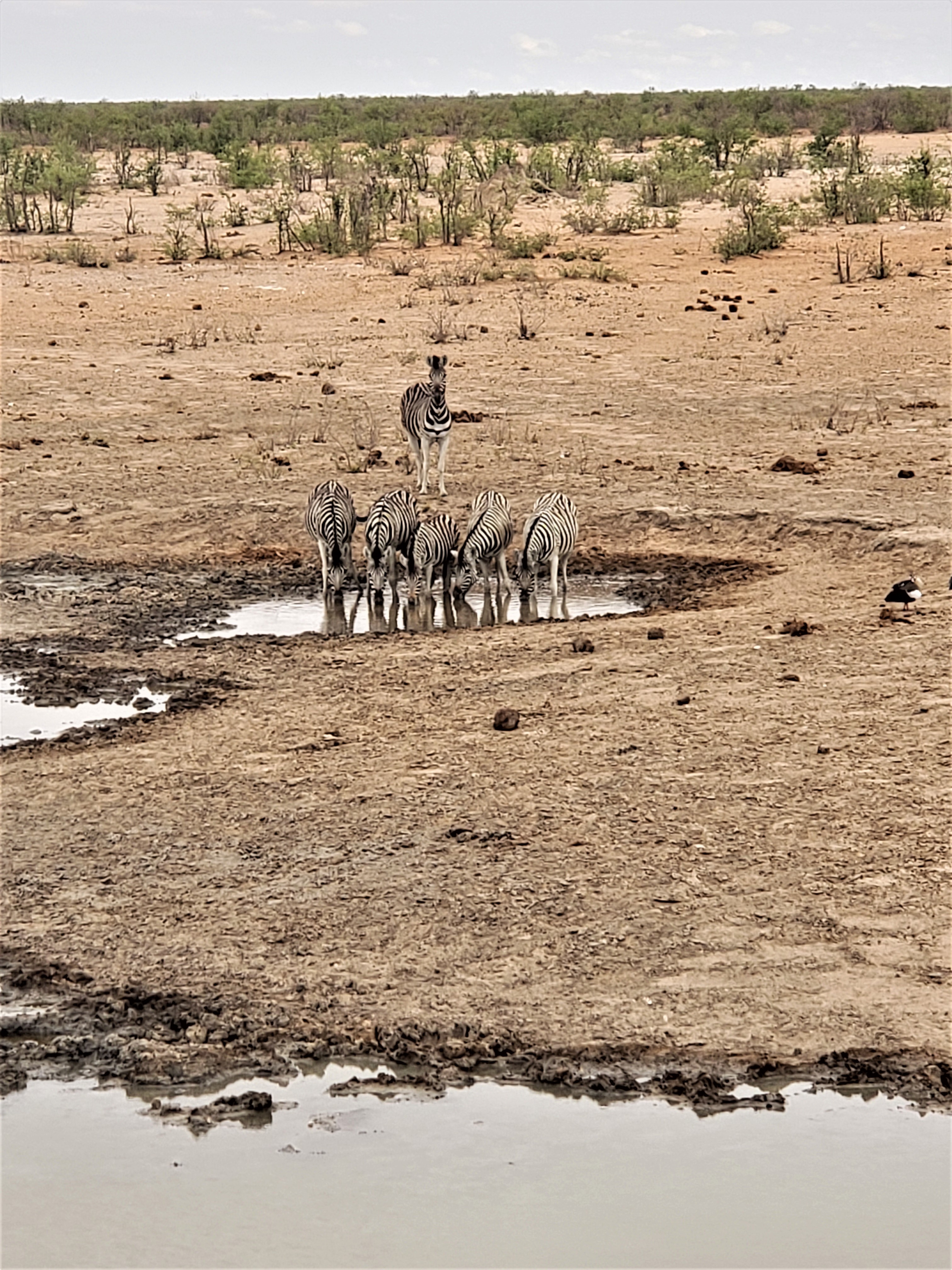
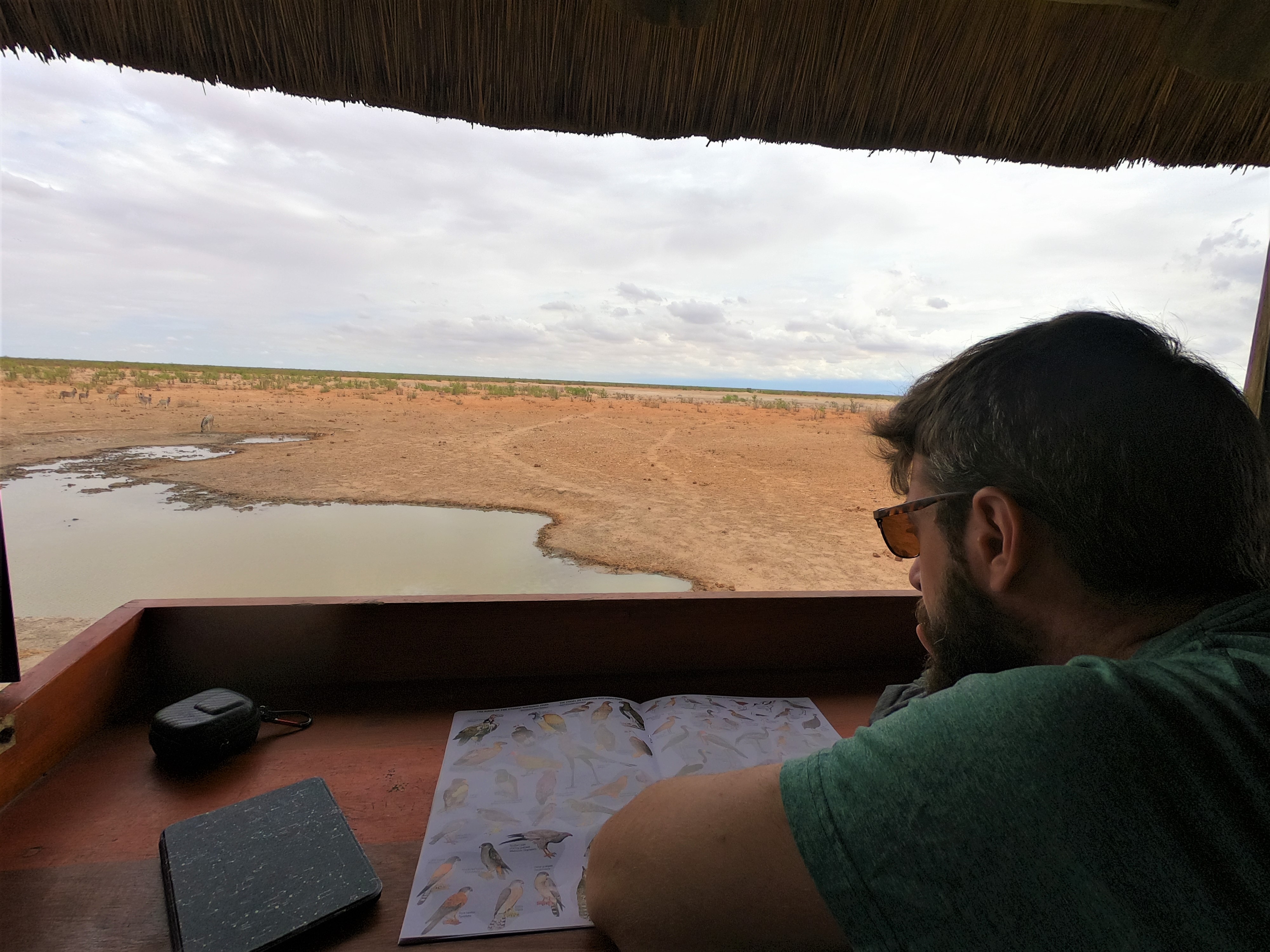
We had bacon and eggs again for breakfast then headed over to the viewing platform. We packed a bag and planned to spend the day their looking for critters. The benches are not particularly comfortable and you have to whisper so as not spook any animals, but we sat there for hours. We saw a few oryx some zebra, and even a jackal. The hardest things to identify are the birds, but Ryan’s becoming a pro.
Around noon a huge storm blew in and we had to run back to camp to put our tent down due to heavy rain and wind. Not wanting to be stuck in the car, we went back to the viewing platform but didn’t see anything. We stuck it out until 1:30 still not seeing anything, then went back to camp to start cooking lunch/dinner. Ryan got the fire going and made rice, chicken, veggies, and dumped a delicious korma sauce on all of it.
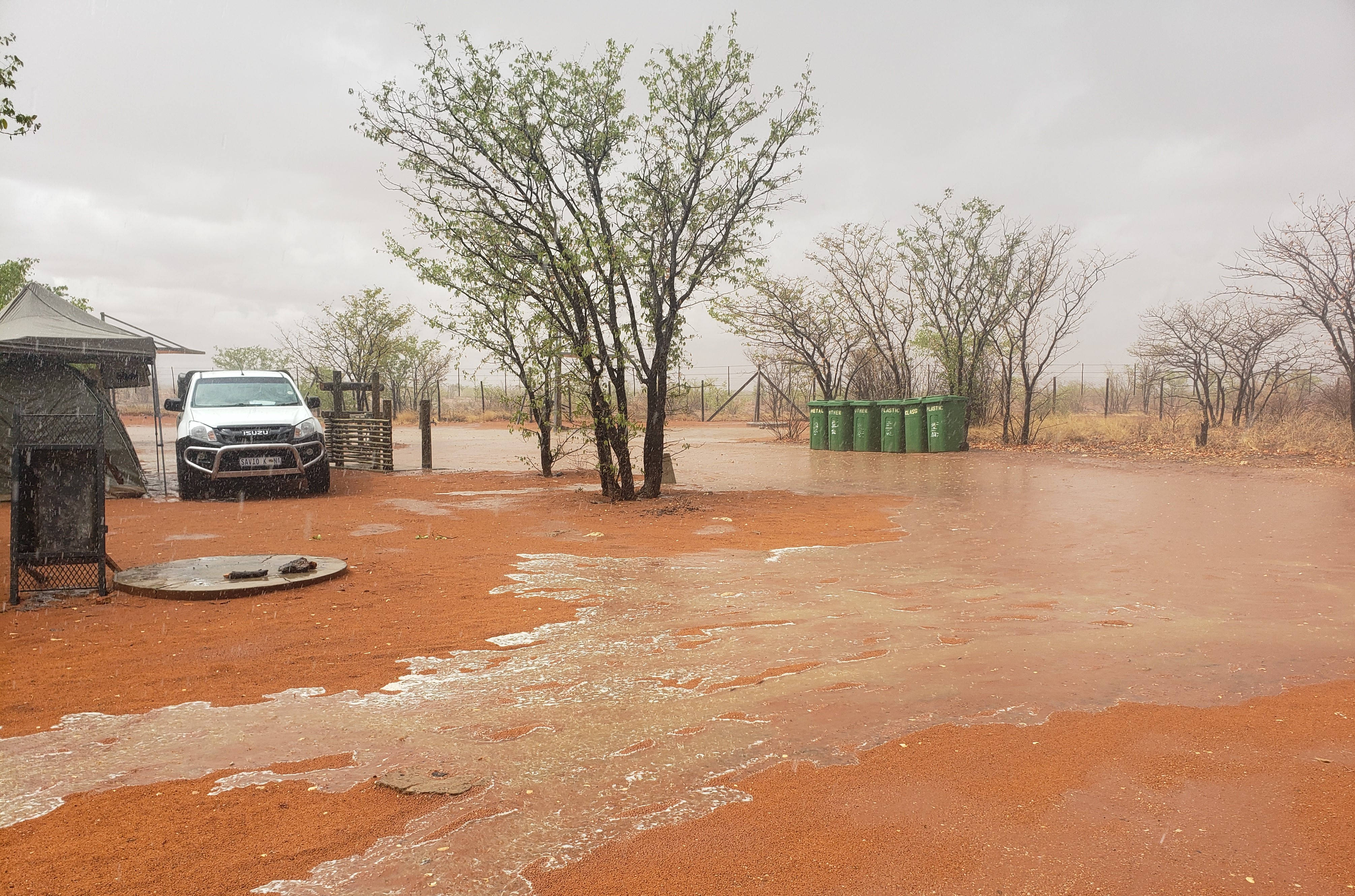
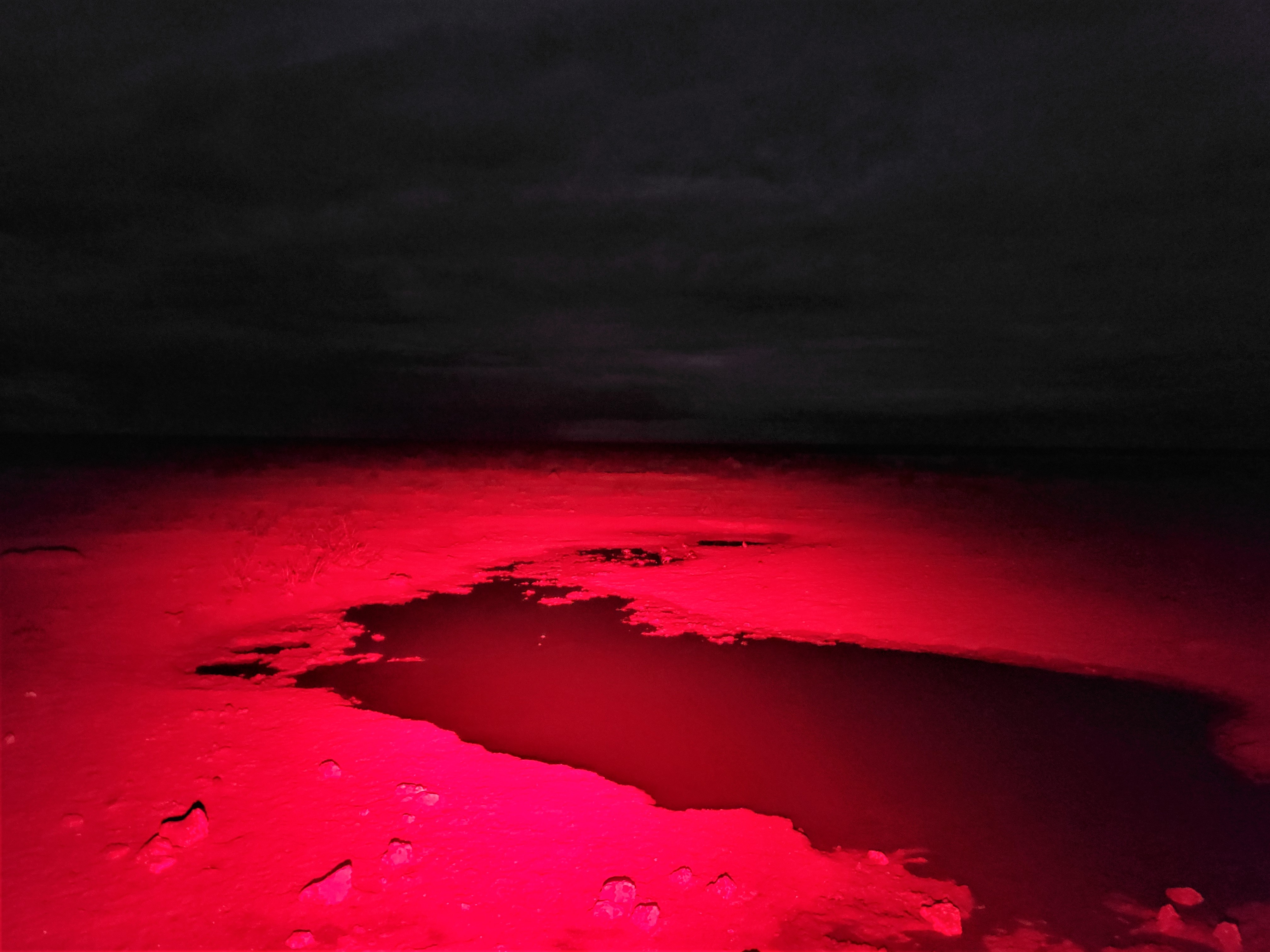
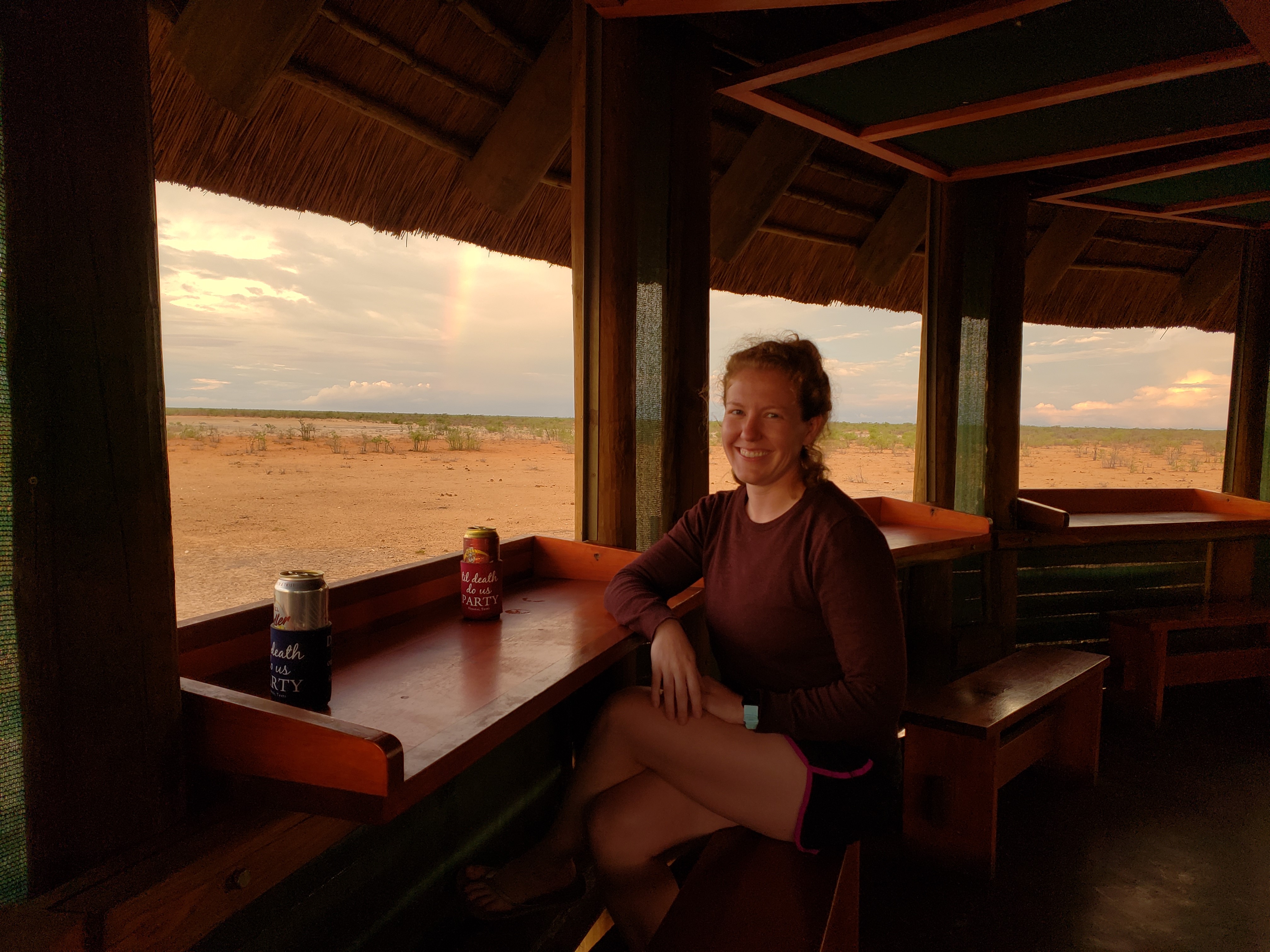
The camp was packed tonight, almost every space full. A group showed up without a reservation but since you can’t drive at night through the park, and they lock all the gates at sunset, they didn’t have much choice but find a place to pitch their tents. The cloud cover hid sunset from us but we walked back over to the hide around 8:30 to see if we could see any nocturnal animals. The night before they reported seeing hyenas between 9:30 and 10:30. The light the area up with red lights so you can see out into the watering hole. We lasted until 9:45 without seeing anything and were too tired to keep looking. It poured rain all night but we stayed cozy and dry in our tent.
Day 7 – Etosha Park – December 5
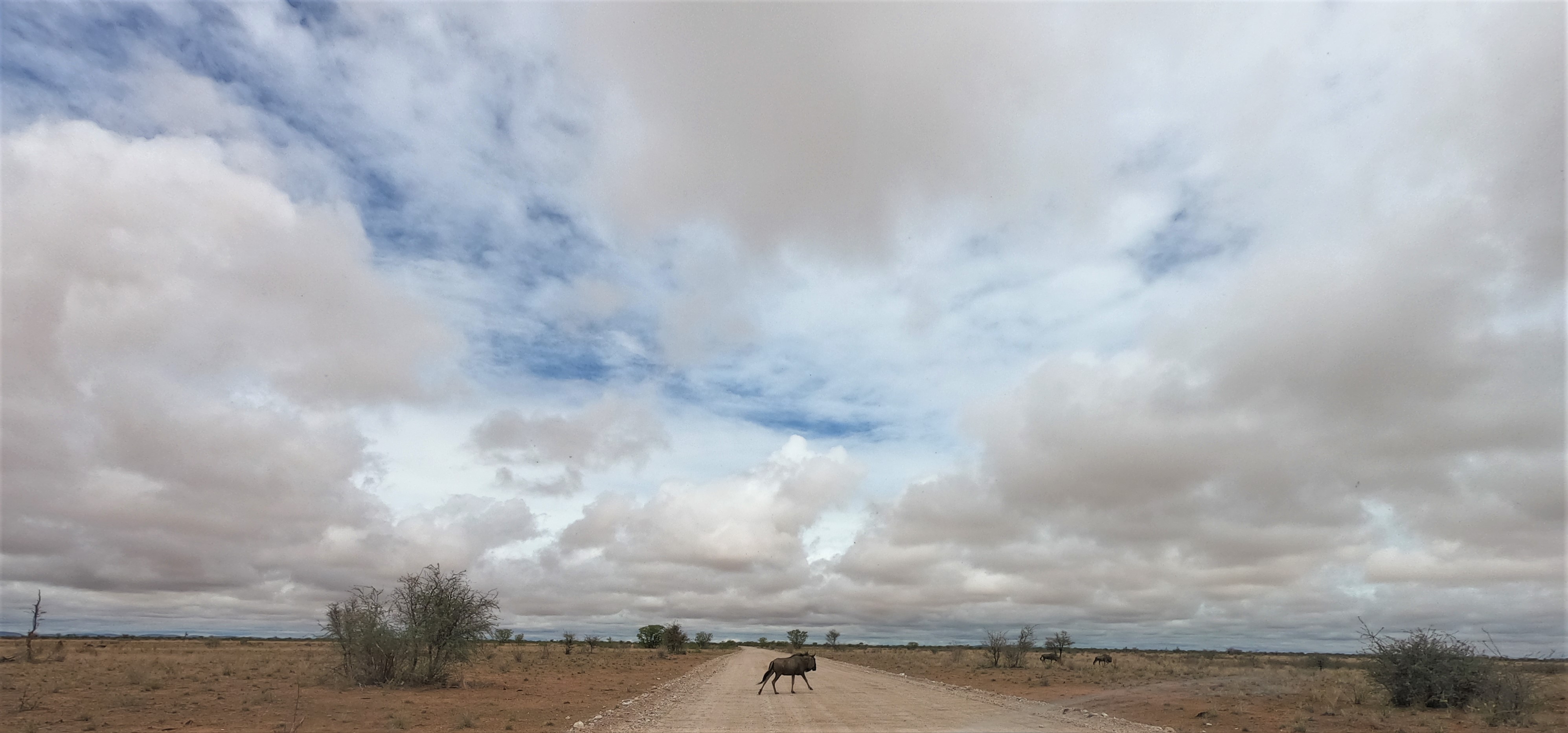
Since it was still cloudy when we woke up, we managed to lounge inside the tent until 7:30. We ate yogurt and granola for breakfast then packed up the car to do some more driving safari. We headed west towards Dolomite Camp and passed two watering holes. The holes were vacant but along our drive we saw more giraffes, wildebeest, springbok, oryx and zebra all around the edge of the road.
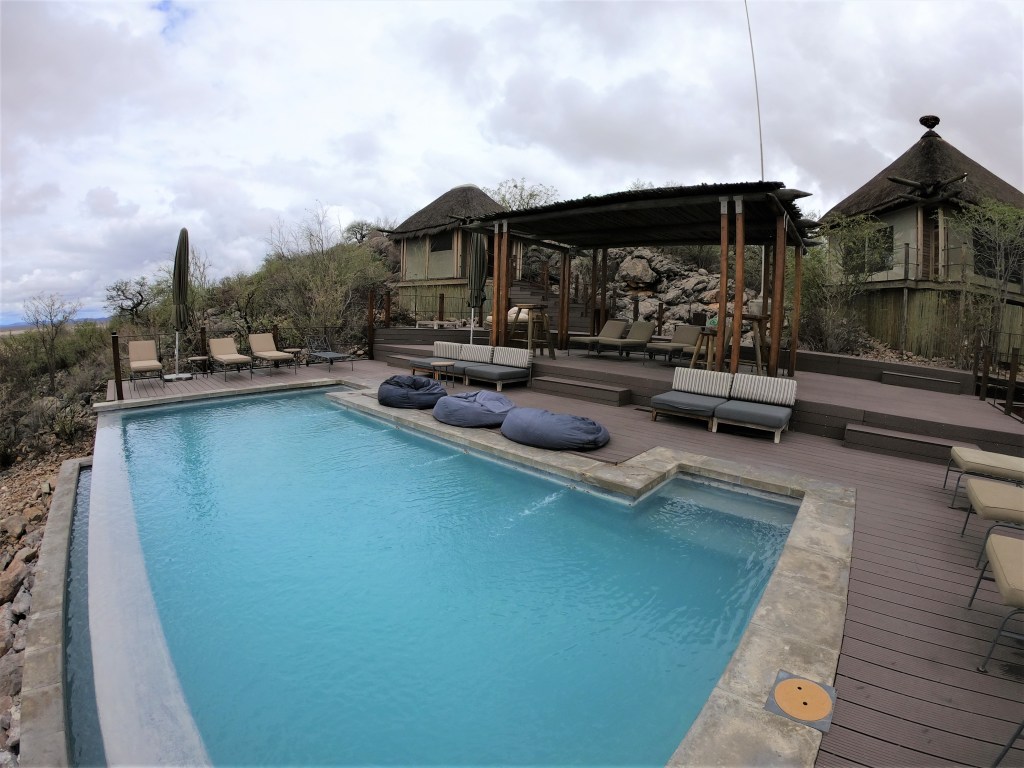
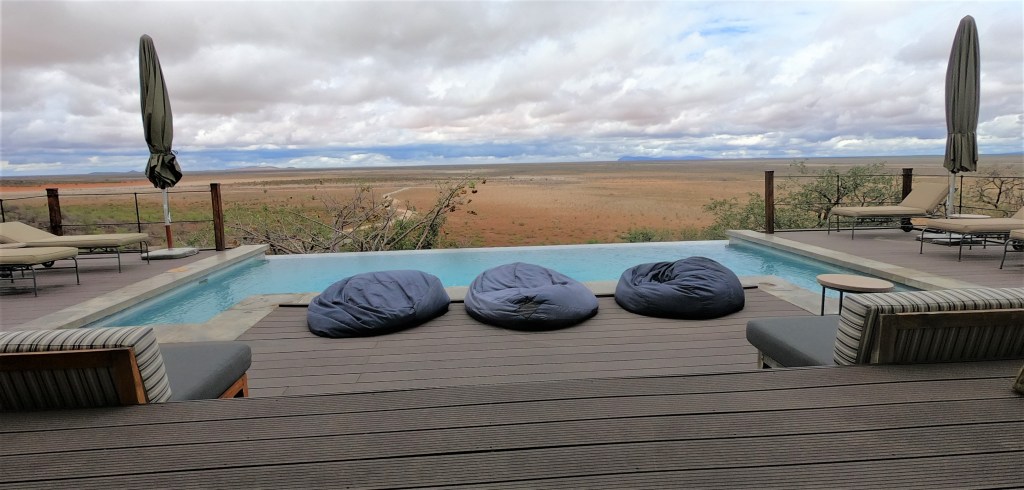
We arrived to Dolomite camp which is located along the ridge of a hill. The reception people weren’t super friendly, a common theme here, but we walked up to the pool to eat our PB&J and potato chips. The pool and rooms looked really nice with a great view and when Ryan asked about price, they said it was $340 per night with the special discount; there is a reason we are sleeping on top of a car. On our way out we read some of the guest comments and at least half of them were people complaining about the facilities or staff. We’ll spend our $340 elsewhere.
We drove back to camp checking the same abandoned watering holes. We saw more of the same animals and made it back right as a storm blew in. We spent the next several hours sitting in the cab of the truck as the rain continued to pour and pour. We had just enough time to sneak in a fire and make dinner. There is a raw food line in the north of Namibia where raw beef can’t be brought into the southern portion of the country due to disease concerns. We weren’t clear on all the rules, so for dinner we took all our leftover meat and put it in one giant pot, which actually turned out to be delicious. The campsite was empty tonight with just the family next to our camp. We kept the fire going until around 9 then climbed up to bed.
Day 8 – Palmwag – December 6
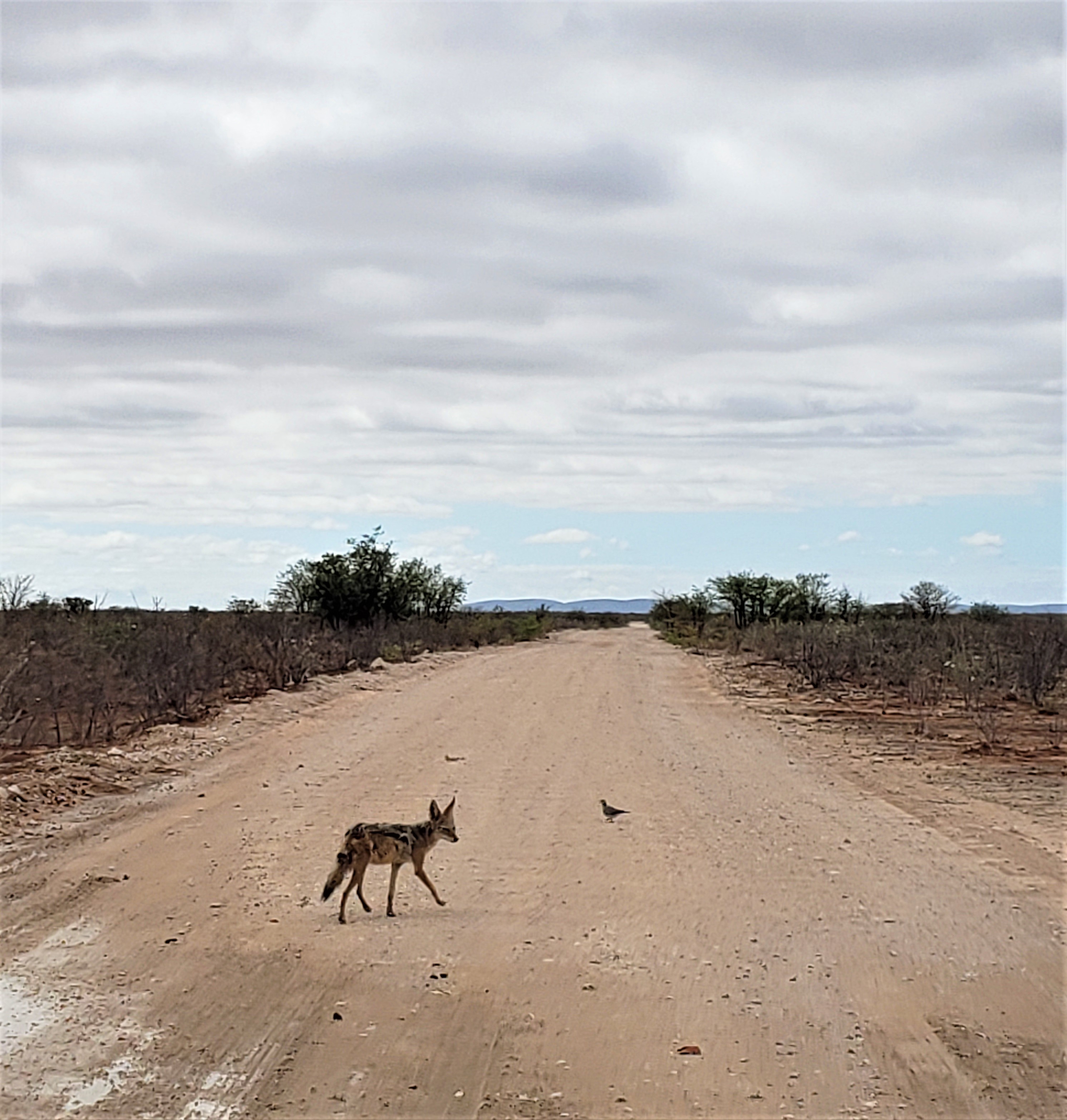
We packed up the tent and began our journey out of the park. We drove southwest towards the Galton Gate stopping at a couple watering holes along the way. We saw a few more Oryx and a couple of cute jackals. It took about an hour and a half to get out of the park, then we drove another hour to get to a town called Kamanjab to buy a few groceries. Buying groceries is always stressful because we are obviously tourists driving up in our rental car and you are immediately bombarded with people offering to “watch your car” or trying to sell you stuff.
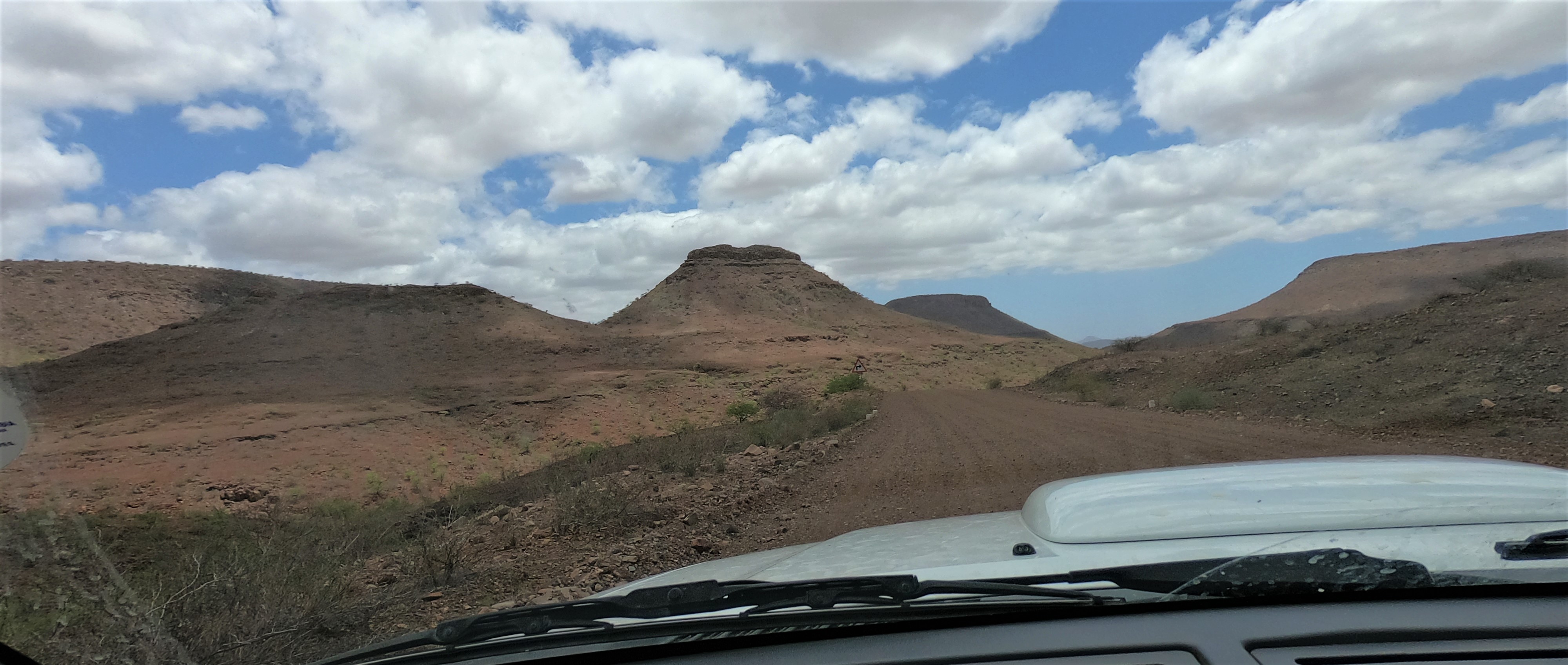
We bought our groceries and filled up on gas then hit the gravel roads. It was another 2 hours to our destination called Palmwag. We drove up the Grootberg Pass, this mountain pass is steep, gravel, and has zero guardrails- but Ryan sailed through without issue. The mountains were absolutely beautiful and a nice change in scenery from Etosha. Our car doesn’t have a phone input so we have been listening to whatever Namibian radio we can find. We stumbled upon a made-for-radio dramatization called Love is Not Rage. By the time we joined, in the story Doris was a survivor of domestic violence and her husband James was trying to convince her to come home. James was using language like “I own her” and “my family is my business”. The story consists of everyone trying to tell him that times are now changing and you shouldn’t hit or own your wife or children. The story wrapped up and apparently this is all part of a larger “Love is Not…” series, hopefully they can curb the domestic violence across Africa.
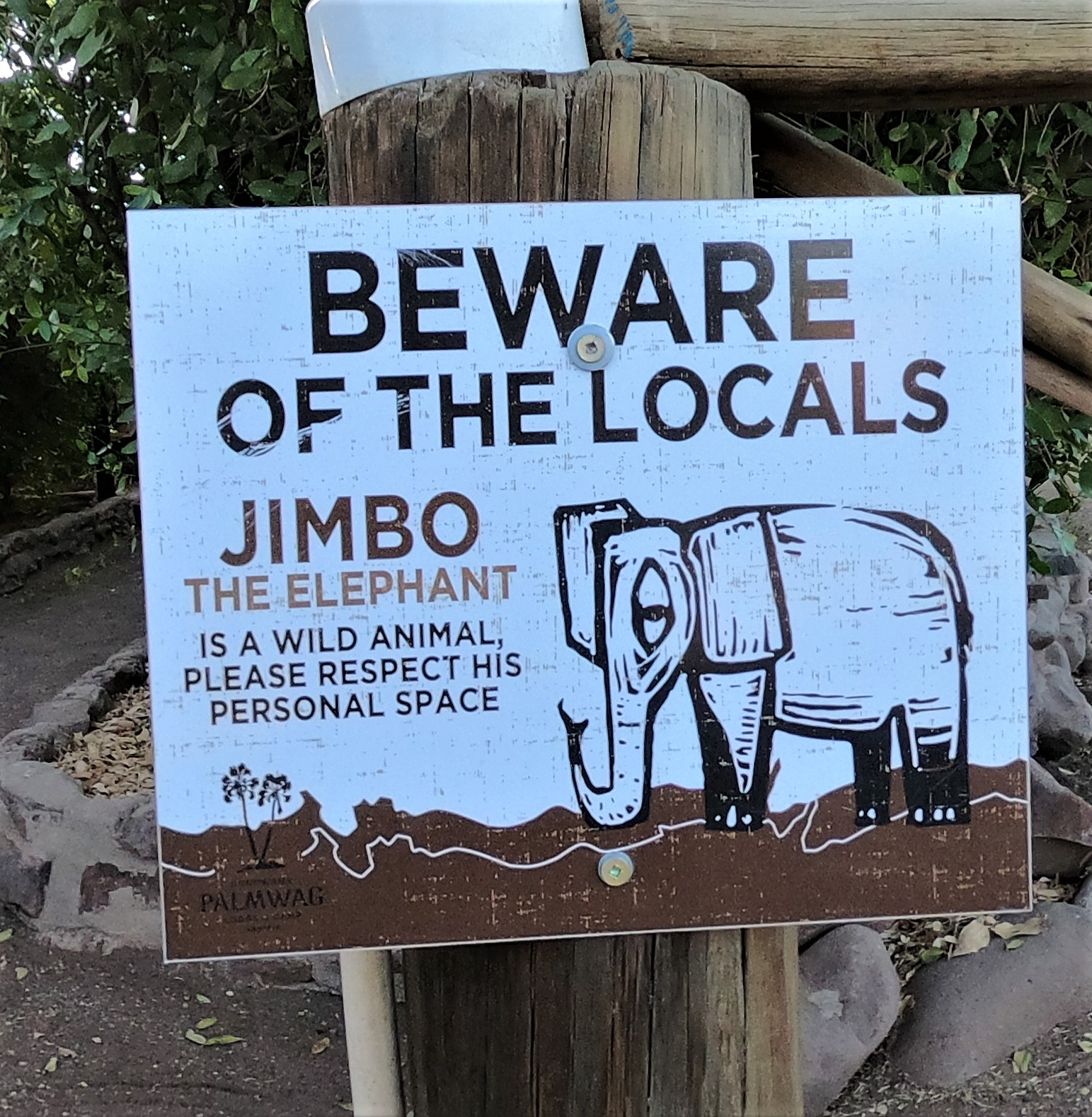
We ended up crossing the raw food boundary a second time, by about 5 miles, to get to our next site. The police officer was very friendly clarifying it was just for beef and as long as it was cooked, we could bring it back down. We’d bought all our meat in the south, but once it crosses the line it can’t be proven to have come from the south and thus must be considered contaminated. We pulled up to Palmwag Lodge and it was definitely one of the nicer places we were staying. Since they don’t have a fence around the property, we signed a waiver warning us of lions and elephants, though we never saw any. They said no one had been eaten yet.
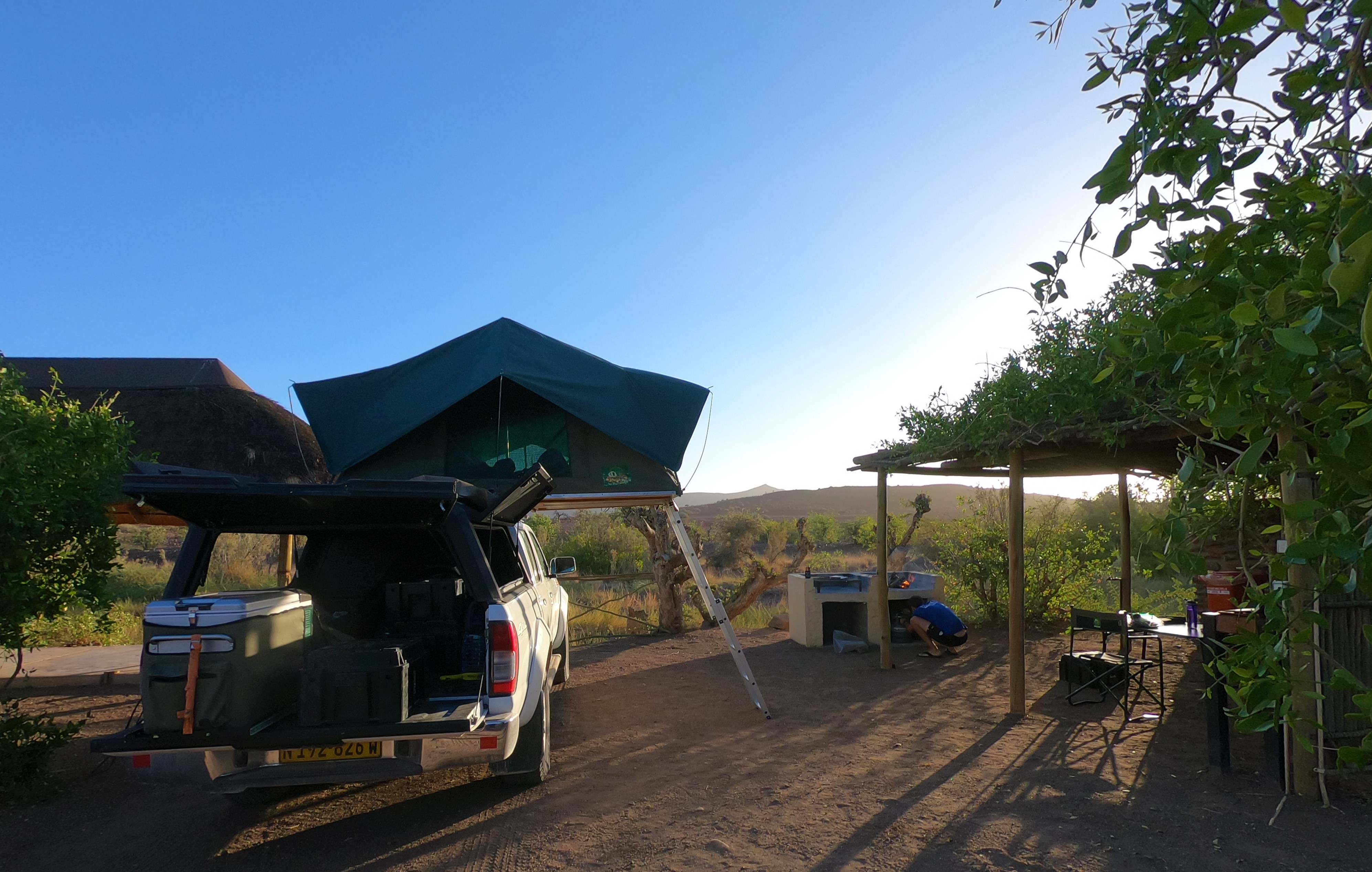
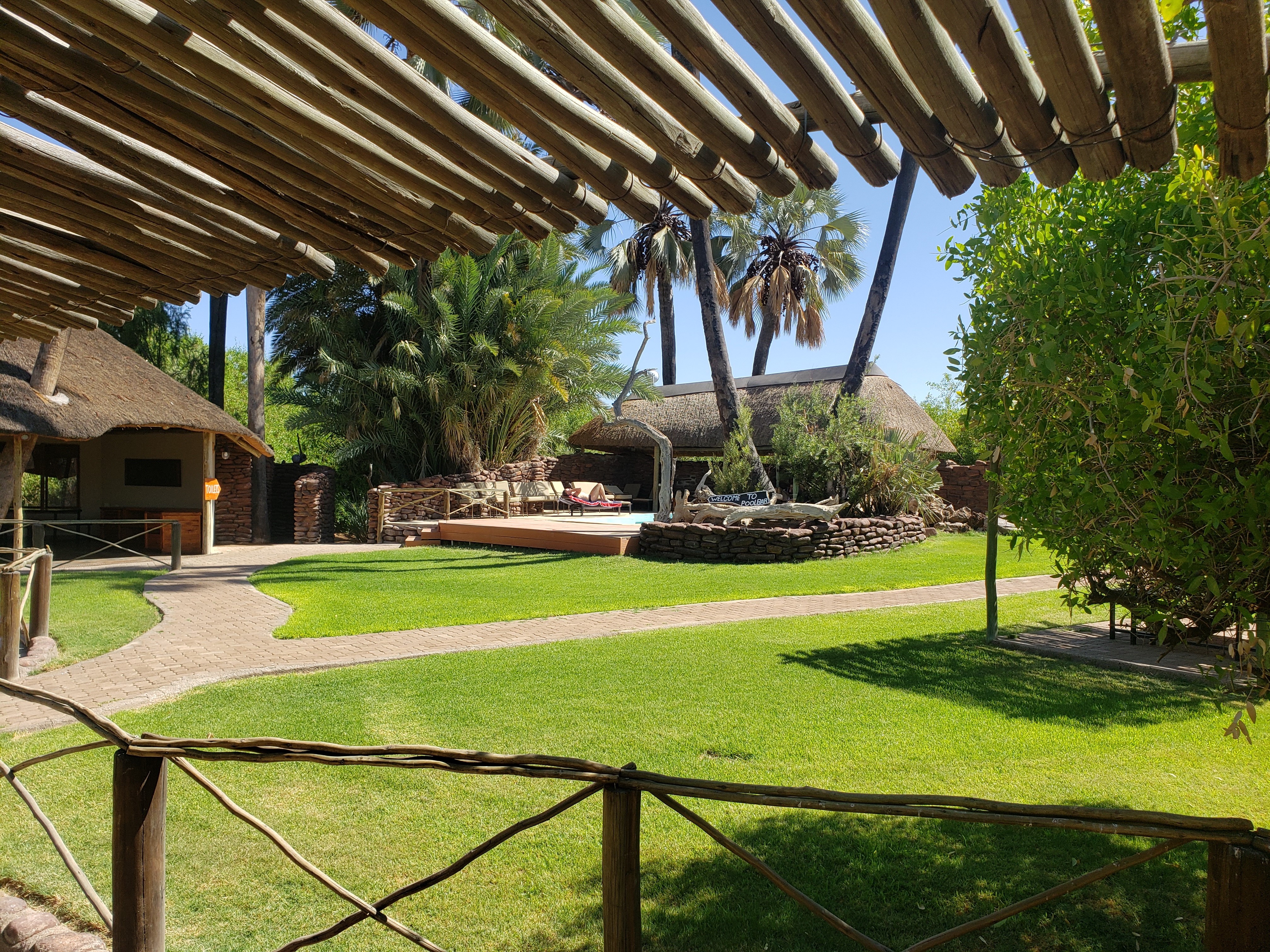
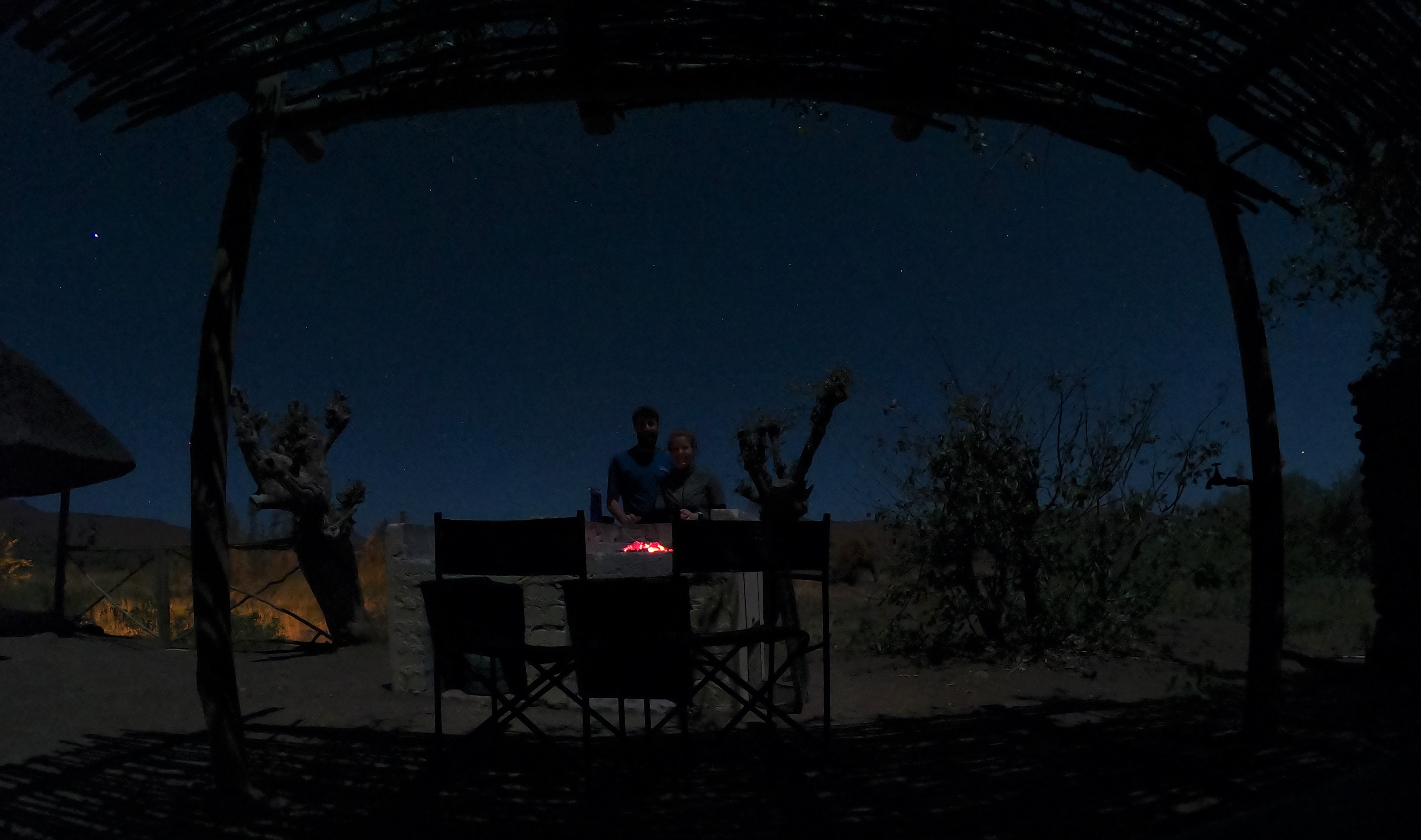
We spent the afternoon on their Wi-Fi hanging by the pool and splurged for a burger and draft beer. That night we sat at our incredible campsite eating sausage and vegetables overlooking a beautiful valley. After the sun set and we finally had a clear night and barely any light pollution. We realized the GoPro we’ve been carrying around for 5 months has an incredible night mode we never took advantage of.
Day 9 – Igowati in Khorixas – December 7
We were sad to pack up the next morning, so we stayed until our 10 am checkout to take advantage of all the internet we could. We still had to buy our plane ticket leaving Namibia. Finally back on the gravel road, we drove 1.5 hours through more mountains to the Petrified Forest, Versteende Woud. The roads are like a crazy rollercoaster with a lot of blind hills.
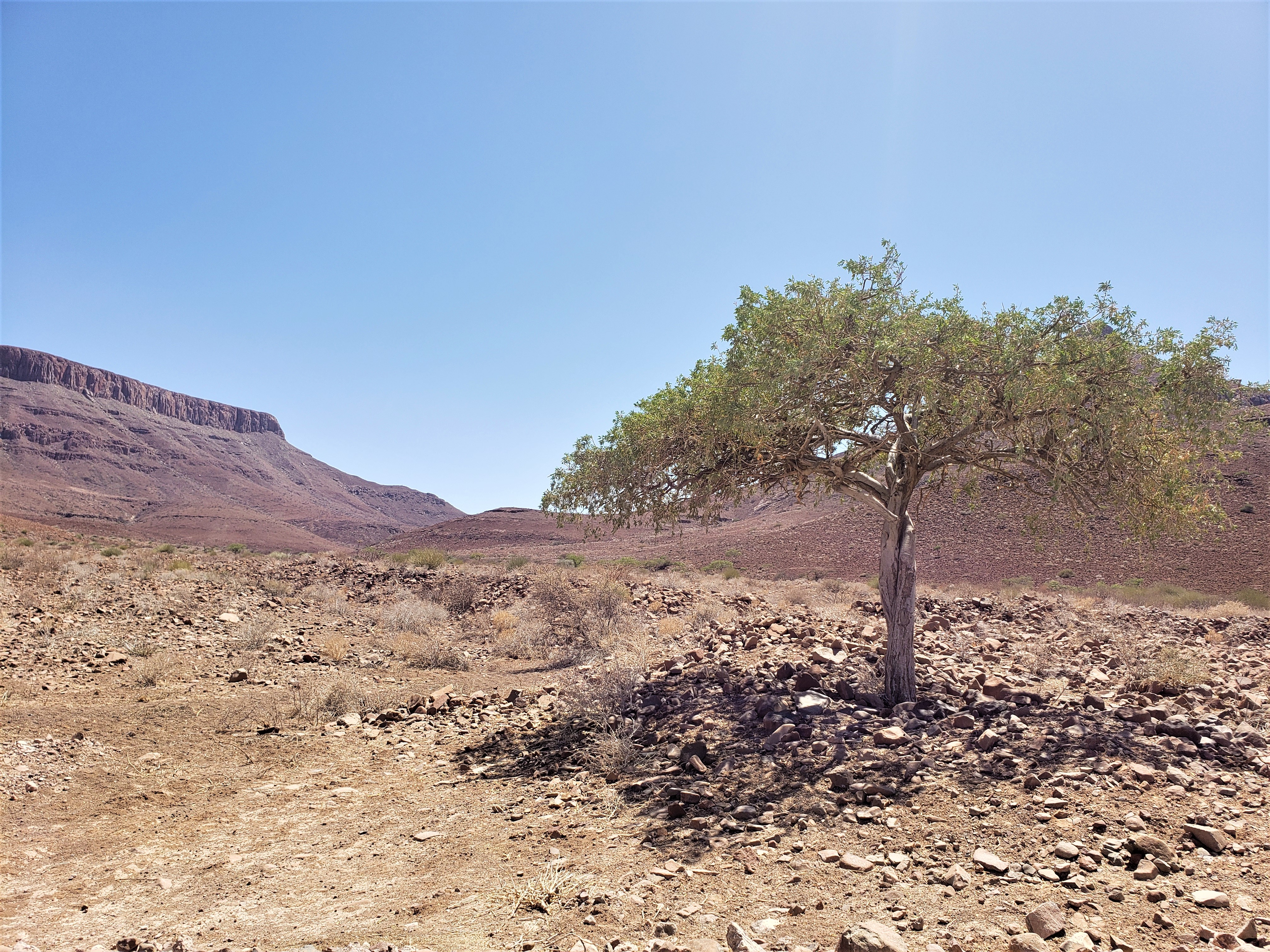
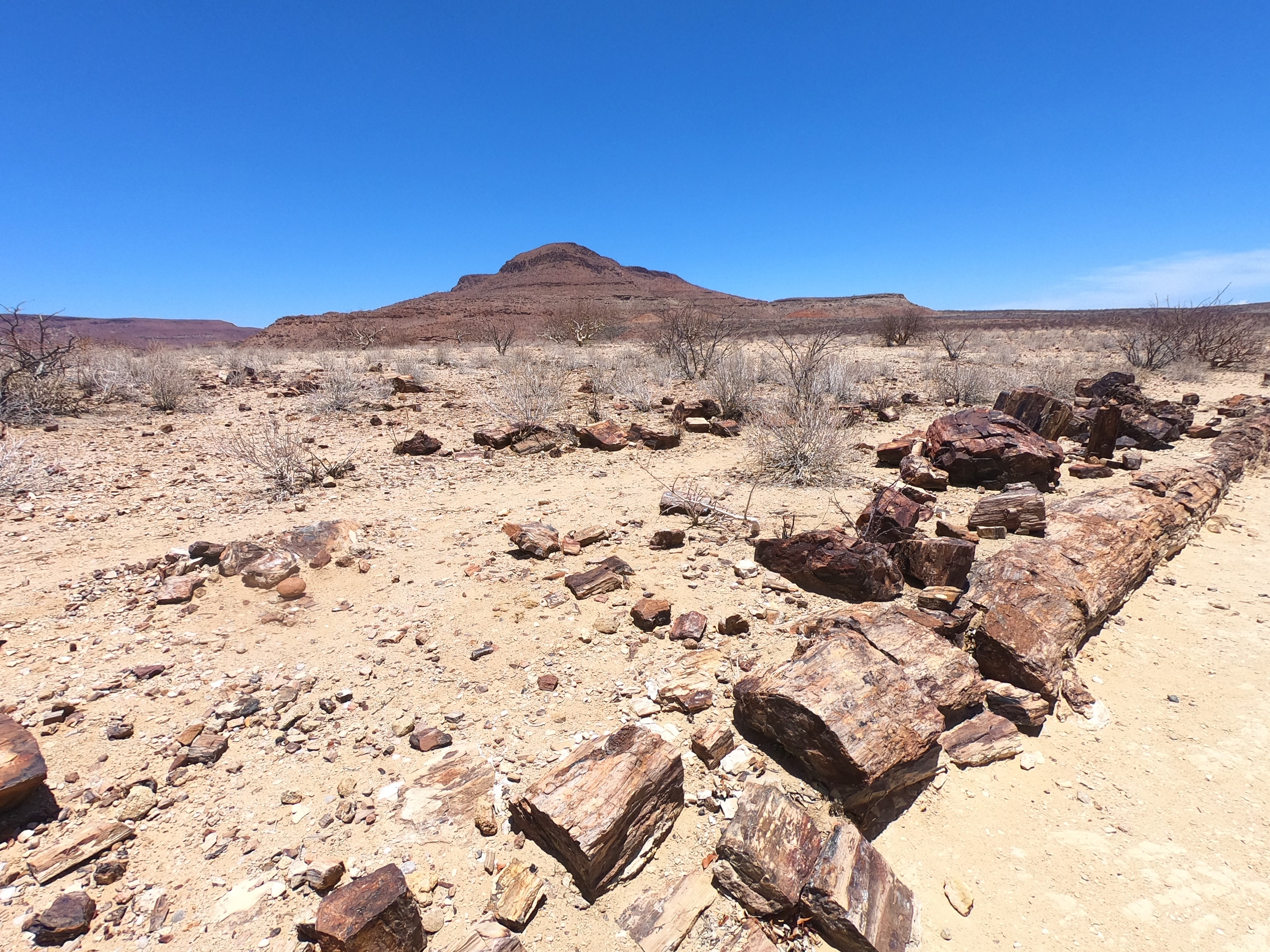
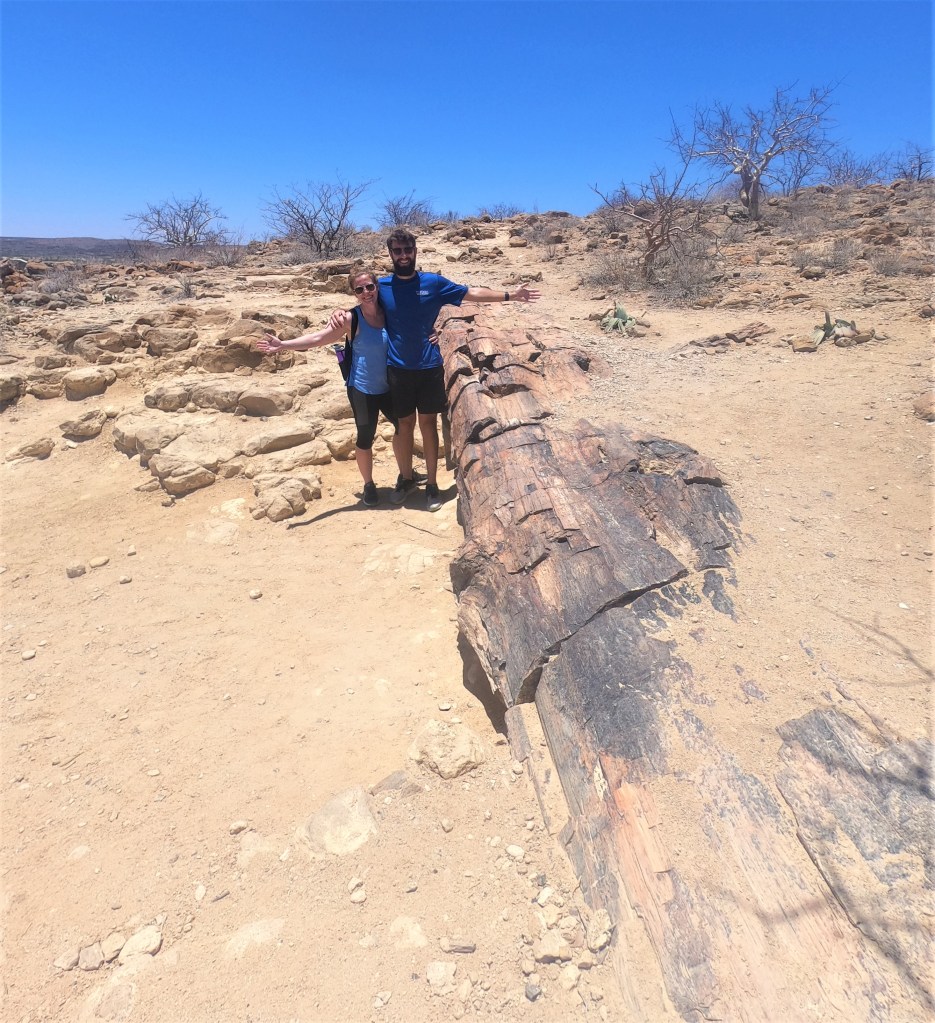
The Petrified Forest was discovered in 1940 by a few farmers and despite its name, isn’t really a forest. The ground is covered by fossilized pieces of wood that traveled from central Africa all the way to Namibia. The largest trunk is 37 meters in length. The cells of the tree were replaced by silica, magnesium, and iron when the tree was buried by sands and has been slowly uncovered by erosion. This, like our campsite in Etosha, are projects of the Millennium Challenge Corporation, founded by President George W. Bush to boost economic growth and reduce poverty in developing countries. Our tour guide told us about the program and how the US provides funds to build homes and facilities for the park workers and gives them training.
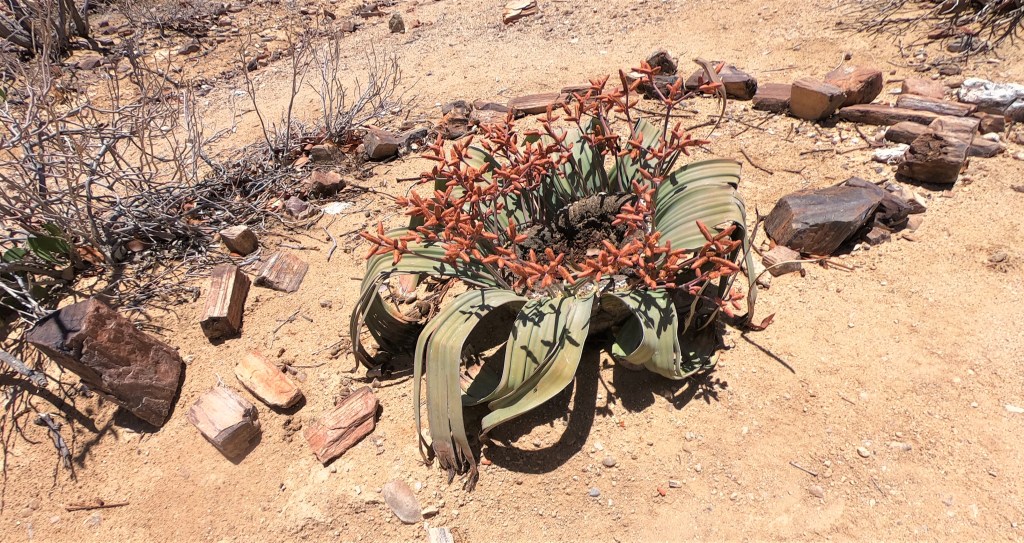
He walked with us for about 30 minutes all around the broken wood fossils, which littered the ground. We also got to see the national plant of Namibia, the Welwitschia, which is endemic only to Namibia and southern Angola.These plants can live for over 2000 years and the two we looked at were children, at 200 years old. You can also tell the difference between male and female by the inside having pollen or cones. We saw one that was 15 years old, which is too young to even have revealed its gender, which happens when it’s 20 years old.
We got back in the car and drove another 30 minutes to the town of Khorixas where we were staying at the Igowati Hotel and Campsite. The staff were super friendly and the lodge is not particularly busy; we are the only campers. They even helped us fix our clogged propane tank. We walked across the street to the small grocery store to buy more beer and chips, only to find out they don’t sell alcohol in Namibia after 1 pm on Saturdays nor all day on Sunday. Ryan will have to ration.
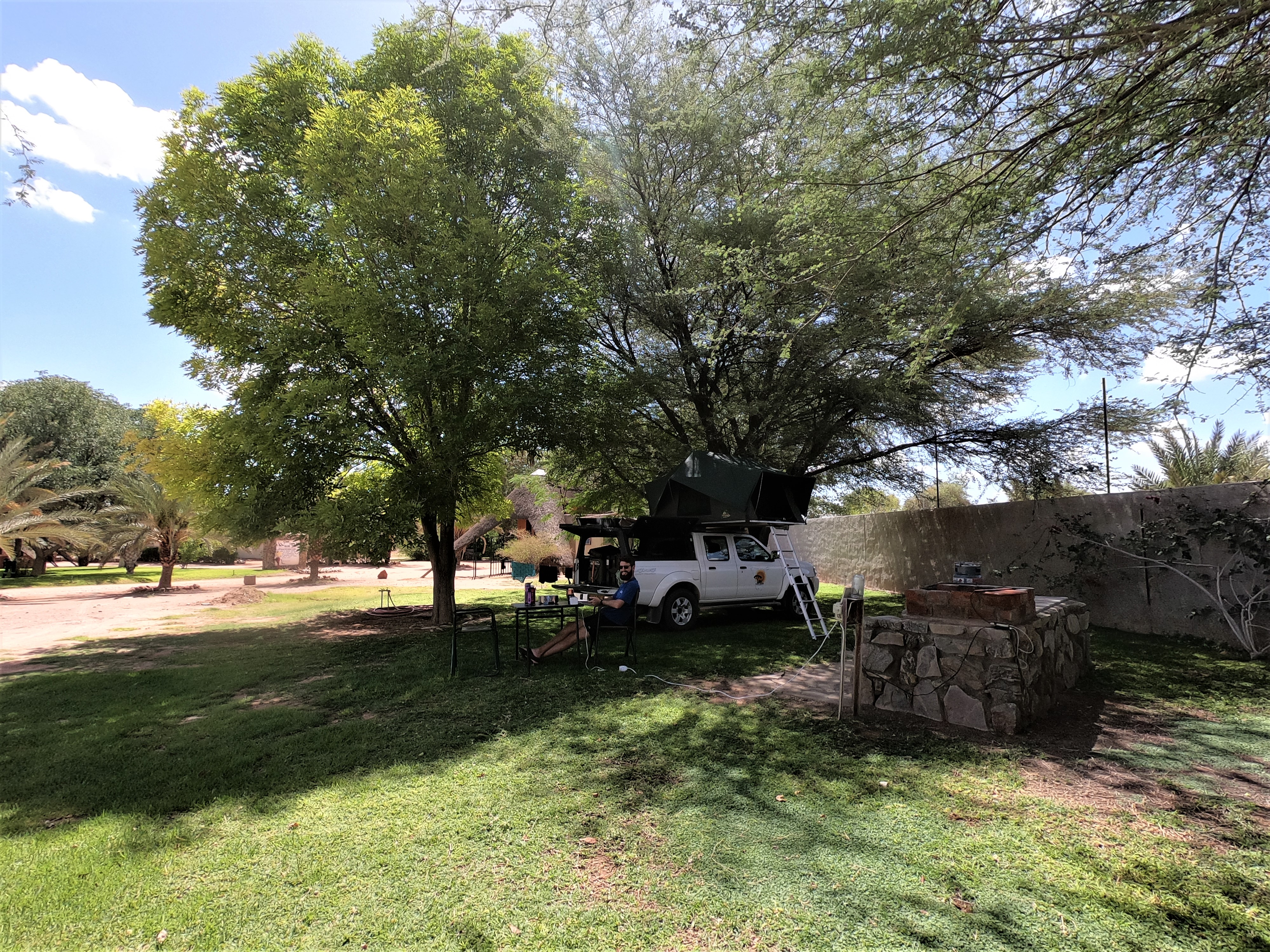
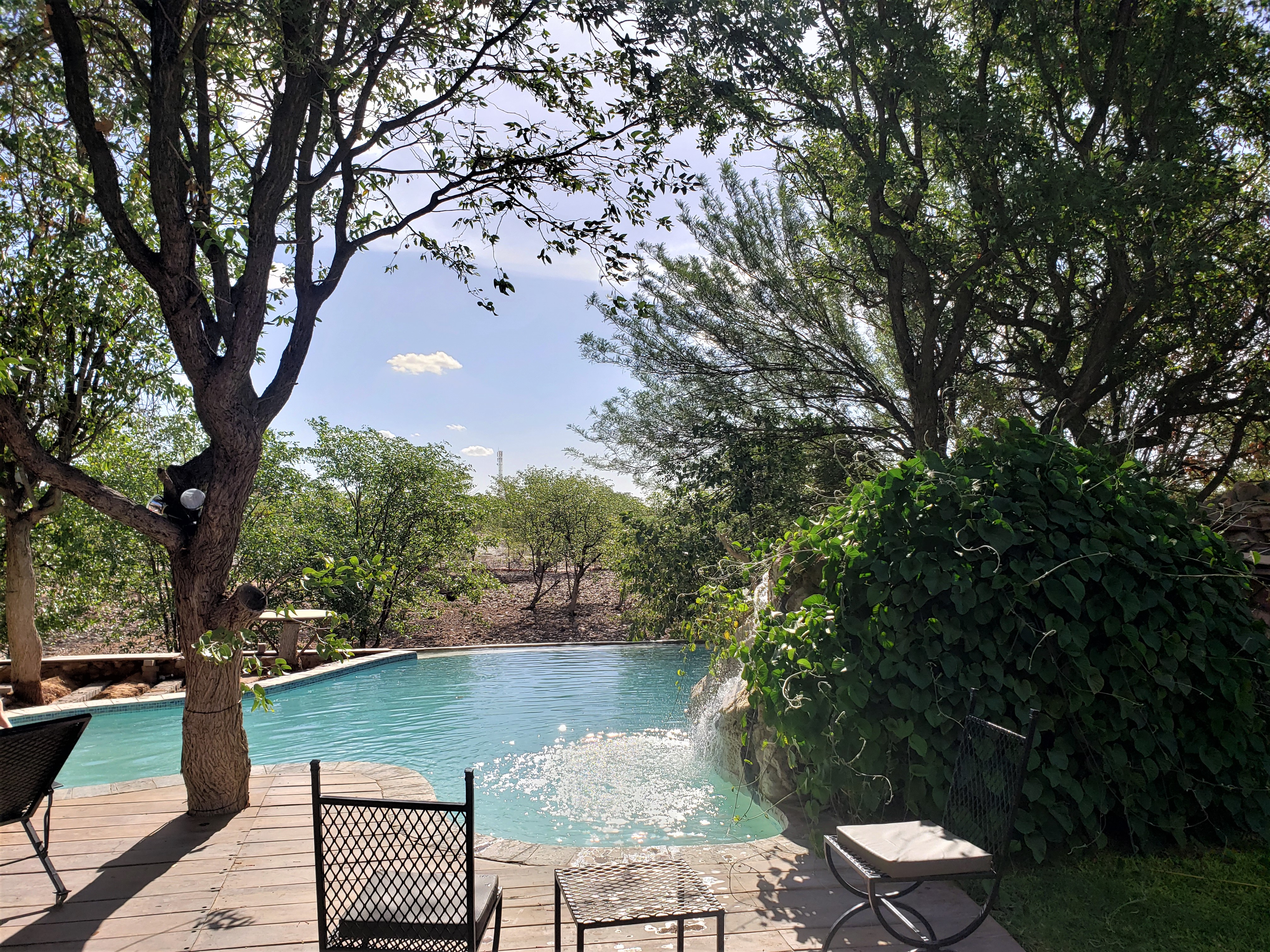
We spent the afternoon enjoying more Wi-Fi and lounging for a bit at our pool then the campsite in the shade. There were even some springbok and peacocks walking around. That night Ryan wasn’t feeling great so we made popcorn for dinner and lounged to our hearts content.
Ryan took a turn for the worst later that evening and began violently puking. It was around 9 pm and the house across the street was apparently the town’s nightclub and bar, or so we assumed from the blaring music and partying noises. Poor Ryan was having to climb up and out of the tent to horrible, loud music just to be sick. Eventually we got the security guards to open a room so he could sleep near a toilet. They charge everything per person here, so Elizabeth slept in the tent.
Day 10 – Spitzkoppe – December 8
Thankfully when we woke up Ryan felt much better, he hadn’t slept much the night before but the demon was purged. It was hands down the worst stomach illness of his life. The only thing we ate that was any different were the ice cream bars from the store, so maybe that did him in. Betrayed by his sweet tooth. We loaded up and hit the road headed for Spitzkoppe, a large granite mountain formation that’s known for good rock climbing. We wouldn’t be climbing there as it’s summer and the rocks are super hot to the touch.
It was a 3-hour drive and Elizabeth finally had to learn to drive stick. Ryan was a good and patient teacher and she eventually mastered it on the empty gravel roads driving on the left-hand side and shifting with her left hand. It only got sketchy when children would try running up to and/or in front of the car to entice us towards their families’ craft goods pop-up on the side of the road when we were cruising at 80 km/hr.
Eventually we found the park and had our choice of campsites. The park is pretty large, somewhere around 5-10 miles wide and there are plenty of remote sites. We drove around and finally settled on spot 11B in the western portion of the park, allegedly with the best sunset views. We set up tent with the sun already burning us.
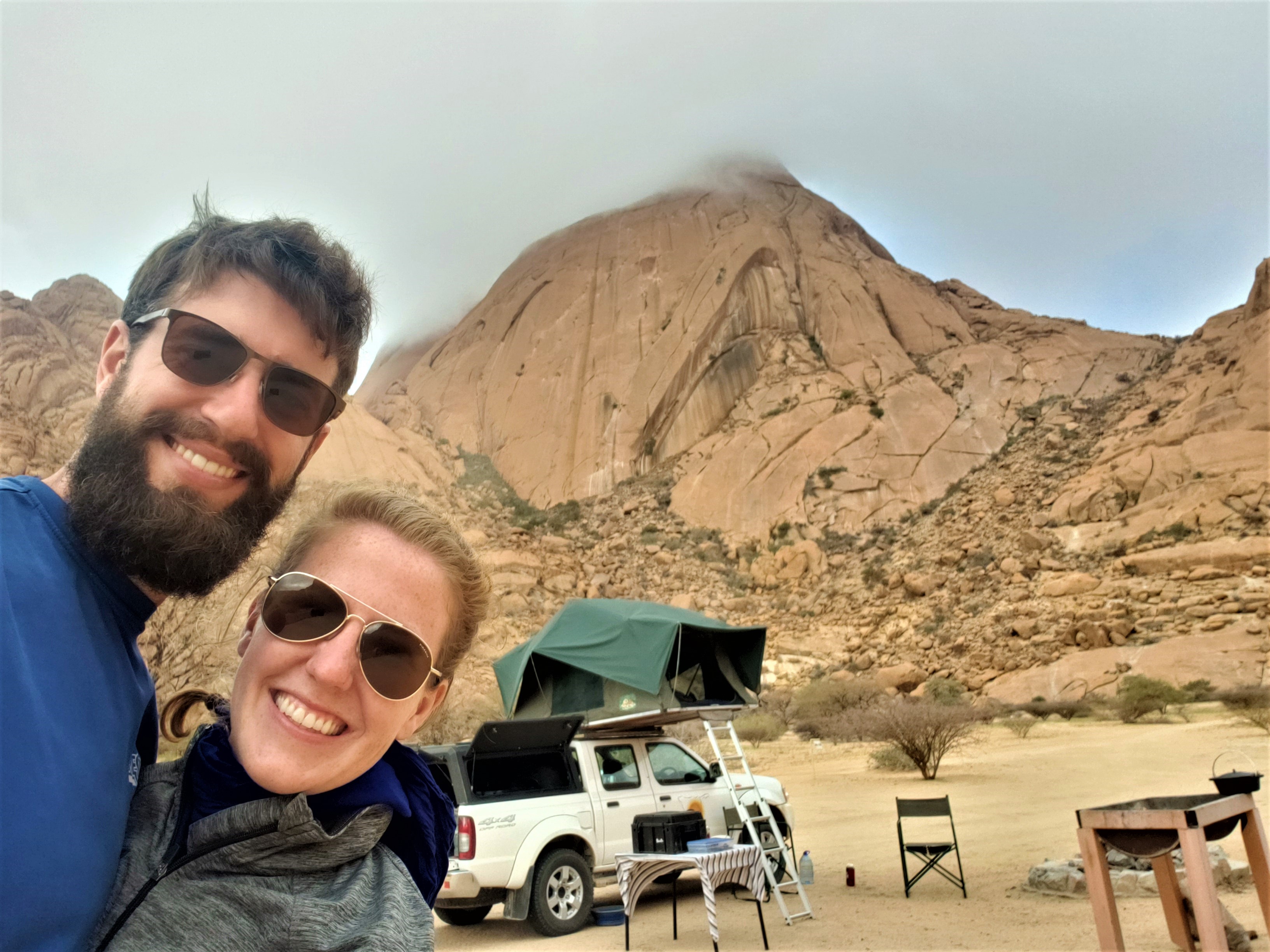
After Billy goat-ing around (what Elizabeth calls hiking and climbing around) on the rocks for a while we found a section in the shade and watched the clouds dissolve in the sun. This place is paradise for scrambling around on rocks without having to risk life and limb. A man came around our site asking for food in the afternoon, he was wearing what appeared to be an official park shirt, but didn’t speak much English. We gave him a PB&J and some water and he was on his way. These sites are remote without running water or electricity and the bathrooms don’t have running water. We saw other staff driving around in a pick-up truck, but this guy was just walking. Ryan’s not convinced he worked for the park at all, but we weren’t going to refuse him a sandwich.
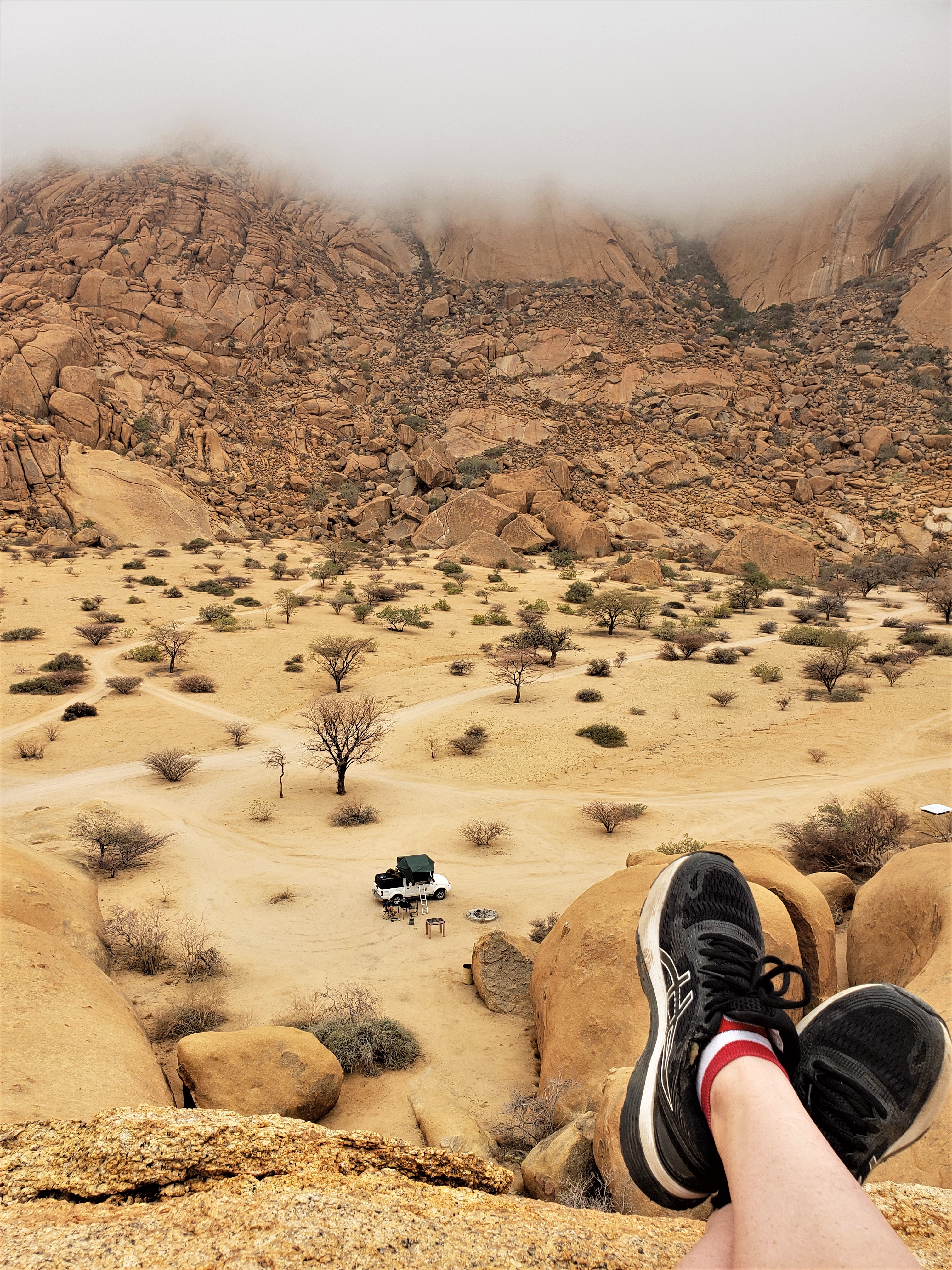
As the sun began to set, clouds rolled in. Elizabeth was very disappointed as this is supposed to be a great place to view stars. We made pasta for dinner then climbed in the tent as the wind picked up and the temperature dropped. That night we lazed in the tent finishing Out of Africa and enjoying the cold.
Day 11 – Spitzkoppe – December 9
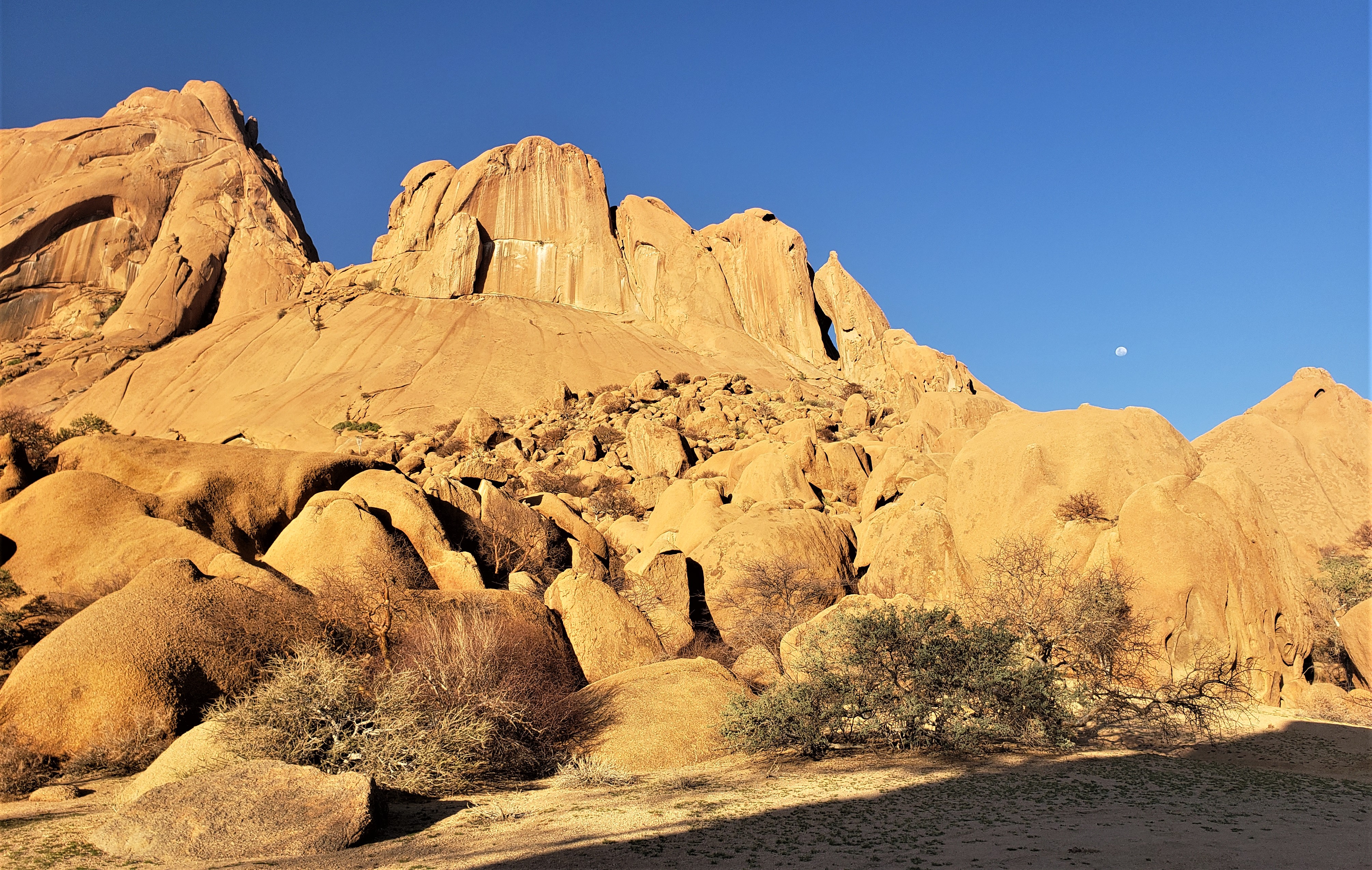
We woke up to thick fog and chilly weather. The mountains that once loomed over us were now completely shrouded in haze. The breeze had died down, so we cooked up some oatmeal and hot tea over our newly fixed burner. It might actually be too strong now; we’re worried we’ll burn through all of our gas before we return it! After finishing breakfast and cleaning up we decided to scamper over the rocks around our campsite. The fog was slowly receding, but the sky was still blanketed in thick gray clouds. Ryan had to put on his jacket for the first time since leaving Europe. We even saw a couple of adorable rock dassies scampering around. (They are right in the middle of the below photo).
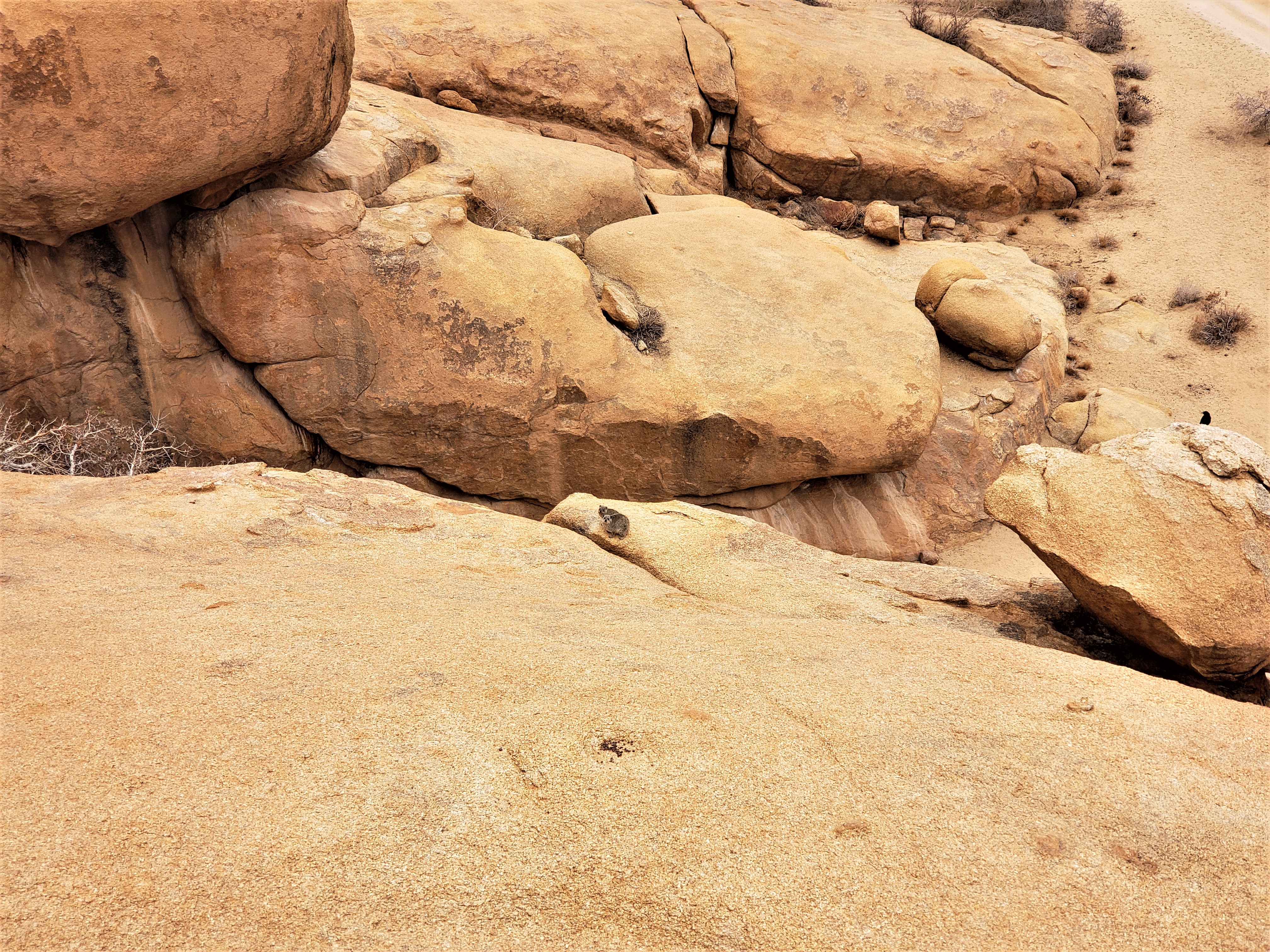
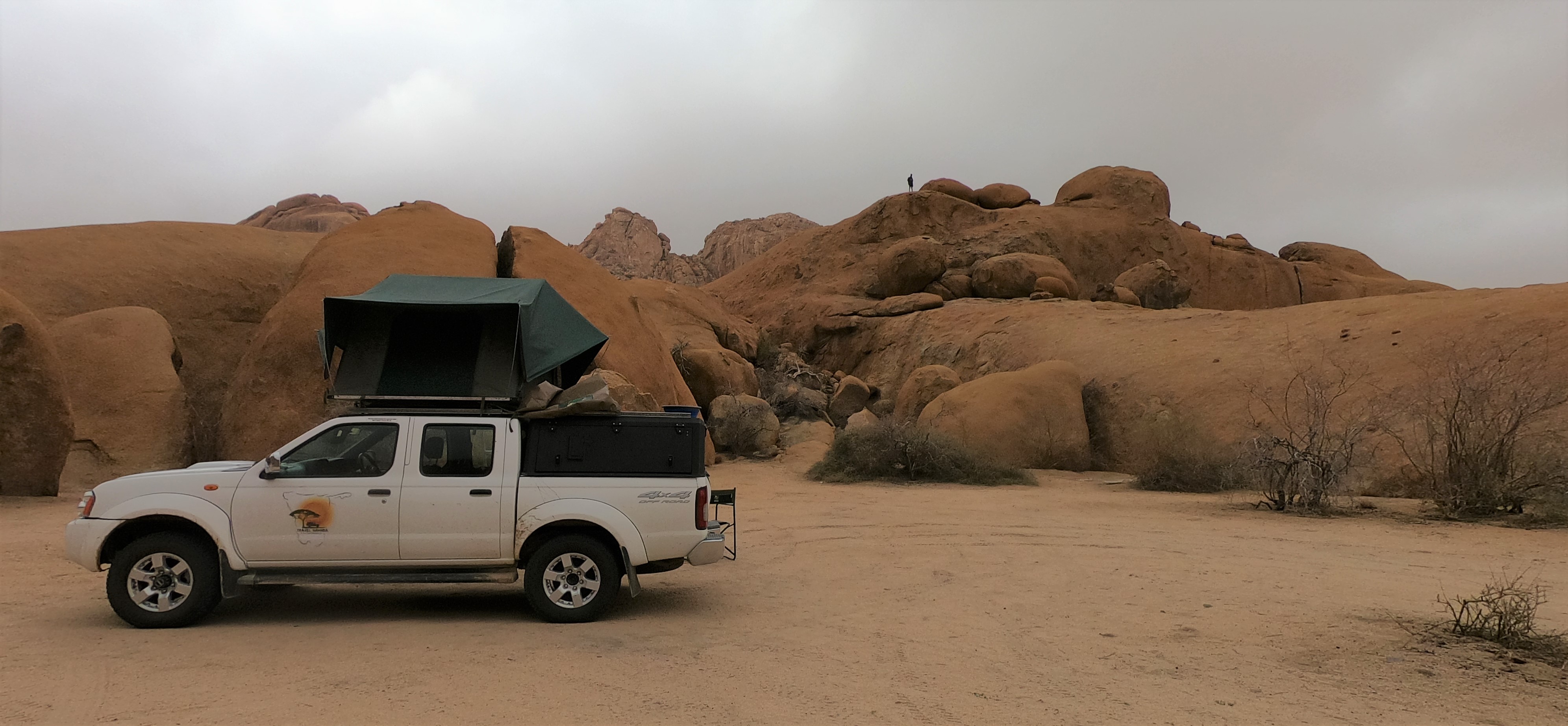
After an hour of Billy goating and trying to get a cell signal we decided to hike back over to the main area to see the rock bridge and the rock pool. It was about a 2-mile hike over the gravel roads between different fallen rocks. Eventually we made it to the rock pool formation and the sun was out in full force. We walked up the incline of the mountain and found a pool that was part natural and part dammed up full of murky water. We laid in the sun for a bit, but didn’t get in.
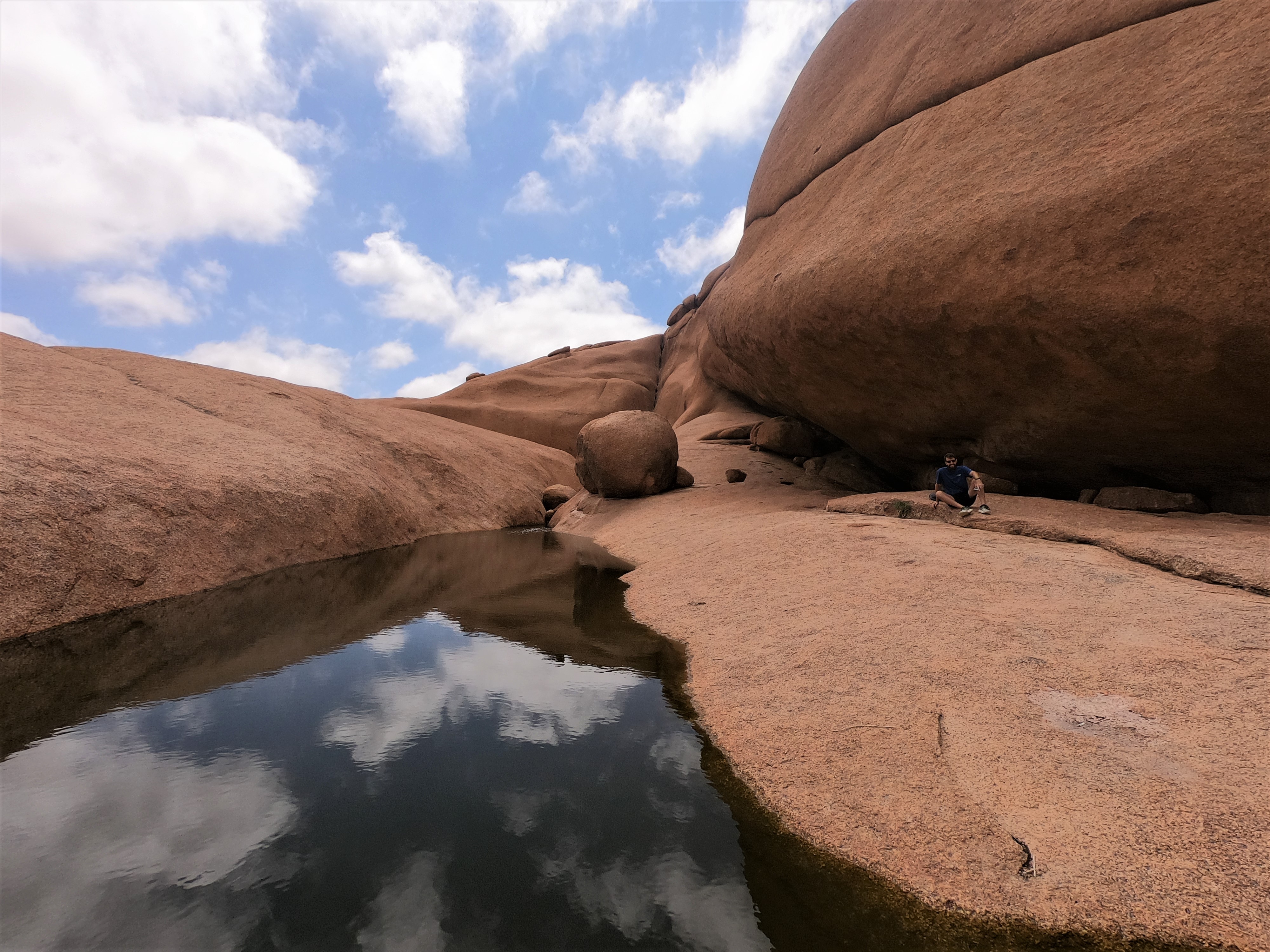
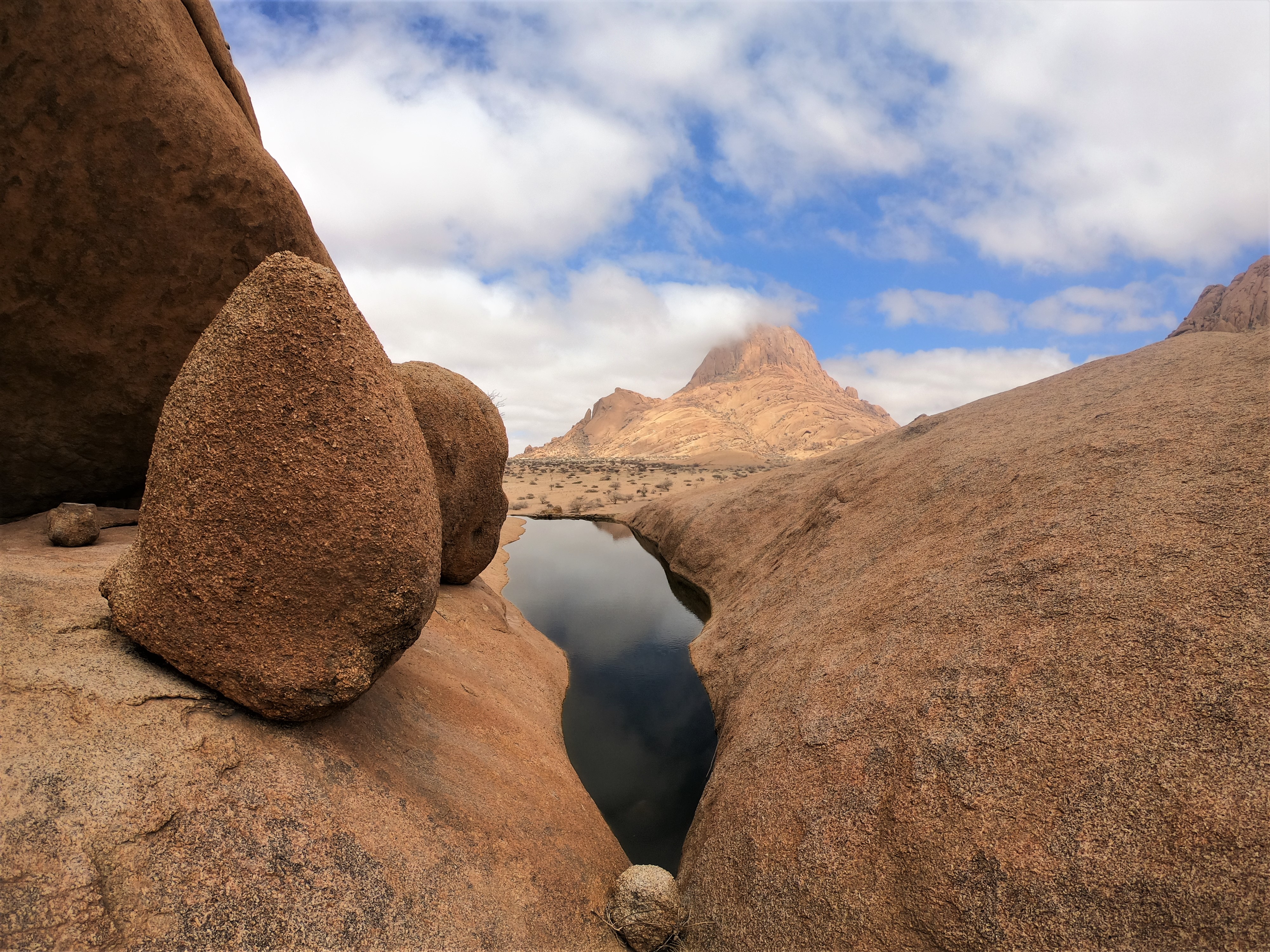
We realized we could safely make it all the way to the top of the formation by walking up more steep inclines and headed to the peak. The rocks are sharp and we cut ourselves from time to time but the hike was overall quite easy.
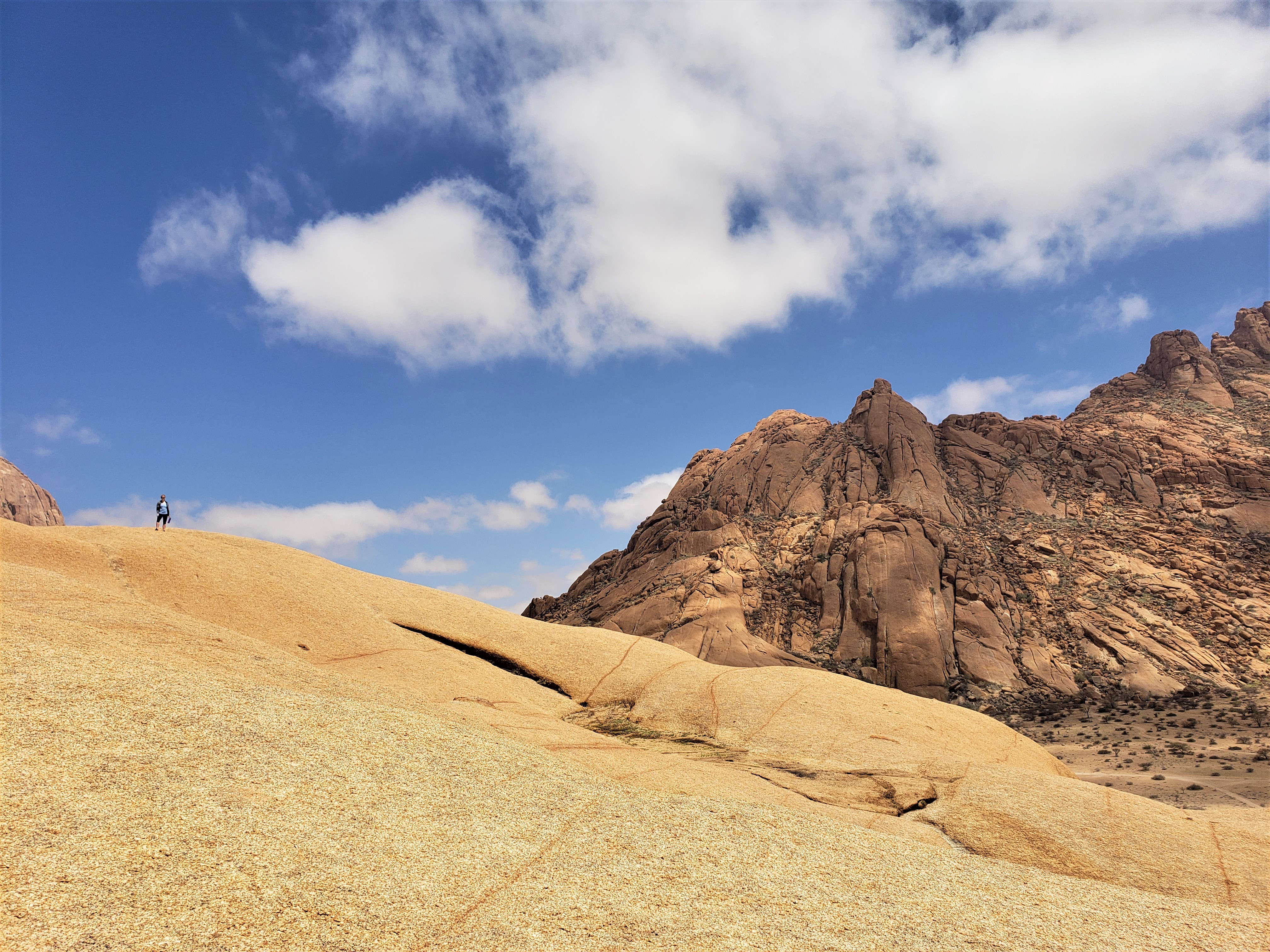
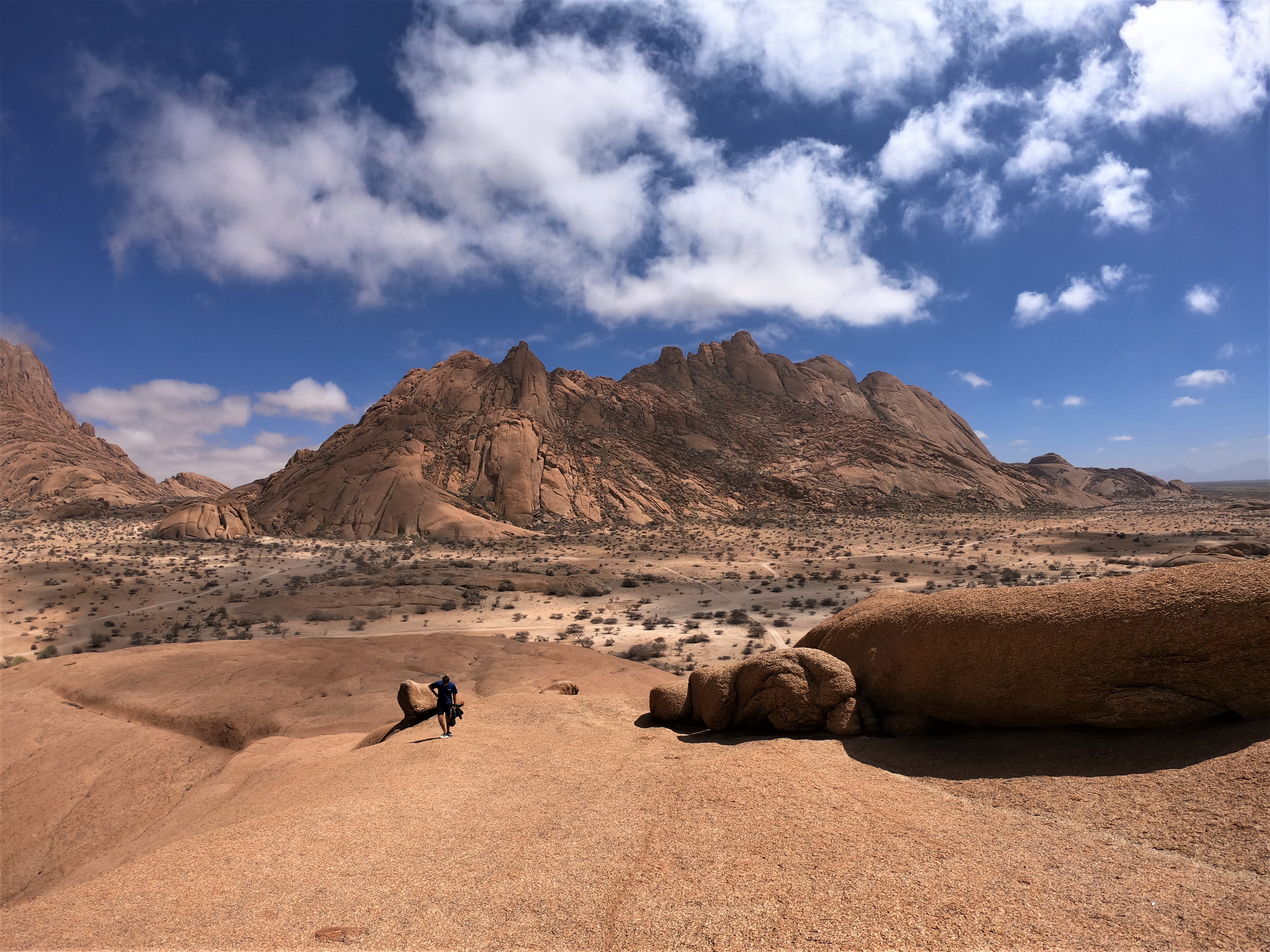
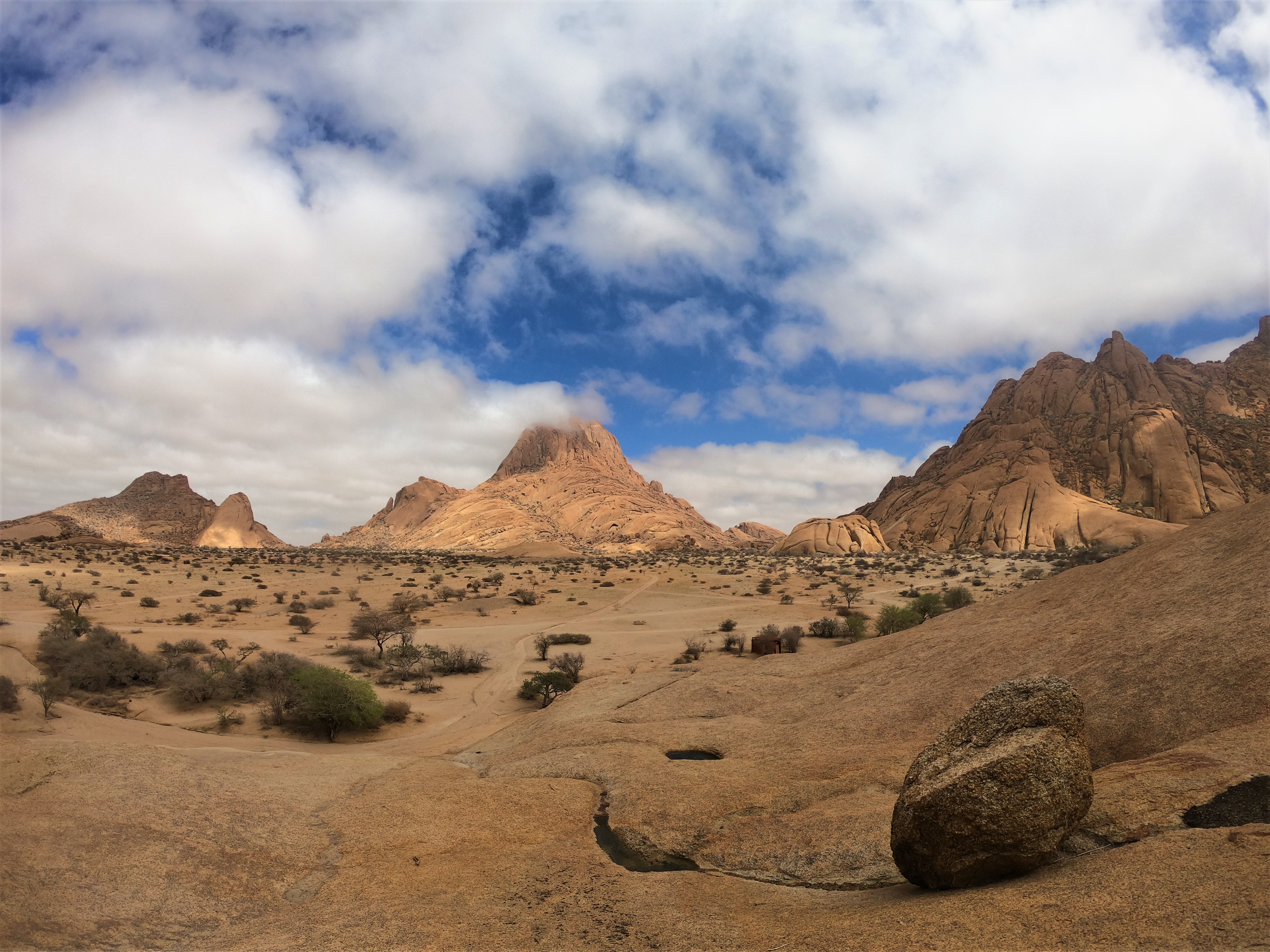
At the top we were able to look across and see the different mountains listed on the map, Pontok Mountains. The tallest Gross Spitzkoppe is about 1,700 m tall. We sat as long as we could in the hot sun and cool breeze then made our way back down and over to the rock bridge.
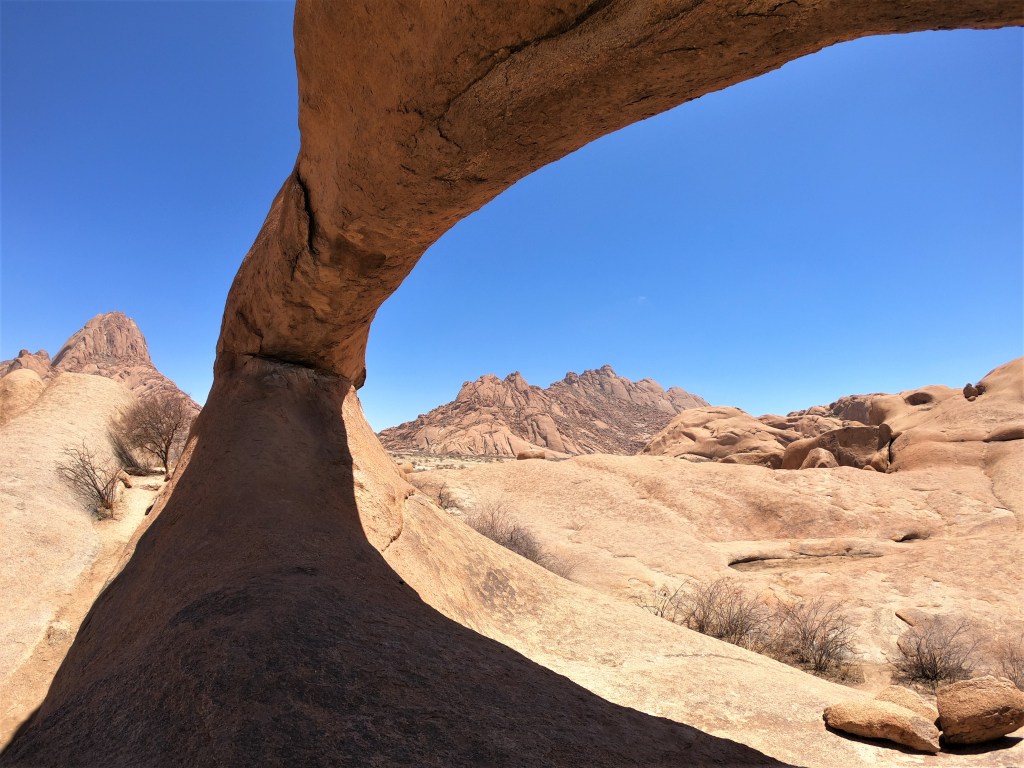
The rock bridge, or arch, was surrounded by birds and beautiful lizards that colored red, white and blue. We sat for a long while in the shadow of the arch watching the male lizard do a mating dance, which looked like he was trying to do pushups, and birds build their nests. It felt like we were watching the Planet Earth series.
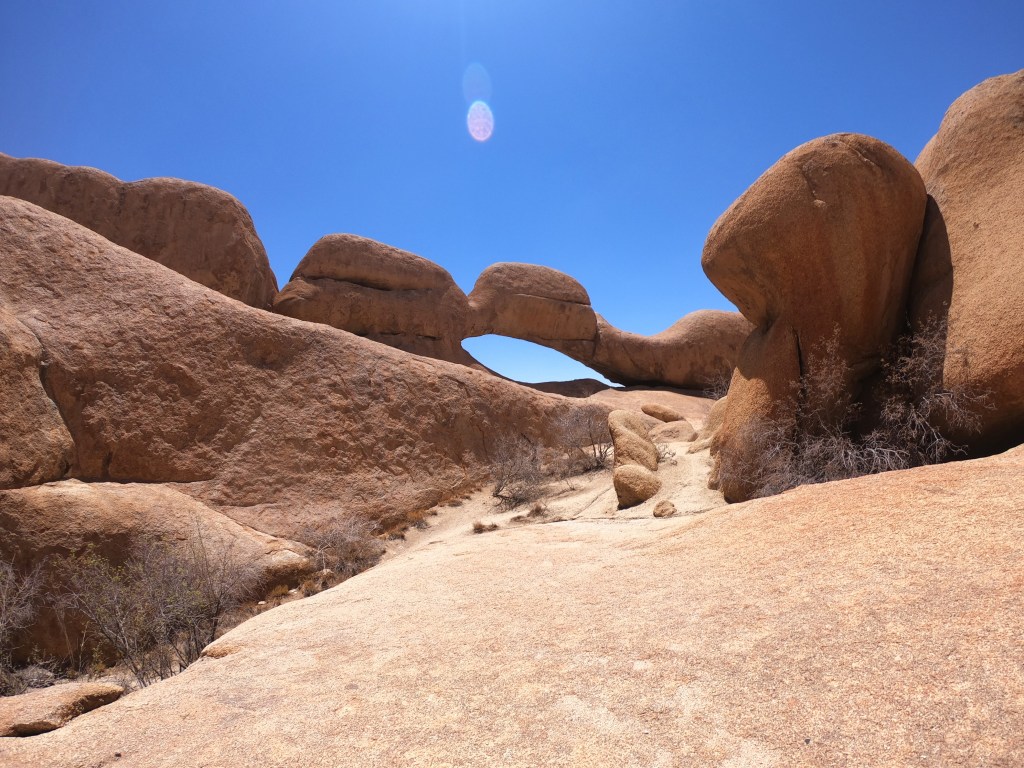
The sun was hot so we headed back to camp to make lunch and lounge in the shade, we still had to hike 2 miles back. For lunch Elizabeth attempted to make grilled cheese and they didn’t turn out terrible. We came back out of hiding a few hours later to climb around the rocks more and watch the sunset.
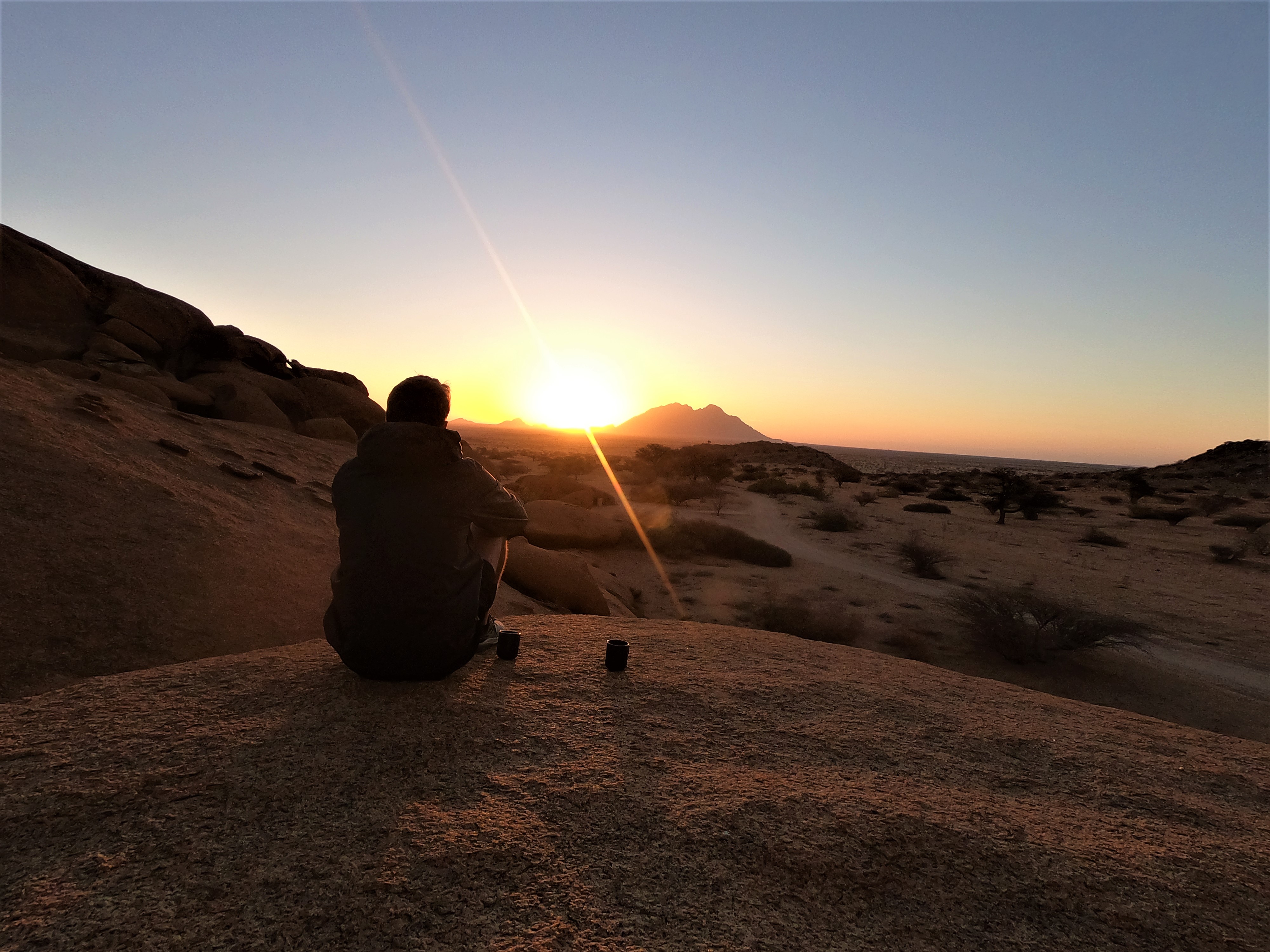
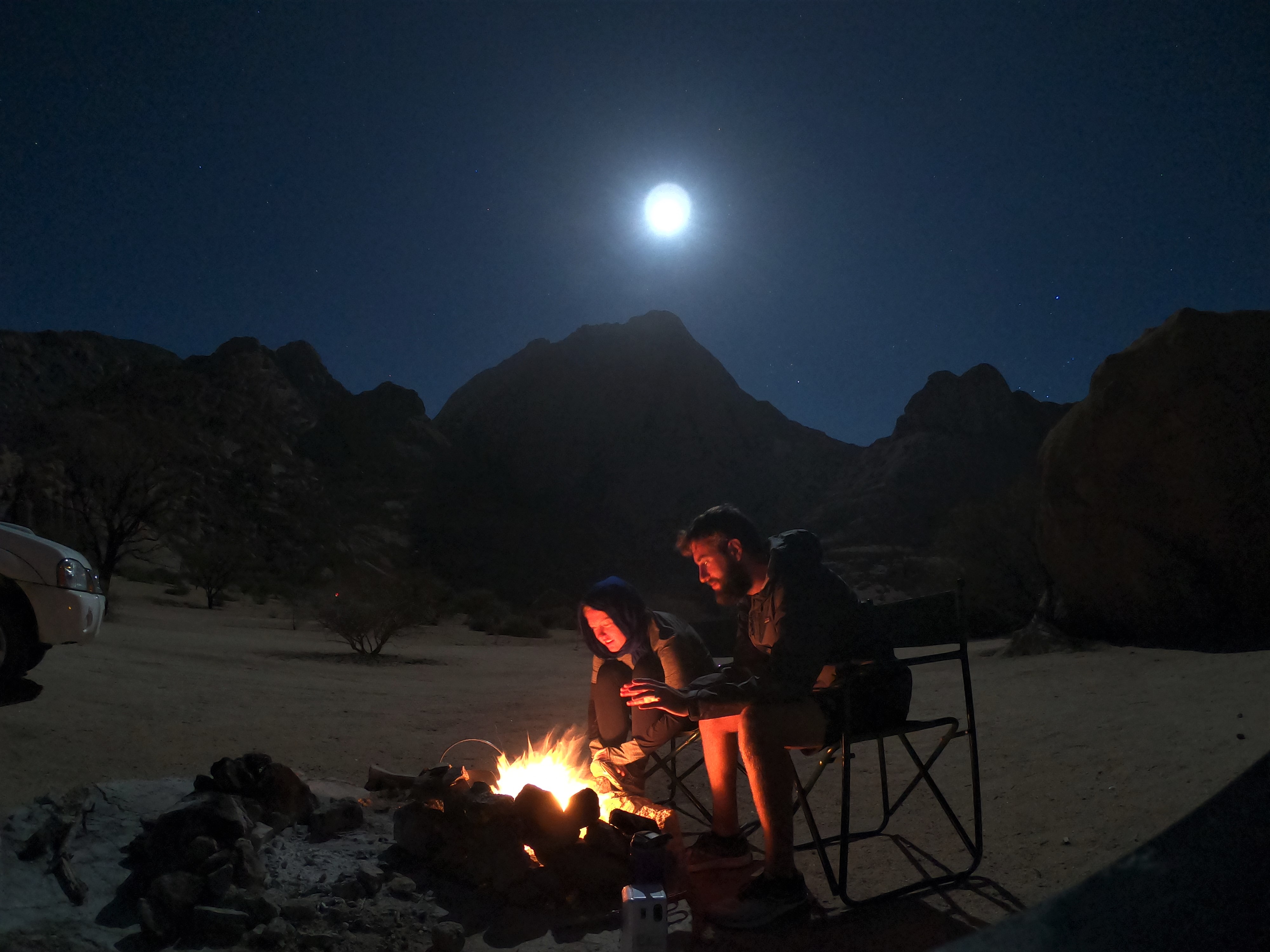
African sunsets are everything we’d hoped they would be according to the Lion King. The temperature started dropping pretty quick after it set and there wasn’t a cloud in the sky. We would have had great stars if it wasn’t for the pesky full moon. We now understand how stories of people doing things by moonlight would work, because it was ridiculously bright. We sat around a fire eating pasta and ragu sauce enjoying the few stars we could see before calling it a night.
Day 12 – Cape Cross – December 10
We ate breakfast and packed up camp to head to the shower area. This is the only sight we’ve stayed at that didn’t have shower facilities or running water close by. The shower areas were by the front gate and adorable. All outdoor but in cute wooden huts and with hot water. We attempted to find the cave painting but were unsuccessful and the roads got pretty bad. Namibian “maps” are really starting to get annoying.
We drove about 2.5 hours through the desert and to the coast. We drove along the coast and there were so many mirages you couldn’t tell what was real ocean or fake. We made it up to Cape Cross where there is a seal reserve you can visit. It costs $10 a person though, so we skipped it and headed to our campsite along the beach, thinking we’d see seals for free.
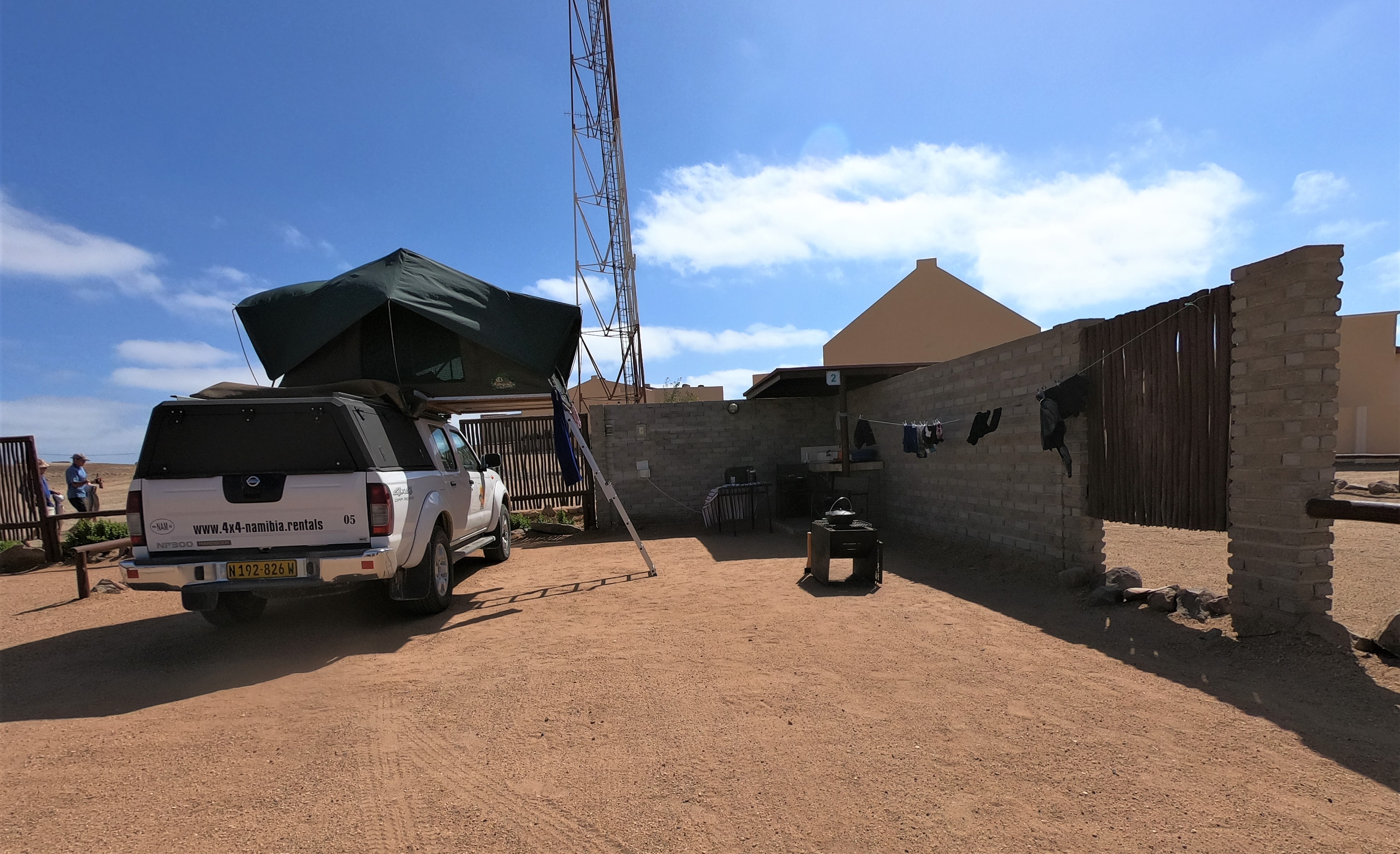
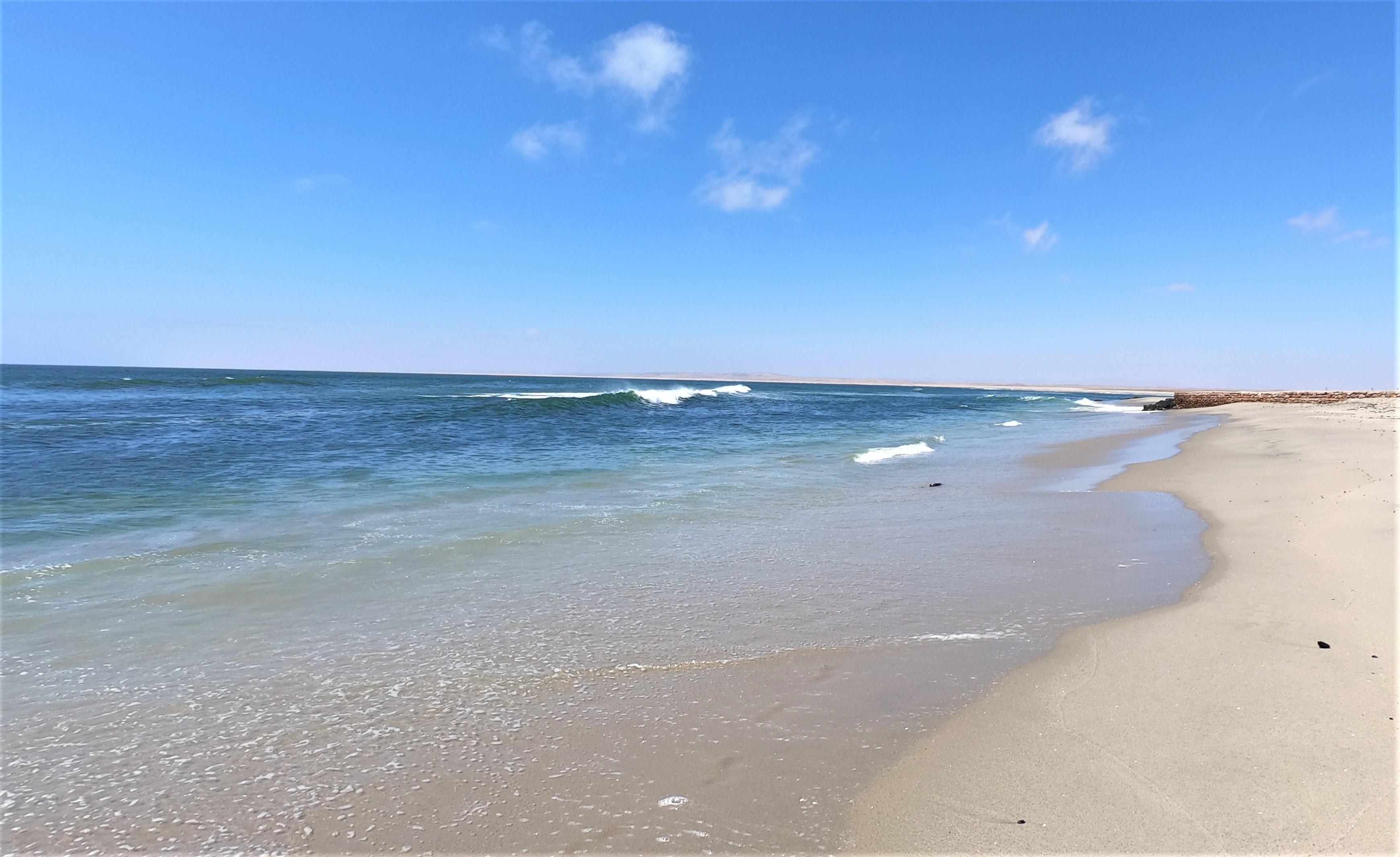
After setting up and doing laundry Ryan made chicken curry with rice – delicious. We walked along the beach which was pretty rough with the tide coming in. We’d notice people packing up surf boards when we’d arrived so this must be a decent surfing area. The beach was beautiful but plagued with dead seal carcasses and washed up jelly fish. Walking became a hazard due to the amount of broken jelly fish pieces everywhere and half rotten seals. Elizabeth read online that the seal colony is also full of dead animals, so very circle of life.
We spent the evening lounging at camp trying not to get blown away by the strong coastal wind. We played cards and listened to Christmas music trying to get in the season. For dinner we were lazy and just ate popcorn and cereal.
Day 13 – Swakopmund – December 11
We had a short 1.5-hour drive south the next morning to get to Swakopmund and we just followed the coast south. We weren’t able to go further north to the Skeleton Coast where you can see a lot of ship wrecks on the high sand dunes, but we still saw one as we drove along. Swakopmund and Walvis Bay are two fairly large towns right next to each other. We filled up on gas and groceries at a large Spar store.
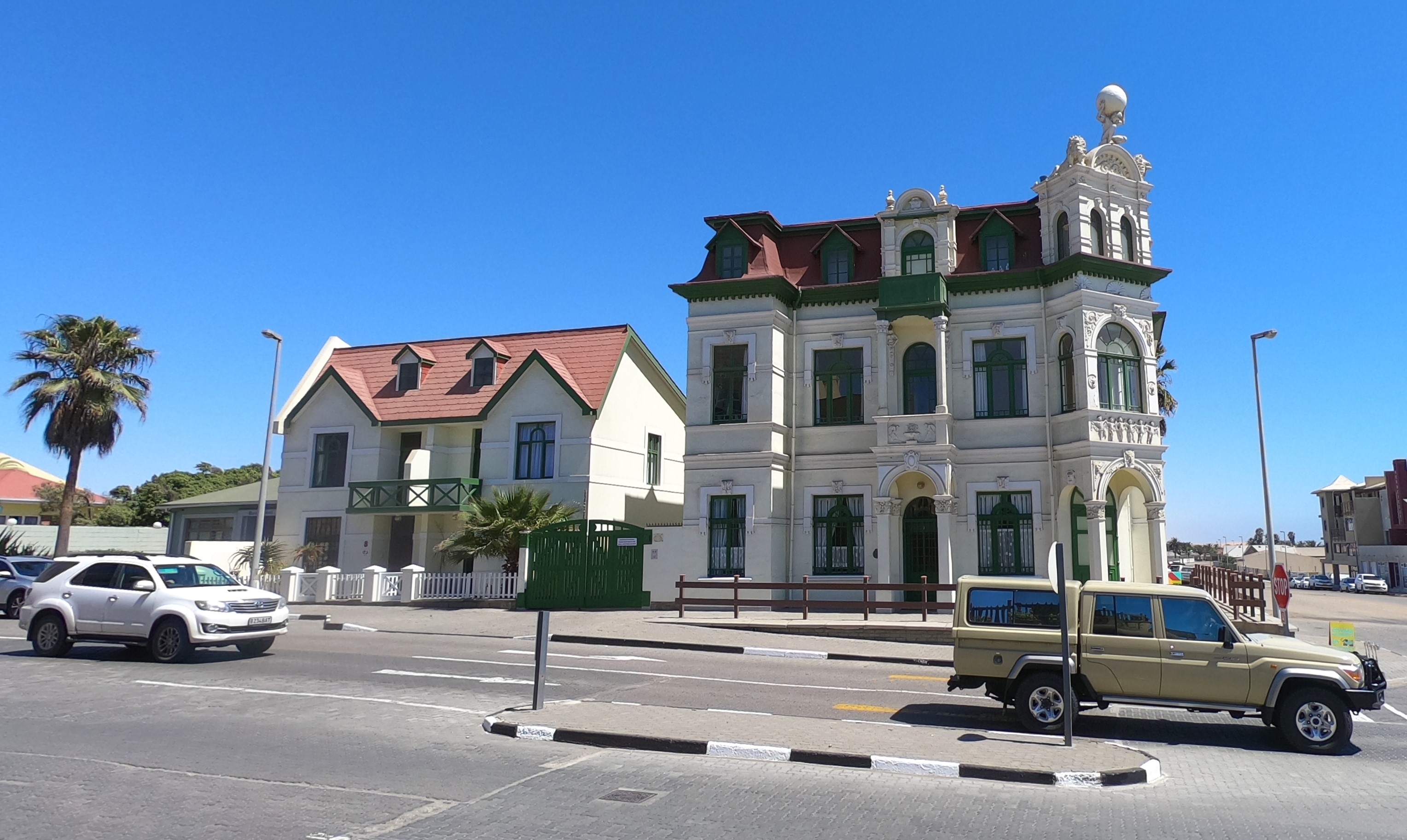
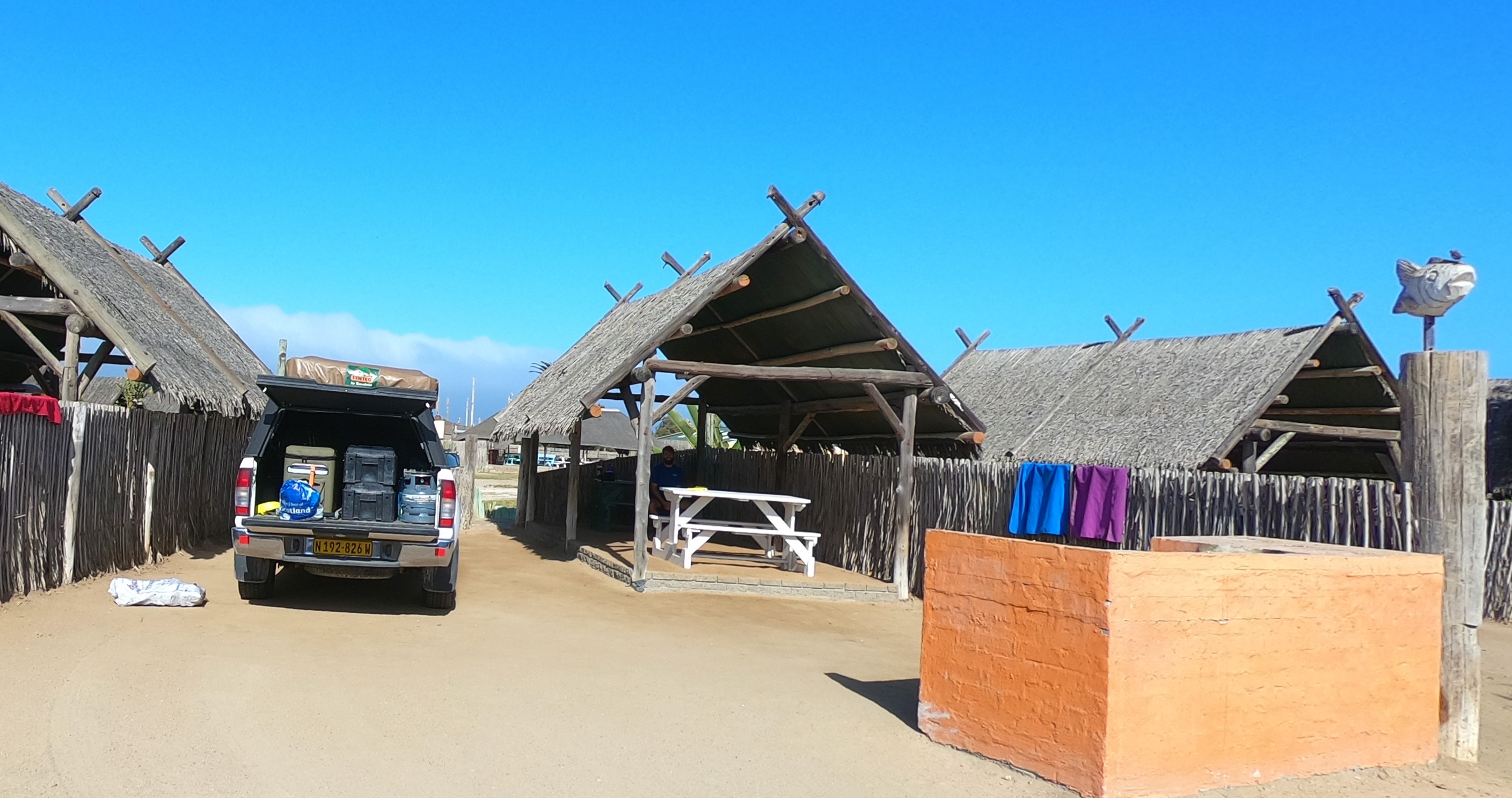
We found our campsite, Tiger Reef, and parked the car before heading into town to walk around. The whole town is maybe two miles wide and very walkable. We walked along the beach and up to a German beer garden called Swakopmund Brauhaus. Namibia is an old German colony so a lot of the white people have German or Dutch heritage and German is widely spoken. This town in particular has a lot of German architecture in its buildings.
We were splurging and eating out, not something we’ve really done here. We each got draft beer then a shared a pork knuckle and jäger schnitzel. They were delicious and tasted just like Germany. We got another beer and closed the place down.
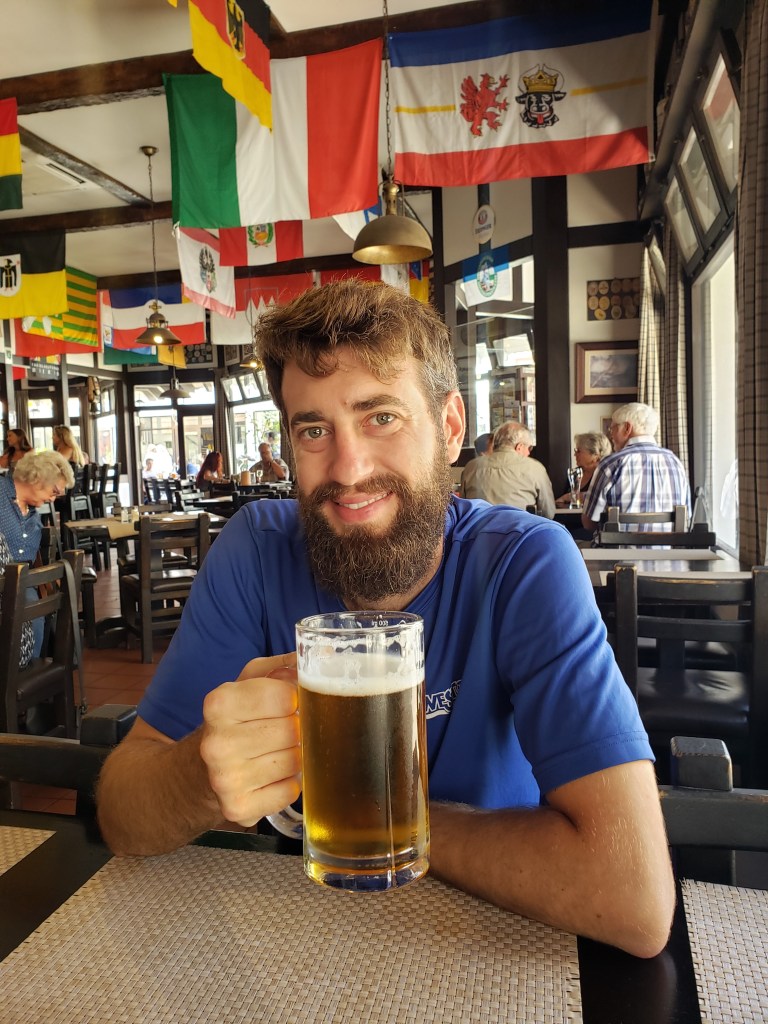
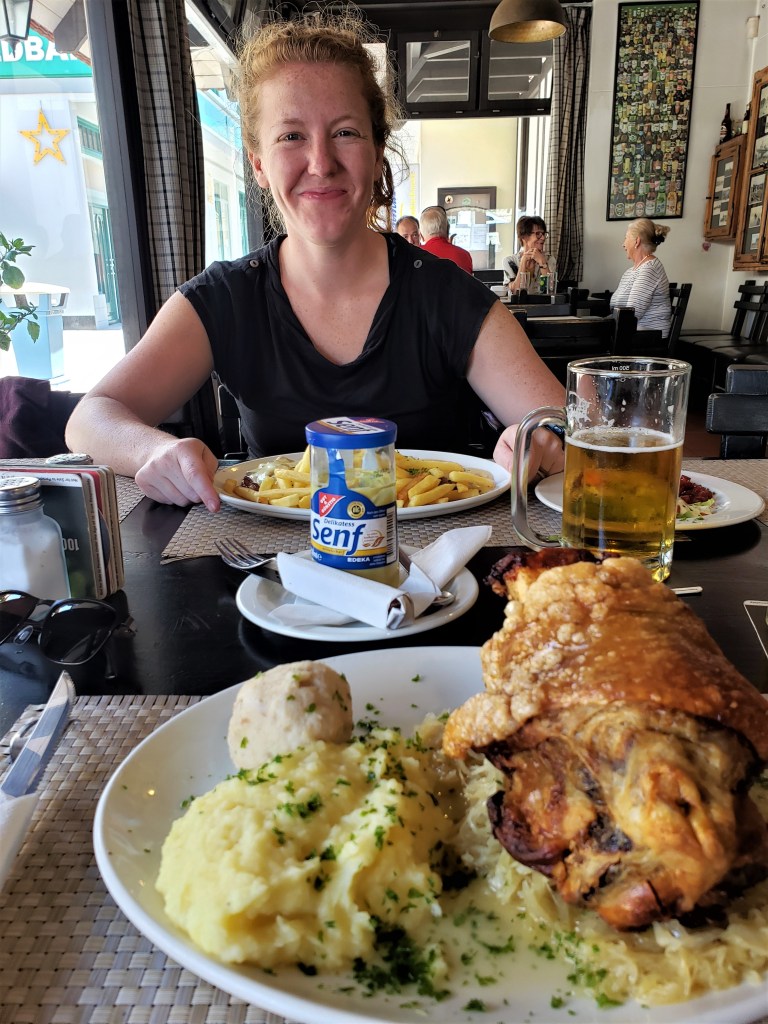
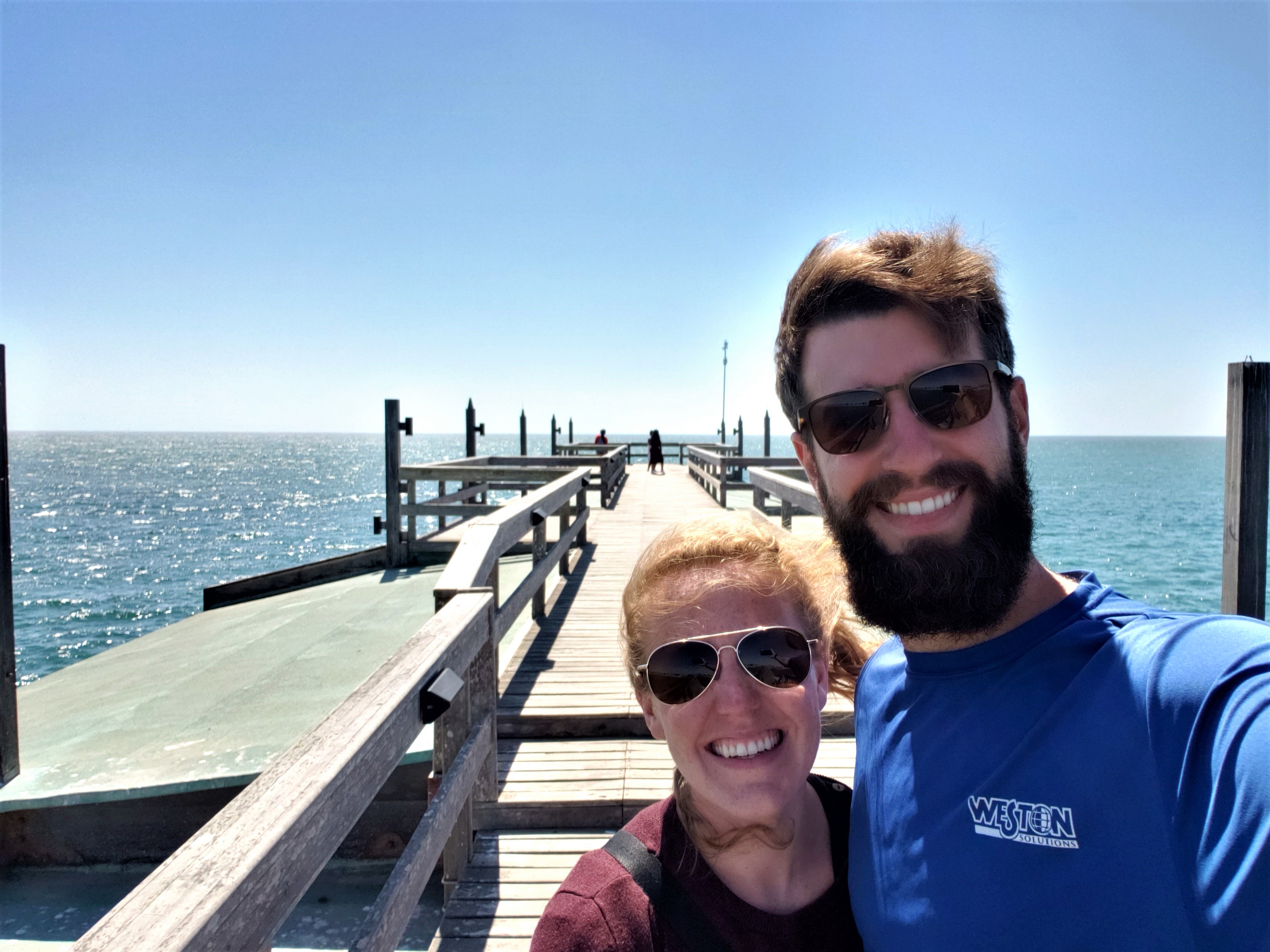
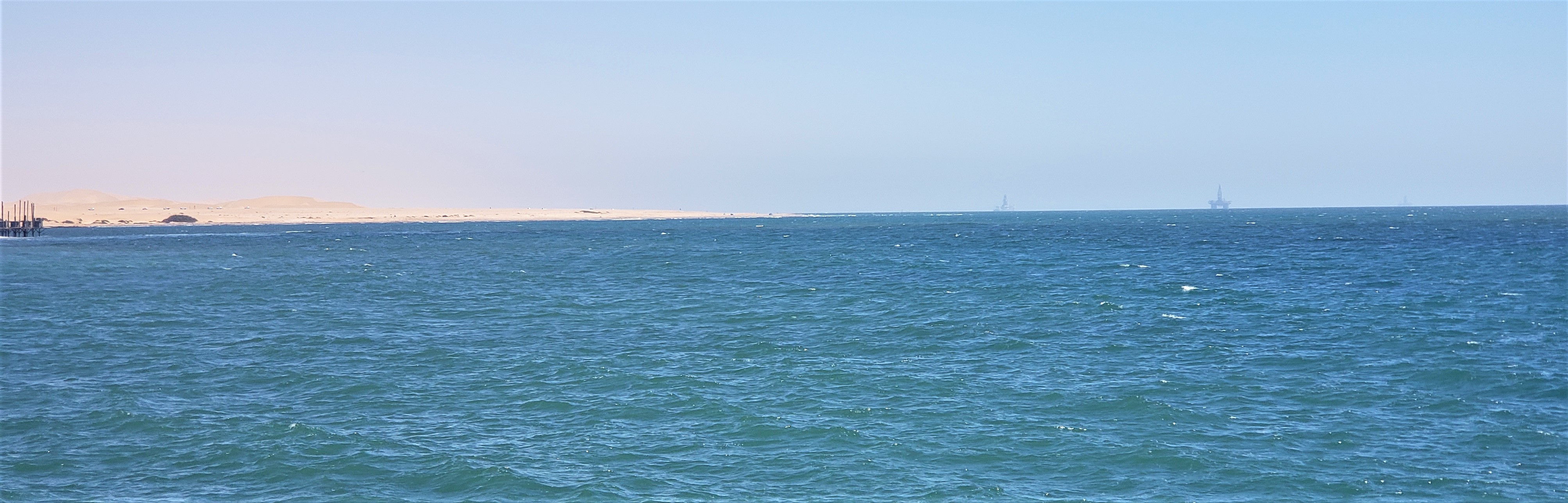
After we walked through town and back towards the jetty we walked out on the large pier and enjoyed the cold ocean wind. We could see ducks diving down and luckily no dead seals. We even saw some oil rigs in the background. We continued walking along the ocean and back towards our camp.
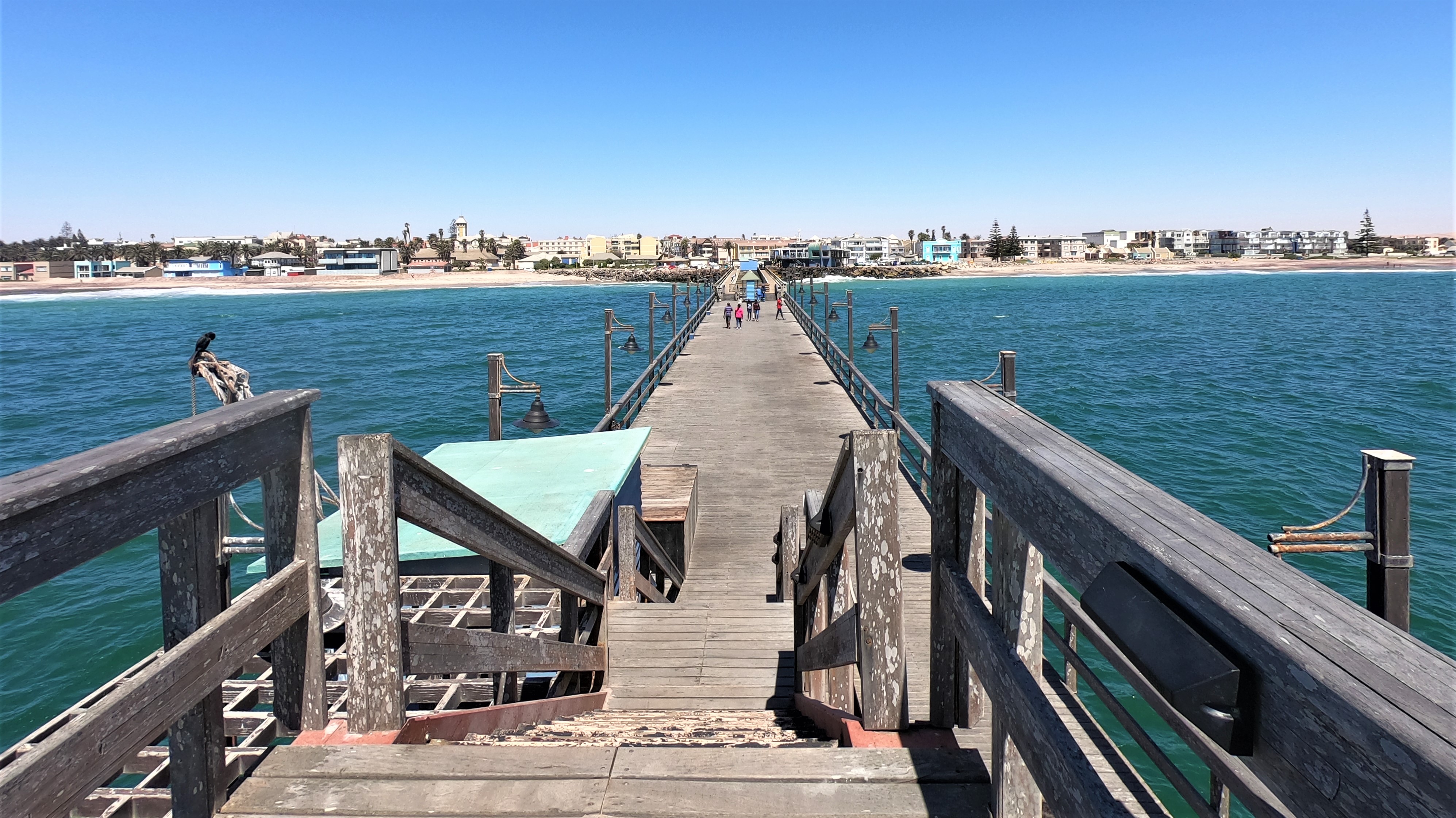
That night, having internet again, we did some trip planning and saw a bunch of pictures of our new niece Violet. We’ll always remember Facetiming her for the first time in a parking lot in Swakopmund, Namibia. For dinner we ate our leftover vegetables and drank some Namibian wine called Etosha Blend, it’s very strong. Our lullaby was the crashing waves and our night light a full moon.
Day 14 – Walvis Bay – December 12
We took our time getting ready the next day since we had a short 30-minute to Walvis Bay. Before going into town, we wanted go to go Dune 7, a large sand dune outside of the city you can climb up. When we arrived, there were a few families playing around at the base of the dune and we walked up the shallow slope to begin our decent. We had flip flops on and the sand was soft. About halfway up the sand got much hotter and at times felt like it was burning our feet. It was an exhausting workout but we made it to the top and had incredible views over the other sand dunes.
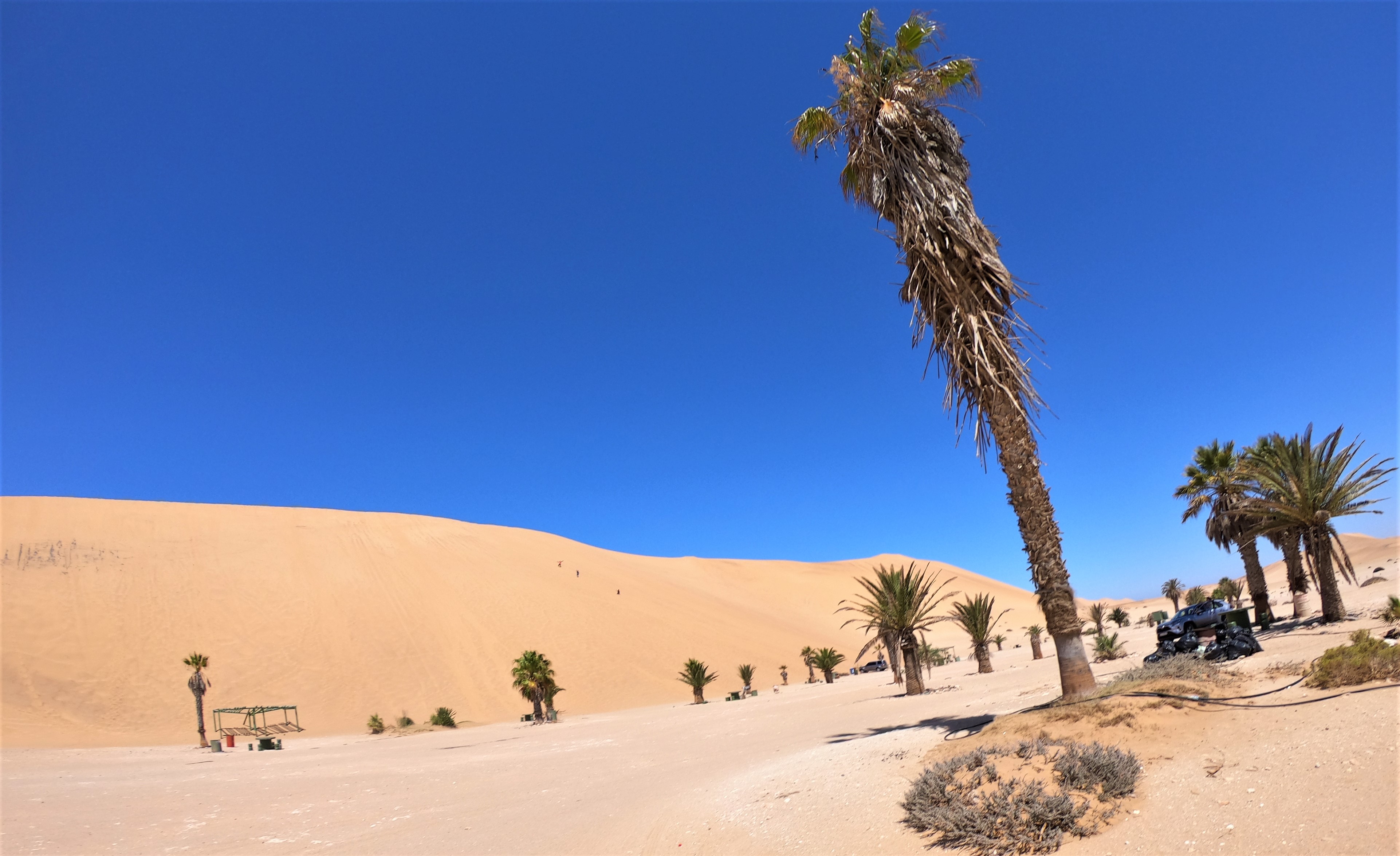
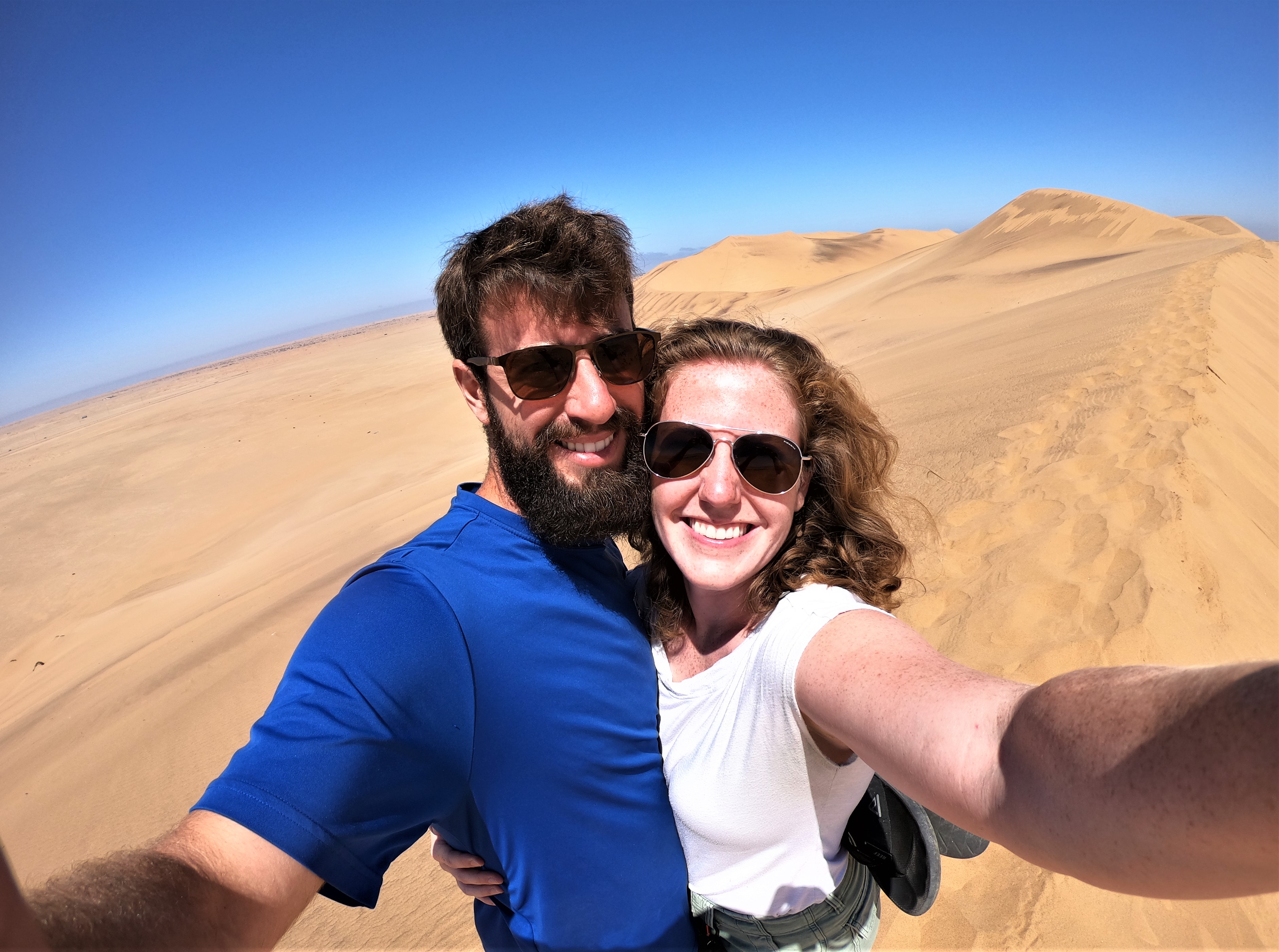
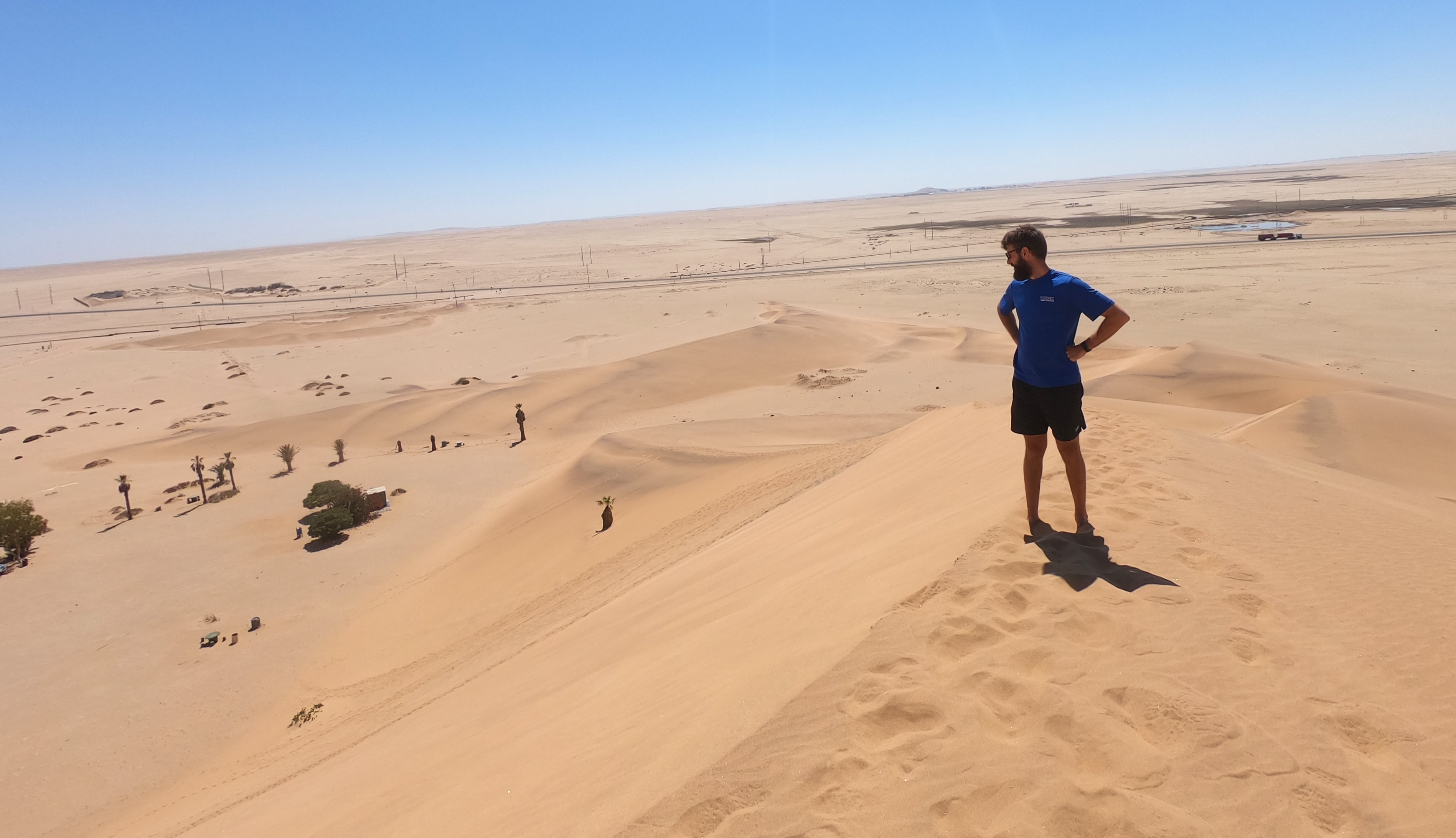
We piled back in the car and headed into Walvis Bay proper. There are a bunch of rigs and boats shooting seismic data out in the water. Walvis Bay is a very industrial town and not as charming as Swakopmund with its German village feel. There was also a good bit more poverty here and lower income housing. As we made our way over to the flamingo viewing area, we entered the fancy part of town with gorgeous, sprawling homes facing the water. We parked and walked along the beach watching the white and pink flamingos pump their legs and eat whatever they kicked up with their feet.
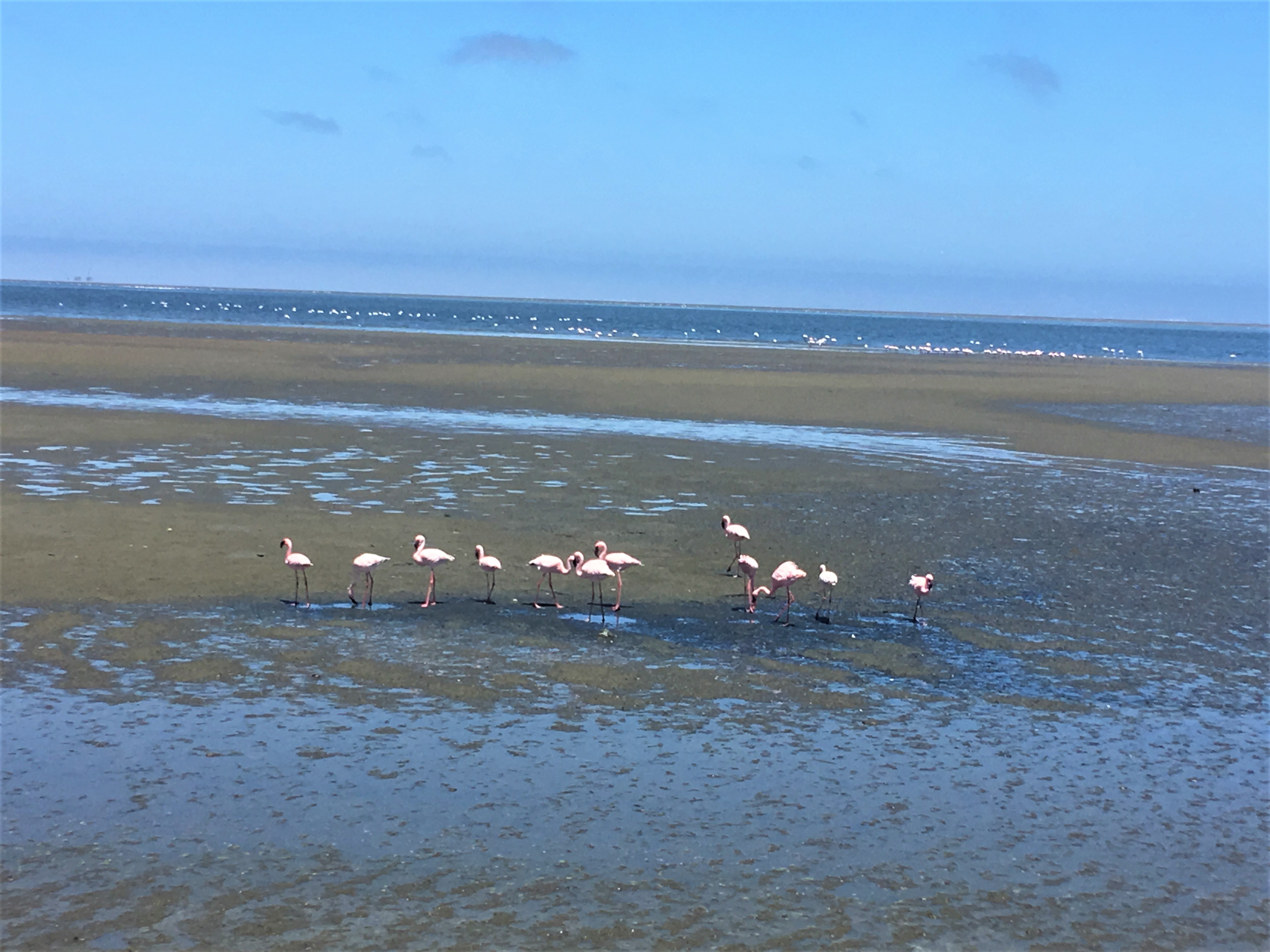
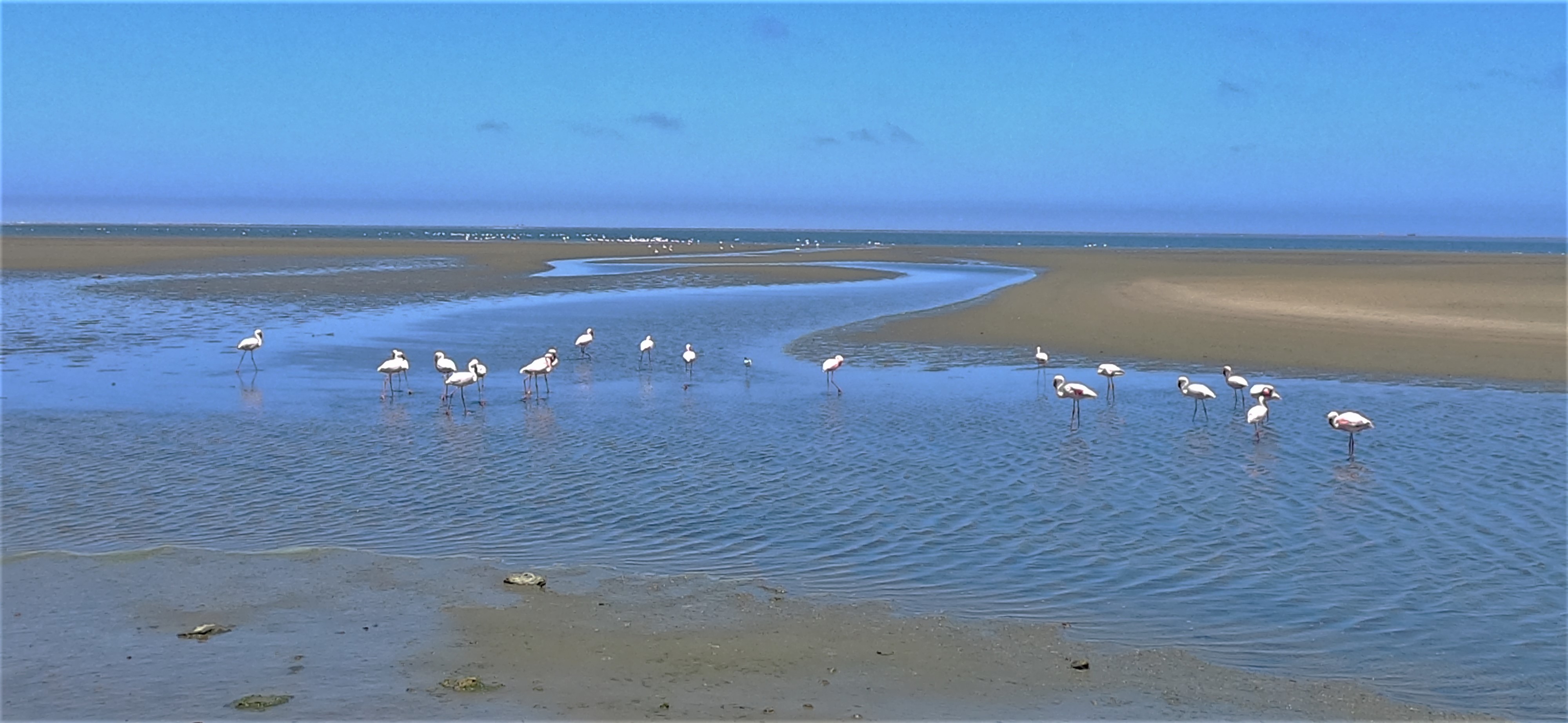
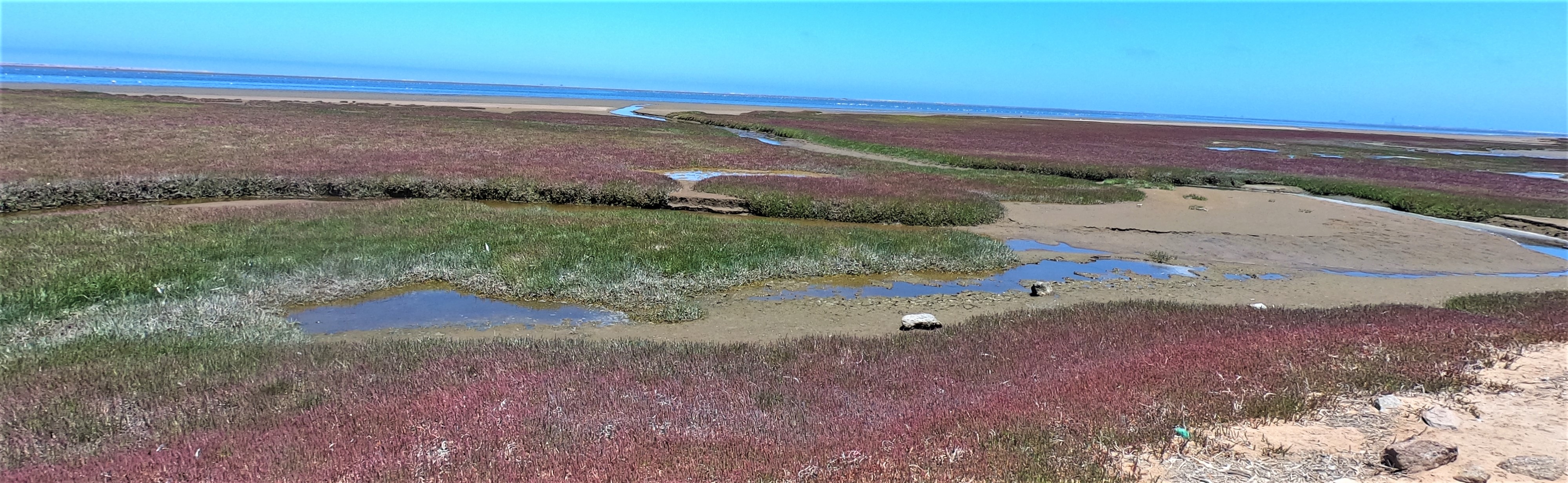
We drove a little further south to what Google called Safe View Point 2, which were small road pull offs where you could see more of the lagoon and flamingos in the distance.
We were pretty hungry so we headed to our campsite called Lagoon Chalet. We found an awesome site under a large tree. The campsite is in the middle of the nicer part of town so our site was neighboring someone’s house. Ryan reheated the chicken curry leftovers and Elizabeth enjoyed a PB&J. The afternoon was spent drinking and trip planning. We have a firmer grip on where we are going for the next couple of months and need to start figuring out our future beds to sleep in.
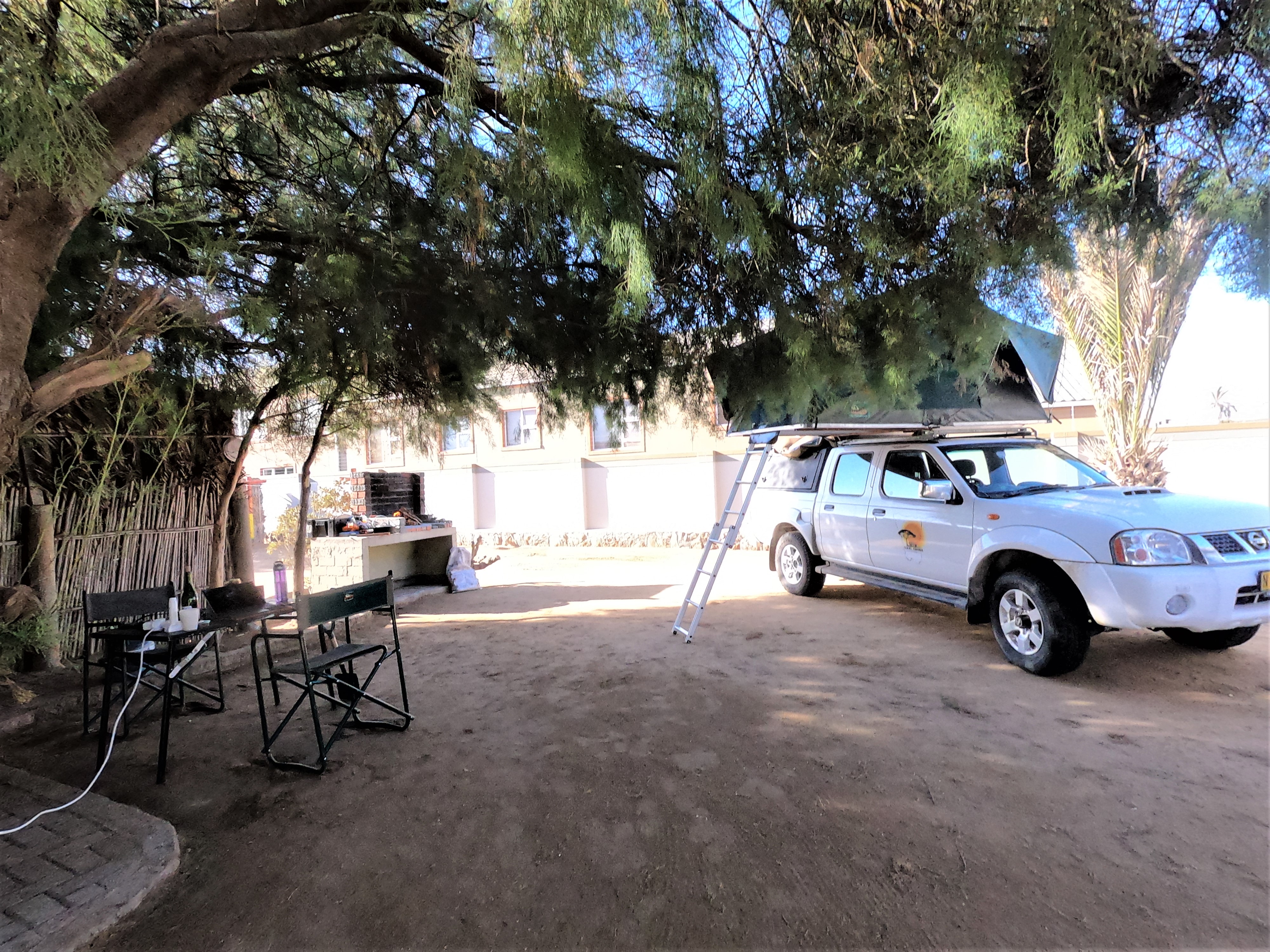
For dinner that night Ryan made Peri Peri grilled chicken with a delicious sautéed hash of potatoes, onions and brussels sprouts. The tree that provided such great shade also shed all over us and our things, making cooking a bit of a challenge. It was another windy night but at least we weren’t by any all-night clubs.
Day 15 – Solitaire – December 13
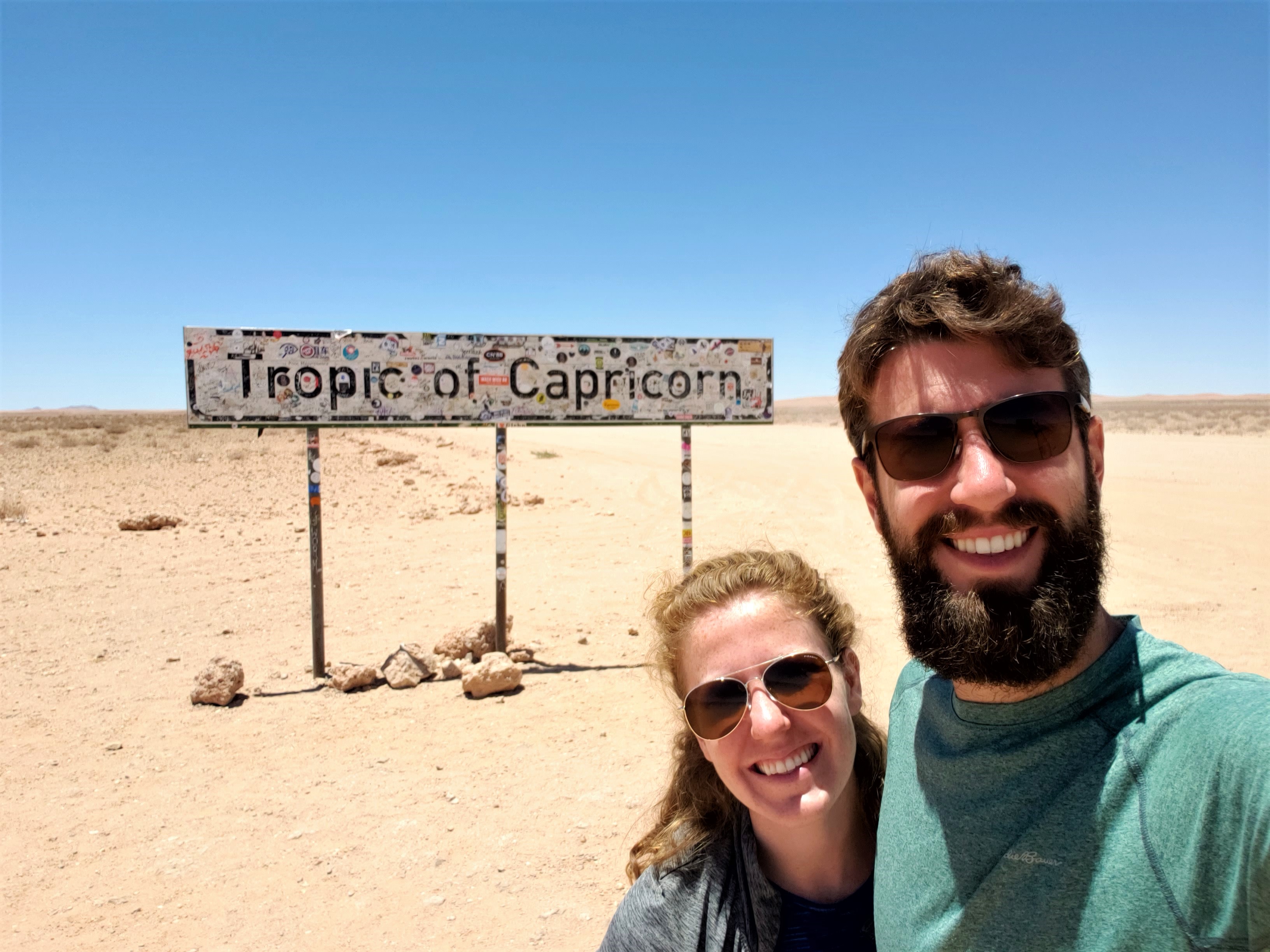
Before heading out of town we stopped by a post office to send out a few cards. We drove back through Walvis Bay and no one harassed us or tried to sell us anything while we were walking around the post office. It was magical. We had a 3.5-hour drive today before our first stop. Along the way we noticed a heavily-stickered sign for the Tropic of Capricorn on the side of the road; we didn’t realize we’d pass this boundary.
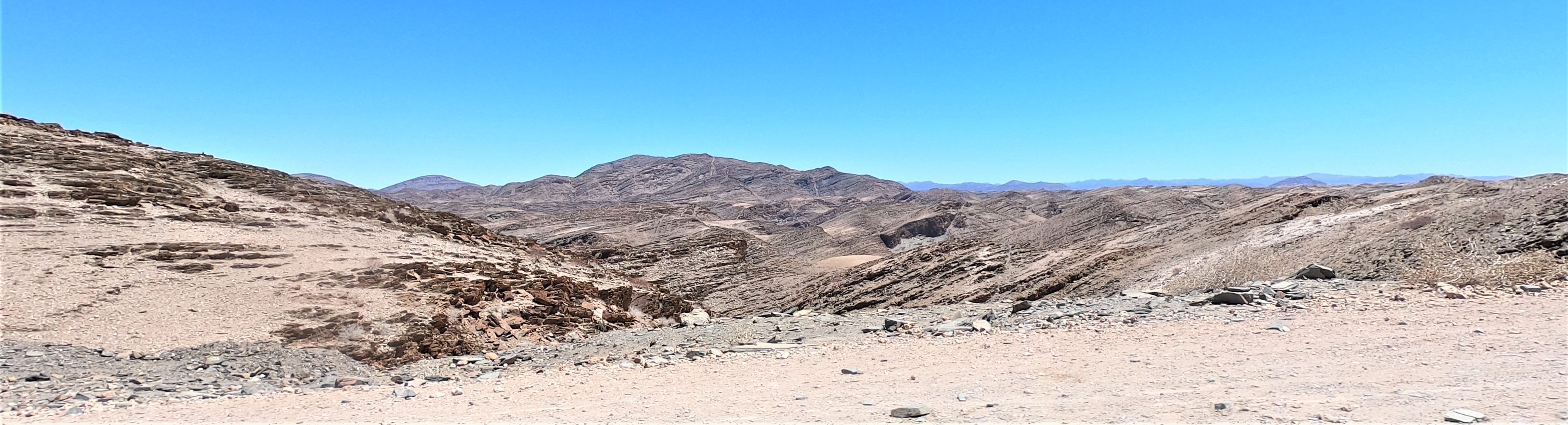
The geology in Namibia is so diverse and beautiful. In just 3 hours we drove through different mountain formations and desert. At one point we noticed all the fields around us were filled with zebra, oryx, and springbok- more than we’d ever seen in the national park.
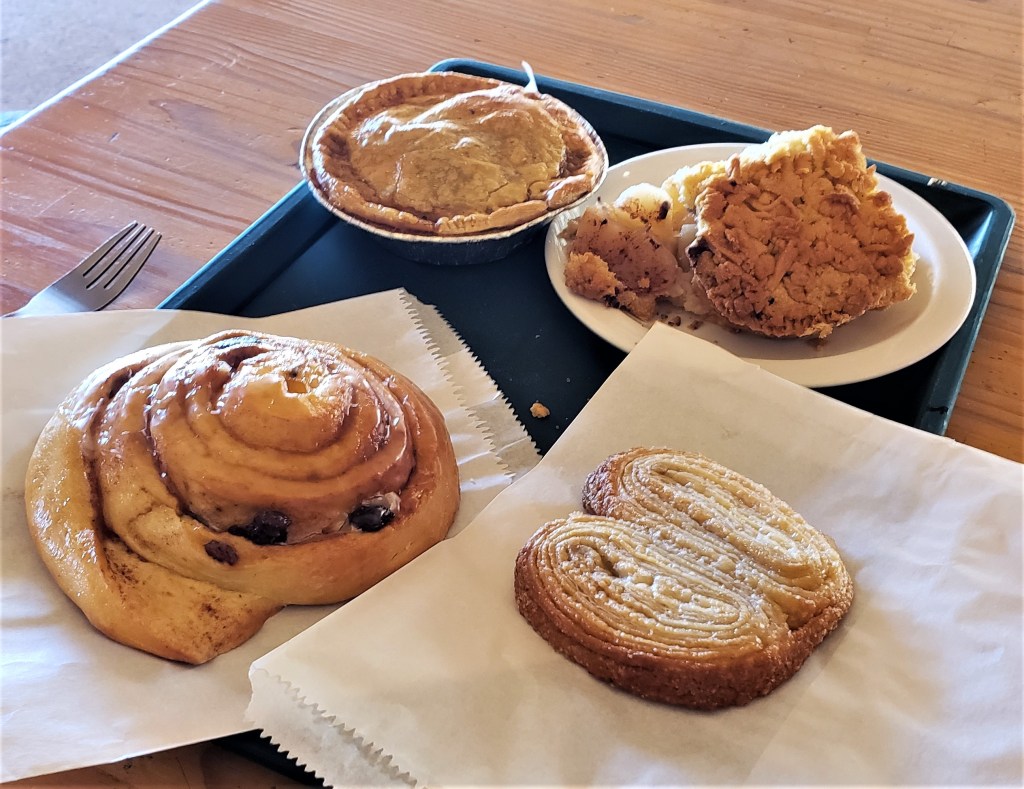
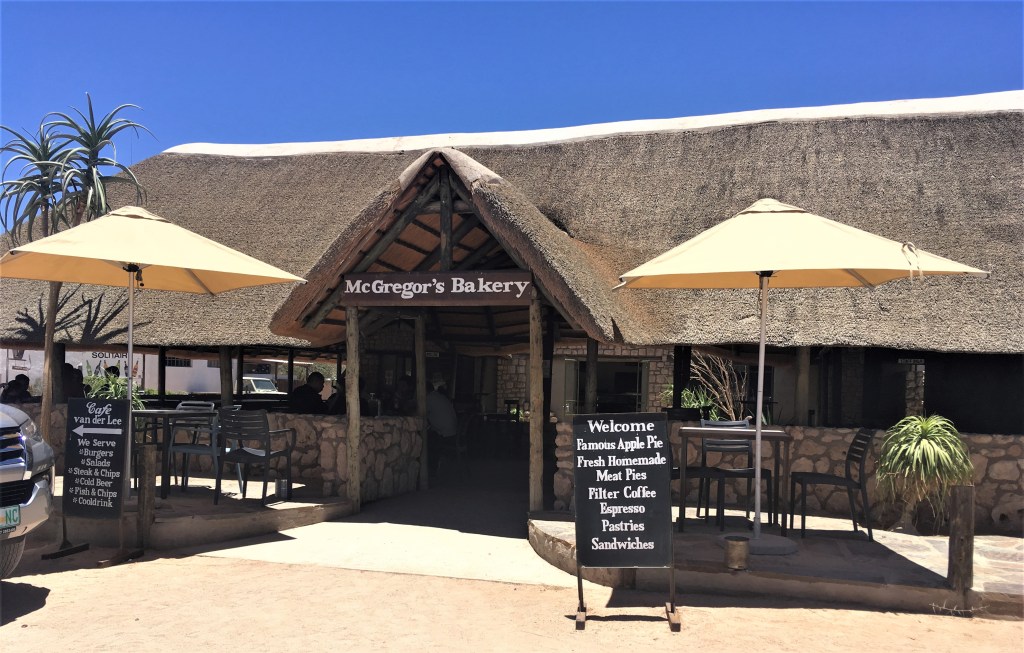
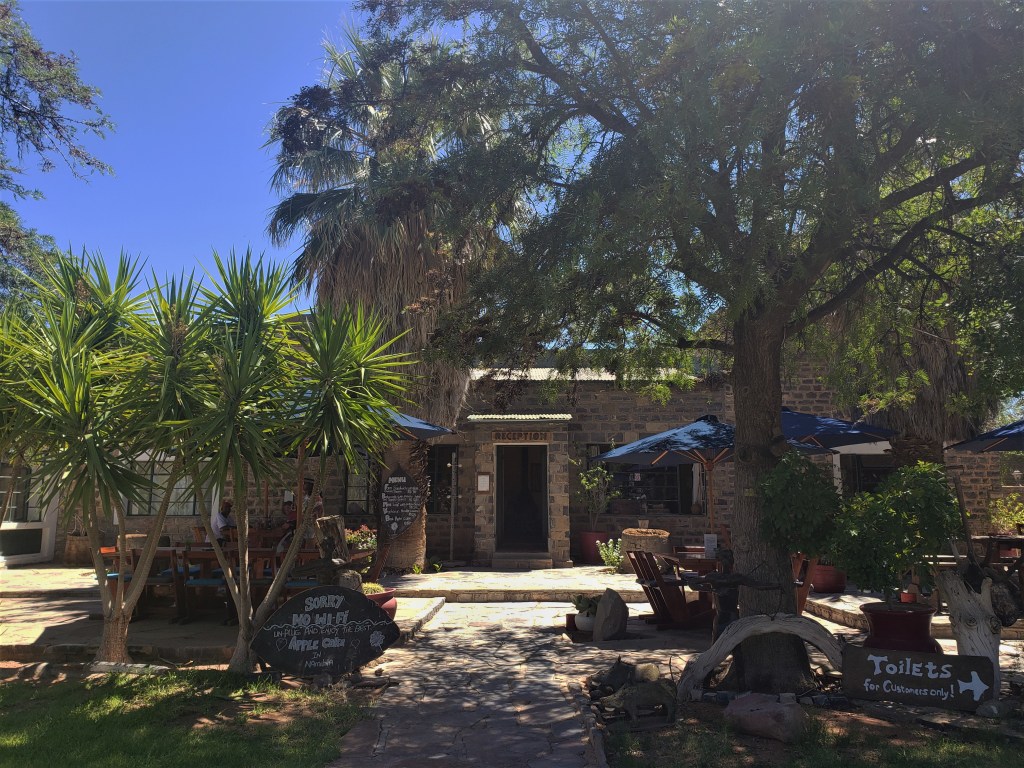
We stopped in a small town of Solitaire which is known for its famous apple pie. We headed into the bakery, which was attached to a gas station and in the middle of nowhere, and ordered a game and pepper pie, cinnamon roll, cookie and a piece of apple pie. It was actually more like apple streusel, just another German influence. Everything was okay, a solid 5 out of 10 but it was a fun experience to stop and eat at a bakery in the middle of the Namib Desert. Apparently, since the owner Moose died a few years ago the bakery recipes just haven’t been the same.
We had a quick 30-minute drive back into the mountains to find our next campsite, Weltvrende. It was right next to nothing, out in the middle of nowhere, but actually pretty nice. We were the only campers, but plenty of people were staying in the lodges. We got Wi-Fi in the lounge and sat in the shade and walked around the grounds. For dinner that night we made chicken curry and rice, while the lodgers ate a 5-course dinner. We still preferred our curry.
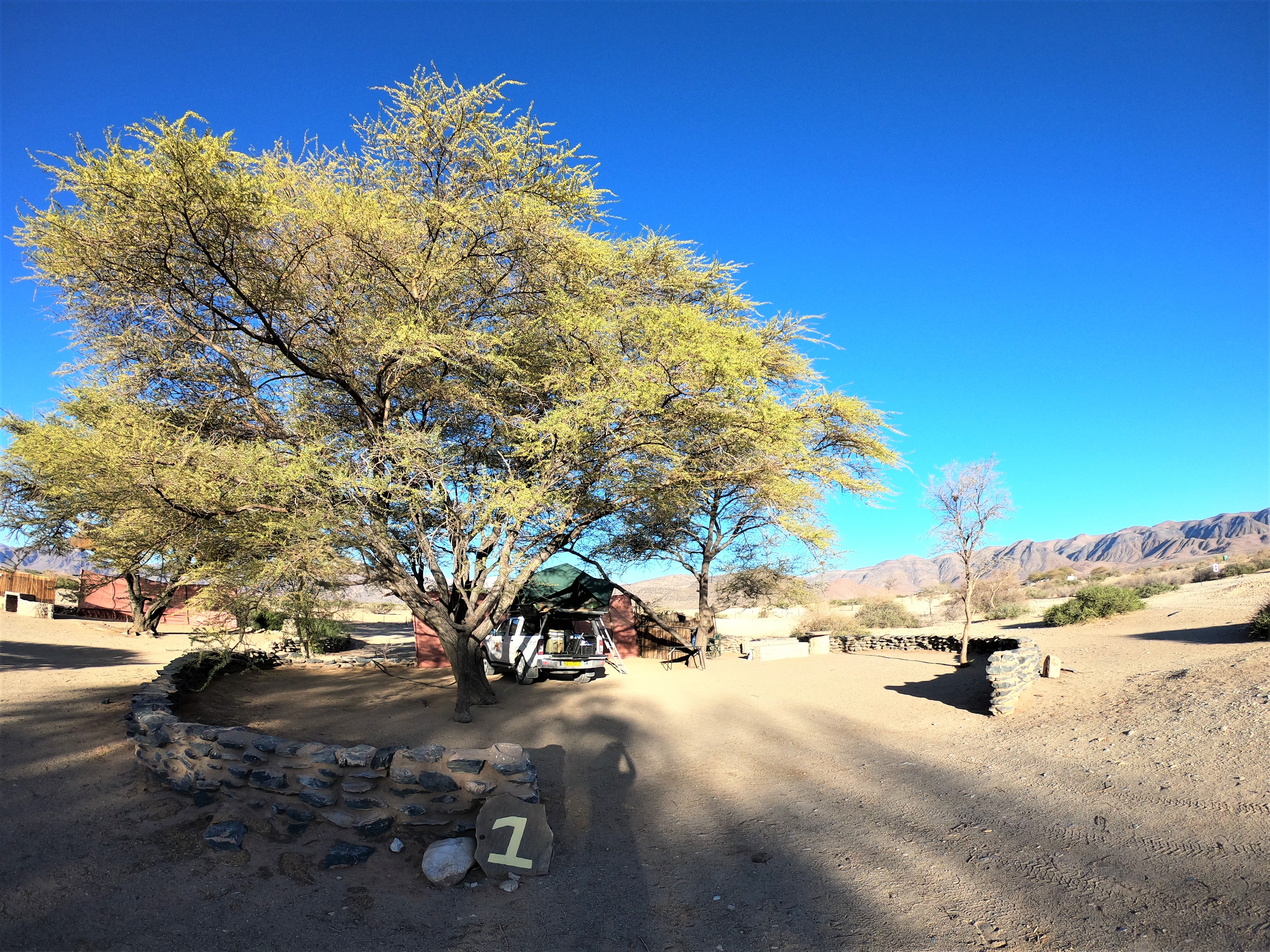
Day 16 – Sossusvlei – December 14
After another morning of granola and yogurt, not that either one of us was complaining, and finishing the download of our new book on tape, we hit the road towards Sossusvlei. Sossusvlei is one of the main attractions in Namibia. It’s a national park, home to beautiful mountains, the Sesriem Canyon, massive sand dunes, and the various vleis (strings of old dried pans). It only took about 45 minutes to make it to the main gate. After paying our $11.50 day fee, both of us and the car – not a bad deal, we were off.
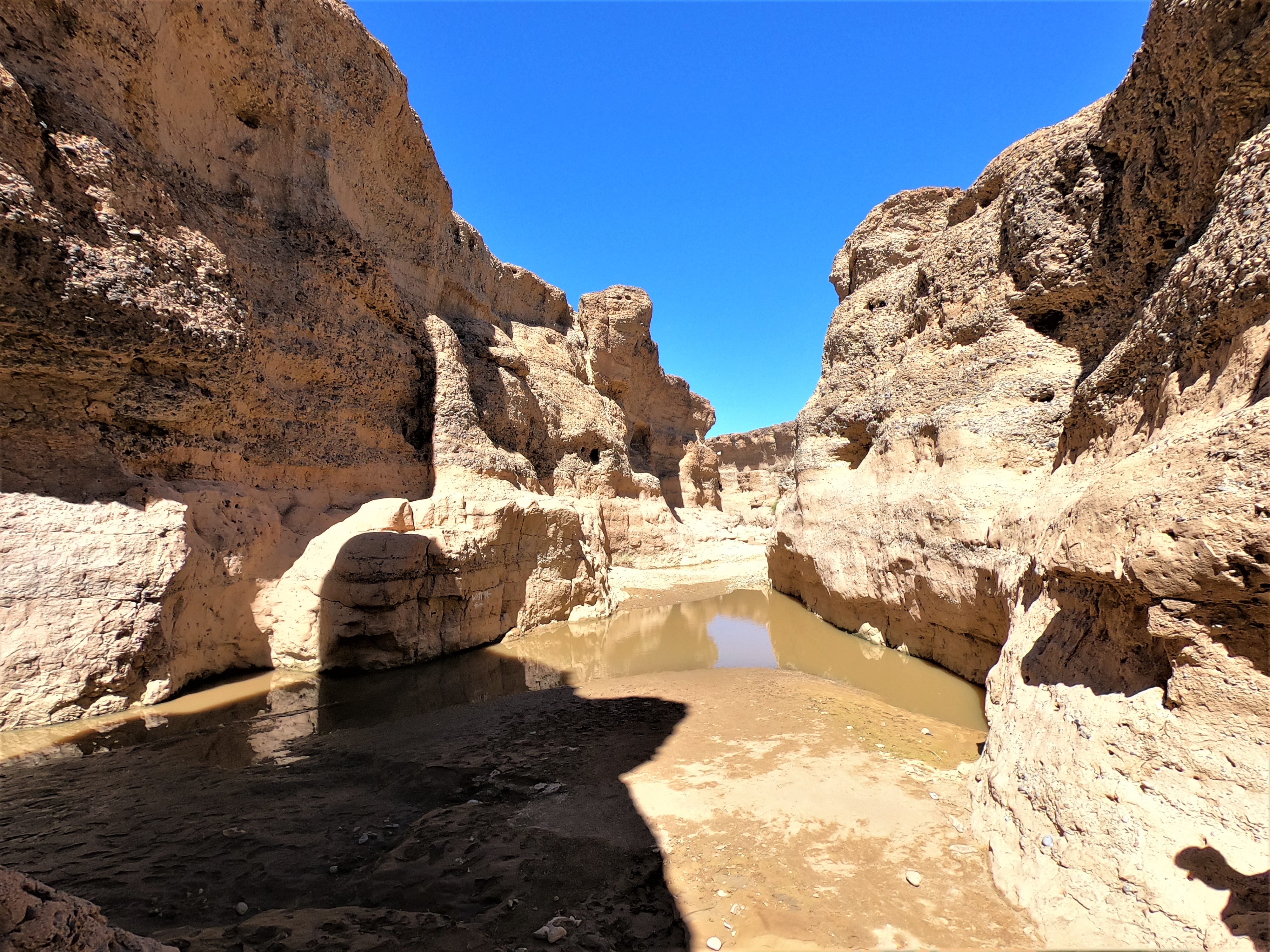
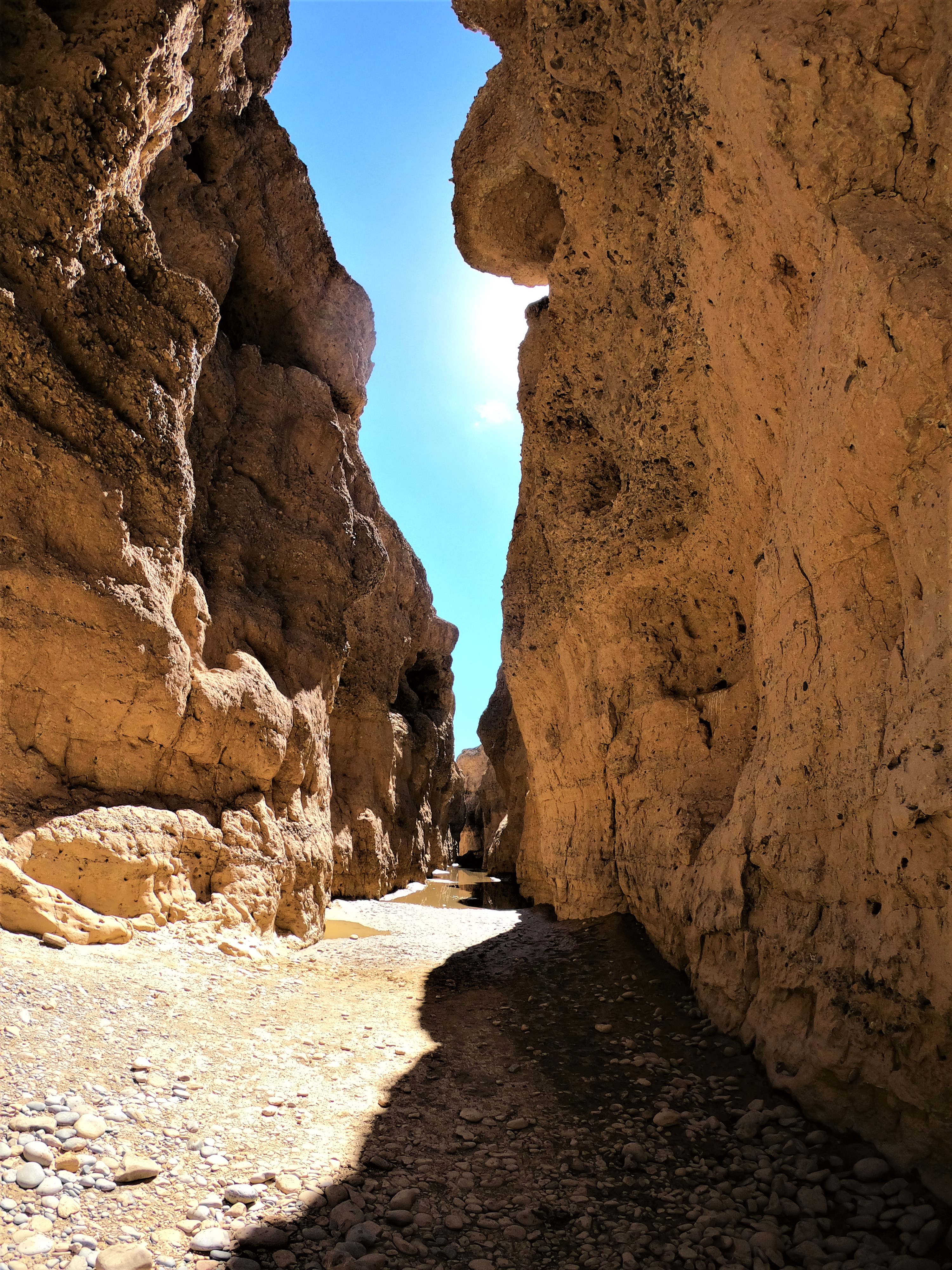
Stop one was Sesriem Canyon. Most of the park is covered by a tar road, which is wonderful cause we are so sick of gravel, but most of the sights require a short trip on a gravel road to get to them. The road to Sesriem was pretty awful but we made it to the parking area and walked towards the canyon. Good thing they had fences and signs because you could quite easily drive straight into the canyon. It’s not clearly visible until you’re on the edge. Before that you might think your just coming up to a slight dip in the topography if you notice it at all. We explored the upper section for a while before climbing down into the canyon itself.
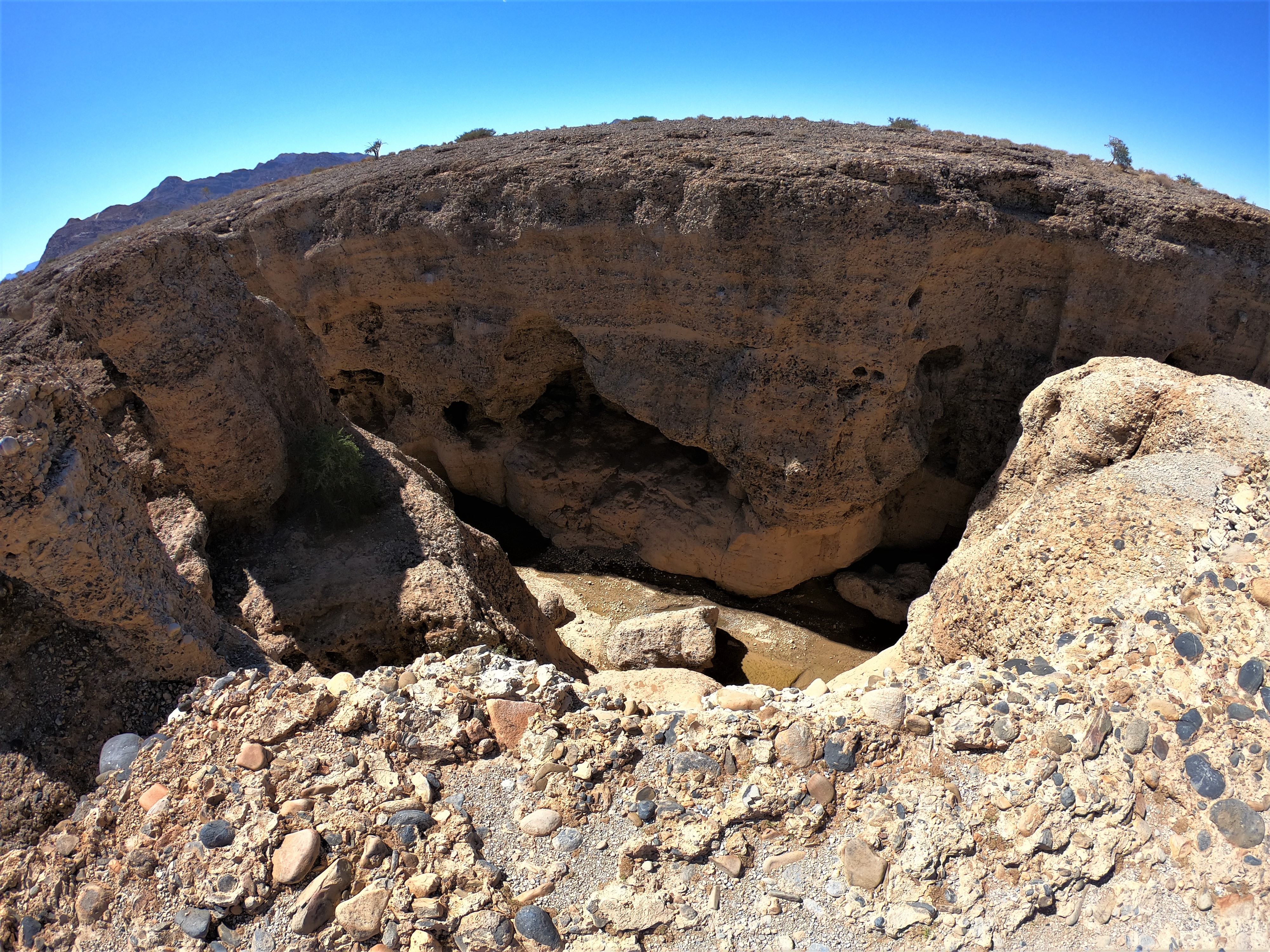
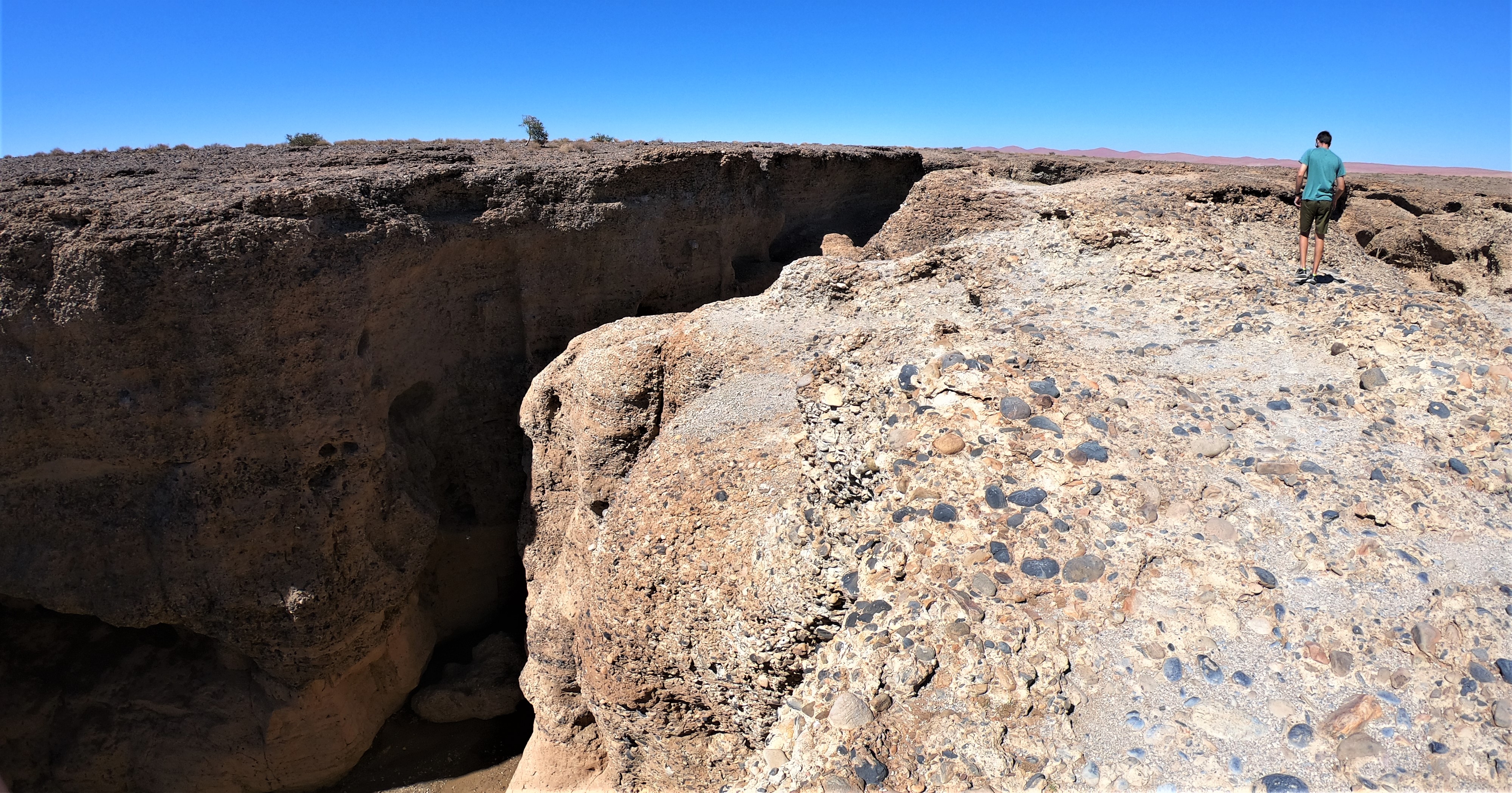
From the top you can hear the calls of birds and monkeys who live in the walls and crevices. We walked down and there found some water from the recent rains and lots of mud. We skirted around the edges as well as we could and enjoyed the geology. You could see the different layers and watch the sand grain get coarser (i.e. larger, for you non-geologists) until they were huge conglomerates.
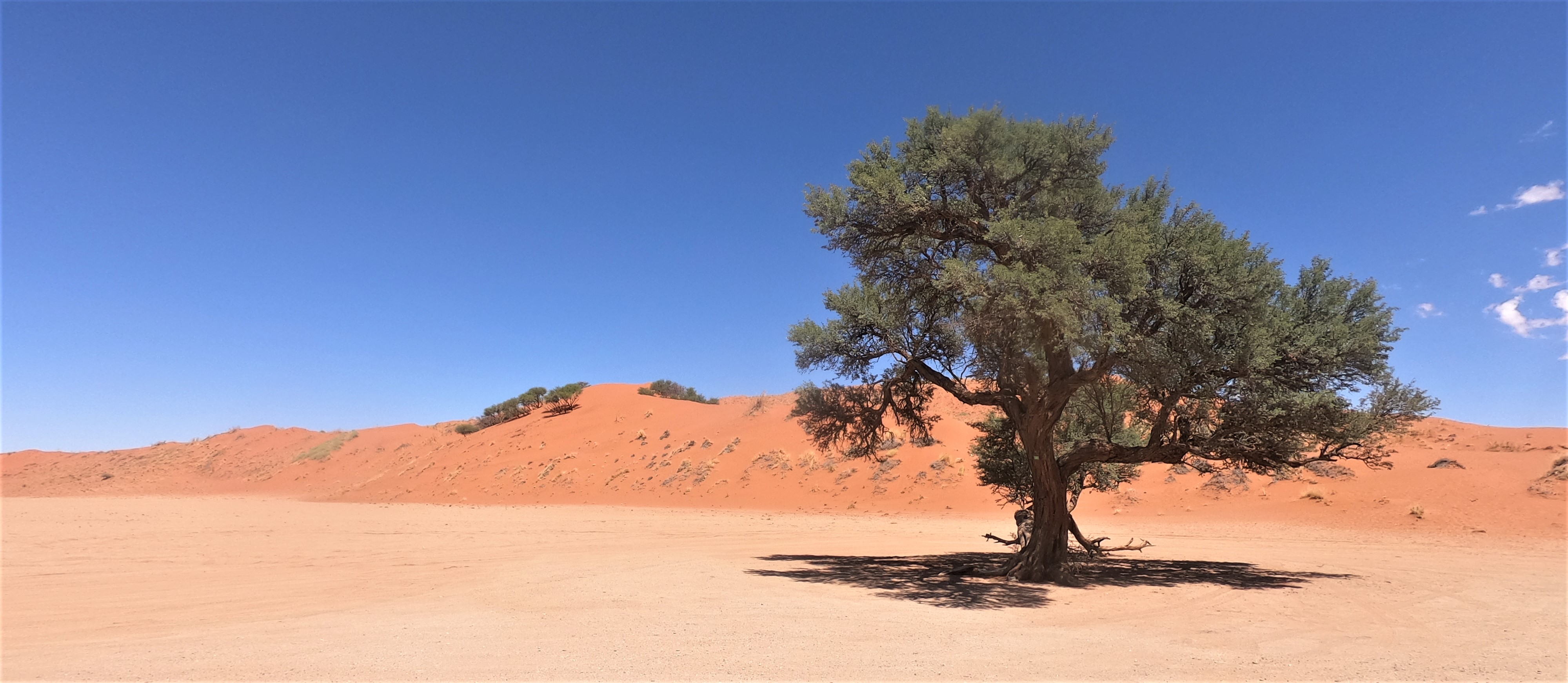
Next, we hopped on the paved road towards Elim Dune. The dune itself wasn’t super impressive but it was a nice spot to eat our PB&Js and watch the oryx roam. We got tomato flavored Fritos and they taste like a Frito that’s been dipped in ketchup, not sure why we’re surprised. We started listening to our new book on tape. The car doesn’t have an aux plug in so we listen to it using our headphones and we must look like we hate each other to anyone passing us.
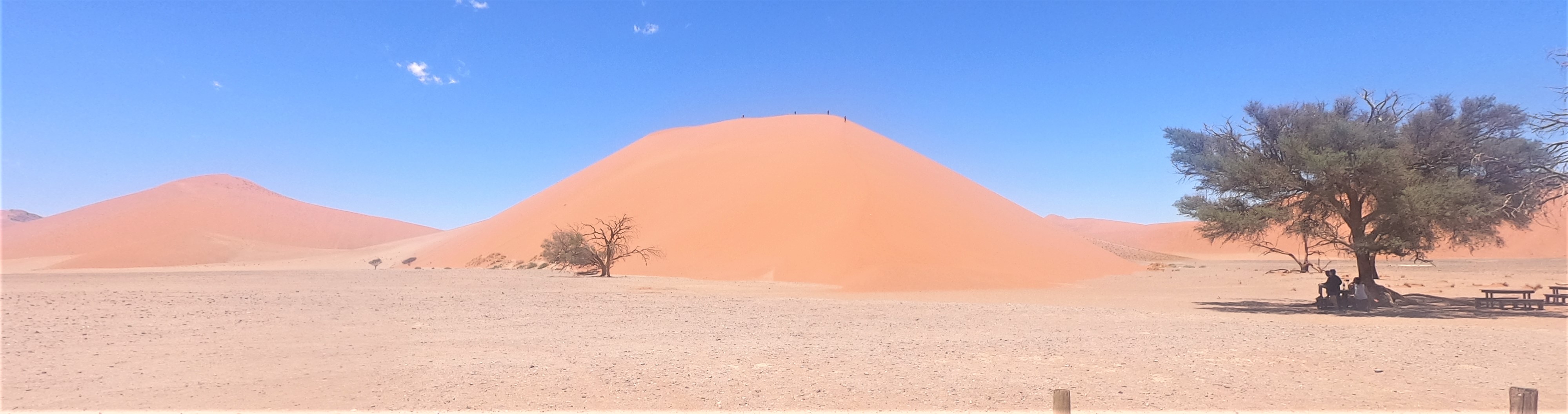
Next, we stopped at Dune 45 or what we thought was Dune 45. We got the car momentarily stuck in the sand, but Ryan power drove us out of there. Since it was early afternoon and already pretty hot, and we’d hiked Dune 7, we didn’t feel like we needed to crest #45. Driving about 5 minutes down the road we saw the sign for the actual Dune 45. They look identical. The real one had people making the long climb up. Namibia says this is the most photographed dune in the world, probably due to its road proximity/ease of access.
Finally, we were on to the main attraction: Sossusvlei. You pull off the tar road into a parking area where you can pay for a shuttle to drive you through the sand, or you can drive yourself if you have a 4×4 vehicle. We deflated our tires to 1 bar, as the rental car company told us, and were psyching ourselves up to not get stuck. One of the shuttle drives whipped over to us and he heckled us about getting stuck and playfully tried to convince us to get in his shuttle bus. We wanted to try ourselves and he said he’d pull us out when we got stuck.
Tires ready and heart rates rising Ryan pulled out into the sand. We had to drive about 10 minutes and Ryan kept repeating a hill country proverb, “if you’re moving you ain’t stuck”, as he whipped his way around the sand. The road isn’t clearly marked and people seem to just drive whatever looks like the hardest sand so it wasn’t always easy to figure out where to go or if you’d made it through the tough stretch. Eventually we found another gravel parking lot with people in it and figured we’d arrived. Luckily, we never encountered another car on the road while we were driving through.
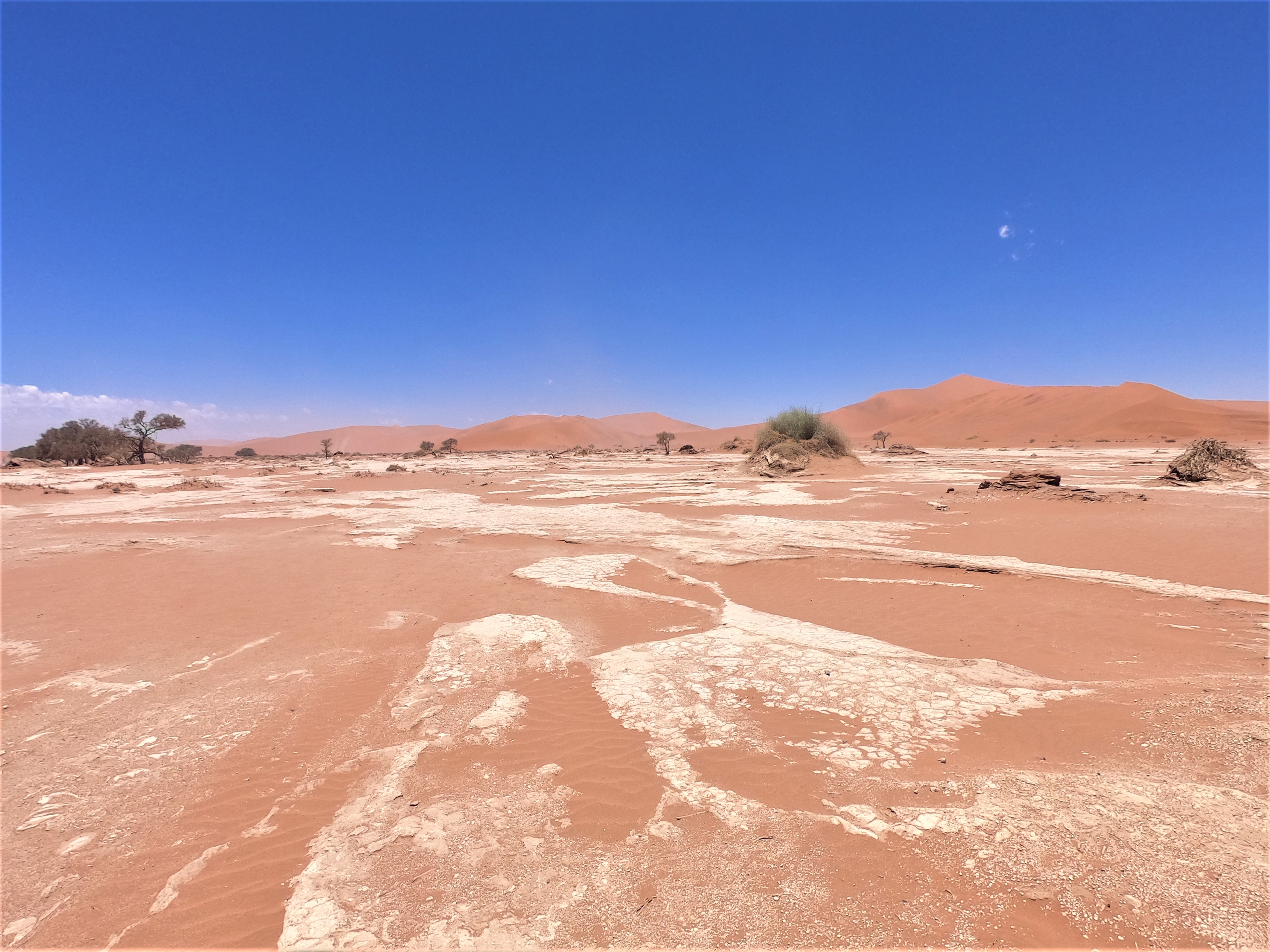
We asked a nice couple picnicking under a tree if we’d made it. They said yes, we were in Sossusvlei, which we might describe as slightly underwhelming. These are old river or lake bottoms that have dried up where scrub vegetation has managed to cling to whatever moisture is left. We were instructed that one of the other vlei’s, Deadvlei, is about a 20-minute walk up over the sand dune. We’d come all this way, so it looked like we were climbing a dune after all.
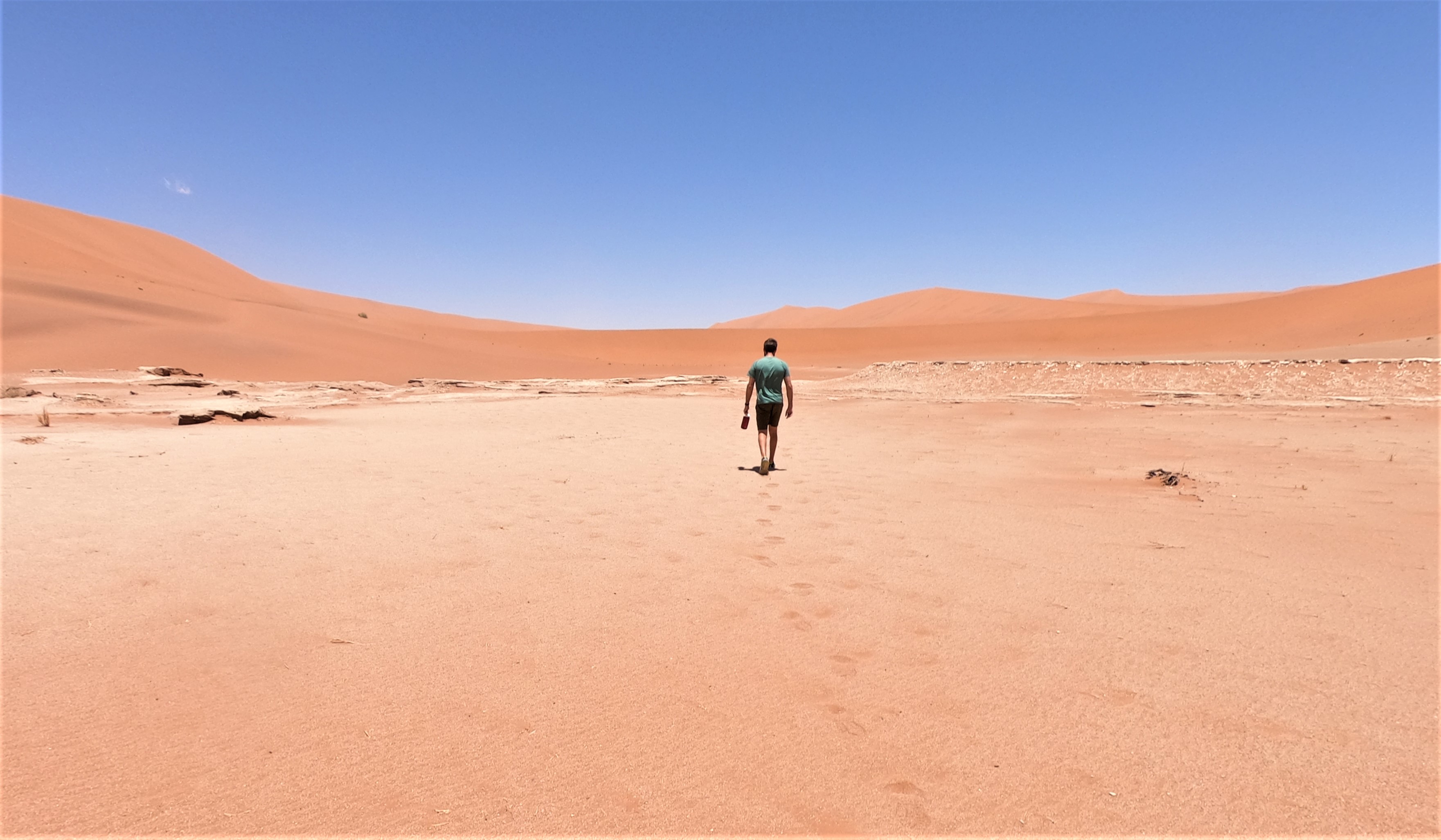
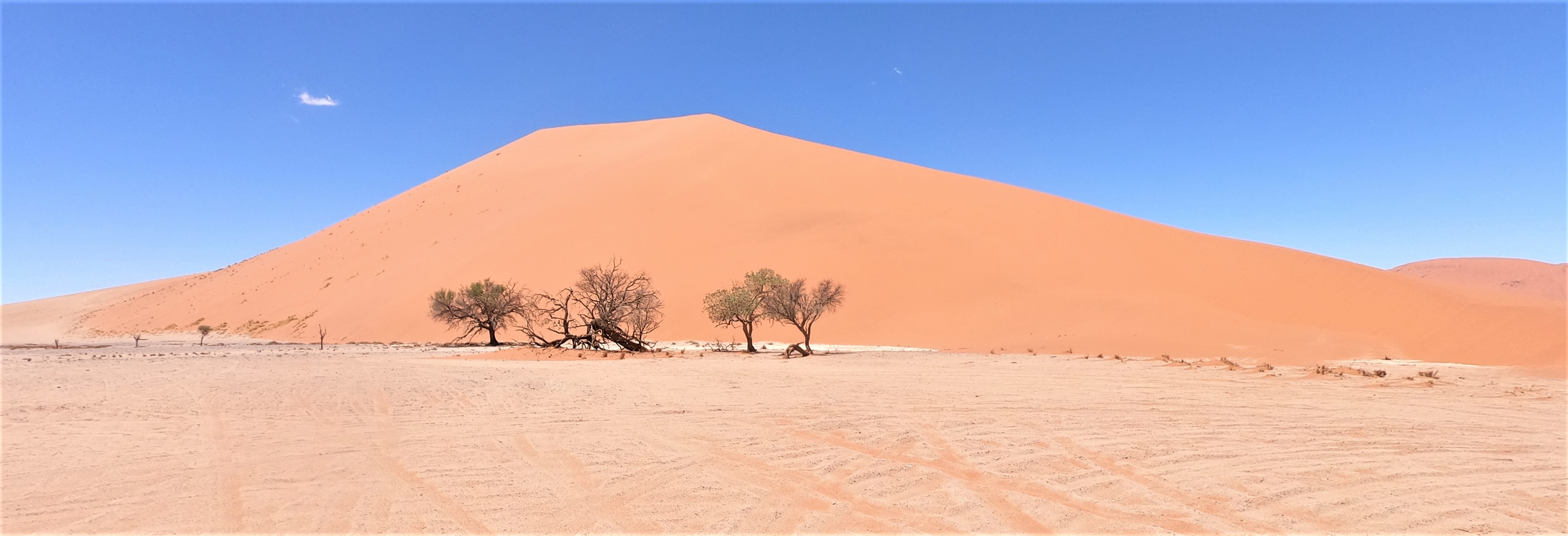
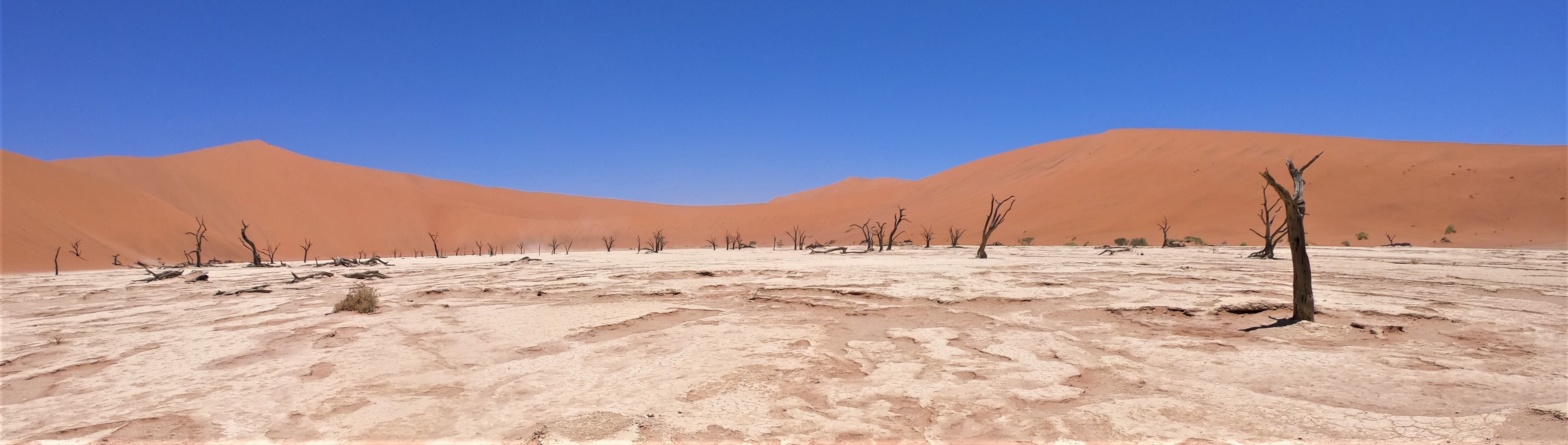
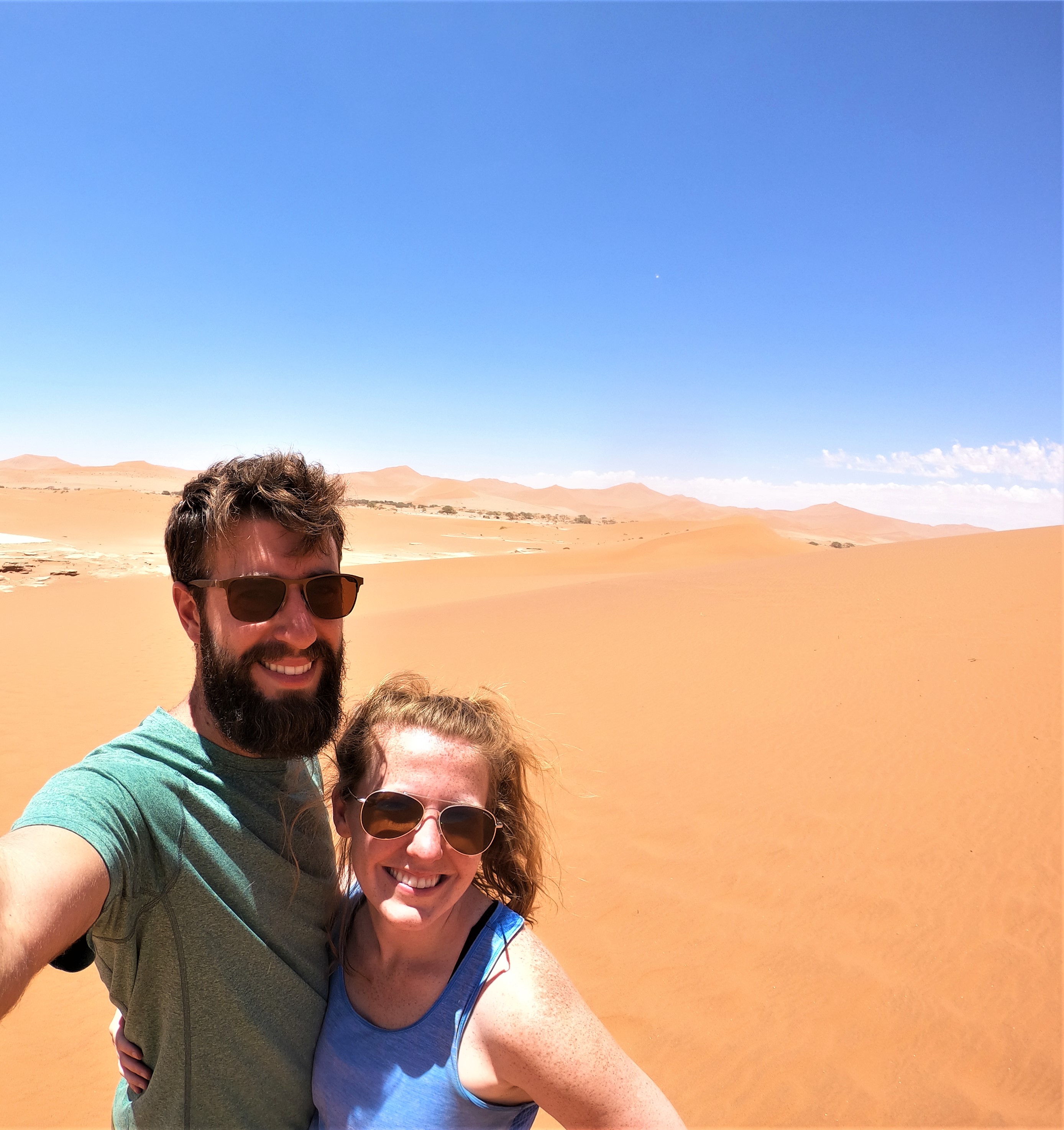
We walked past several pans without even a dead tree in them until we crested a larger dune where we could see Deadvlei. This pan has a bunch of dead trees still defiantly sticking out of the ground, refusing to admit they’re dead and has an eerie feel. You are surrounded by huge dunes with the dune called Big Daddy in the background. How did anyone find these to begin with? How lost were they? We saw as much as heard shouts, from people running down the steep side of the dune.
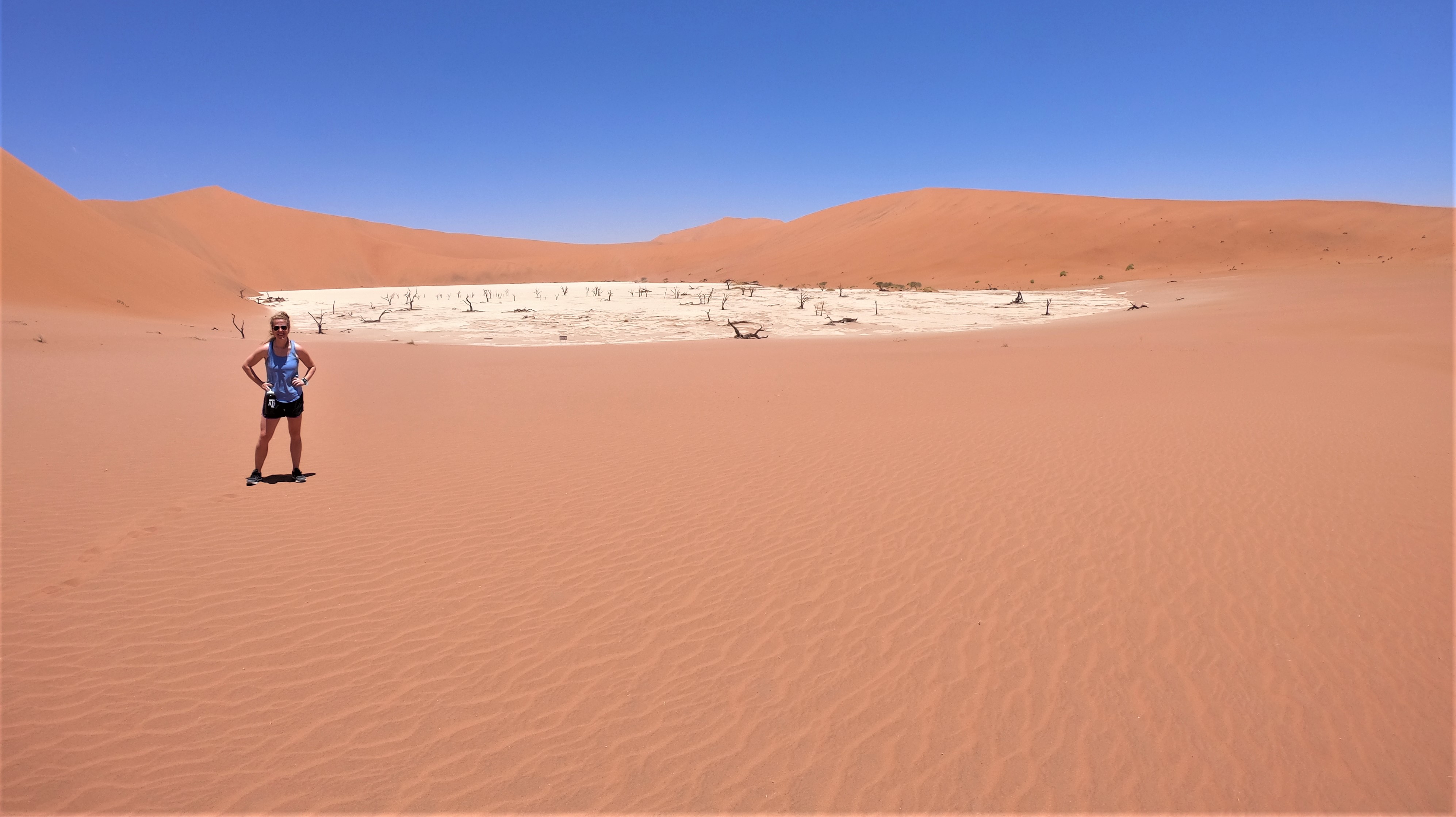
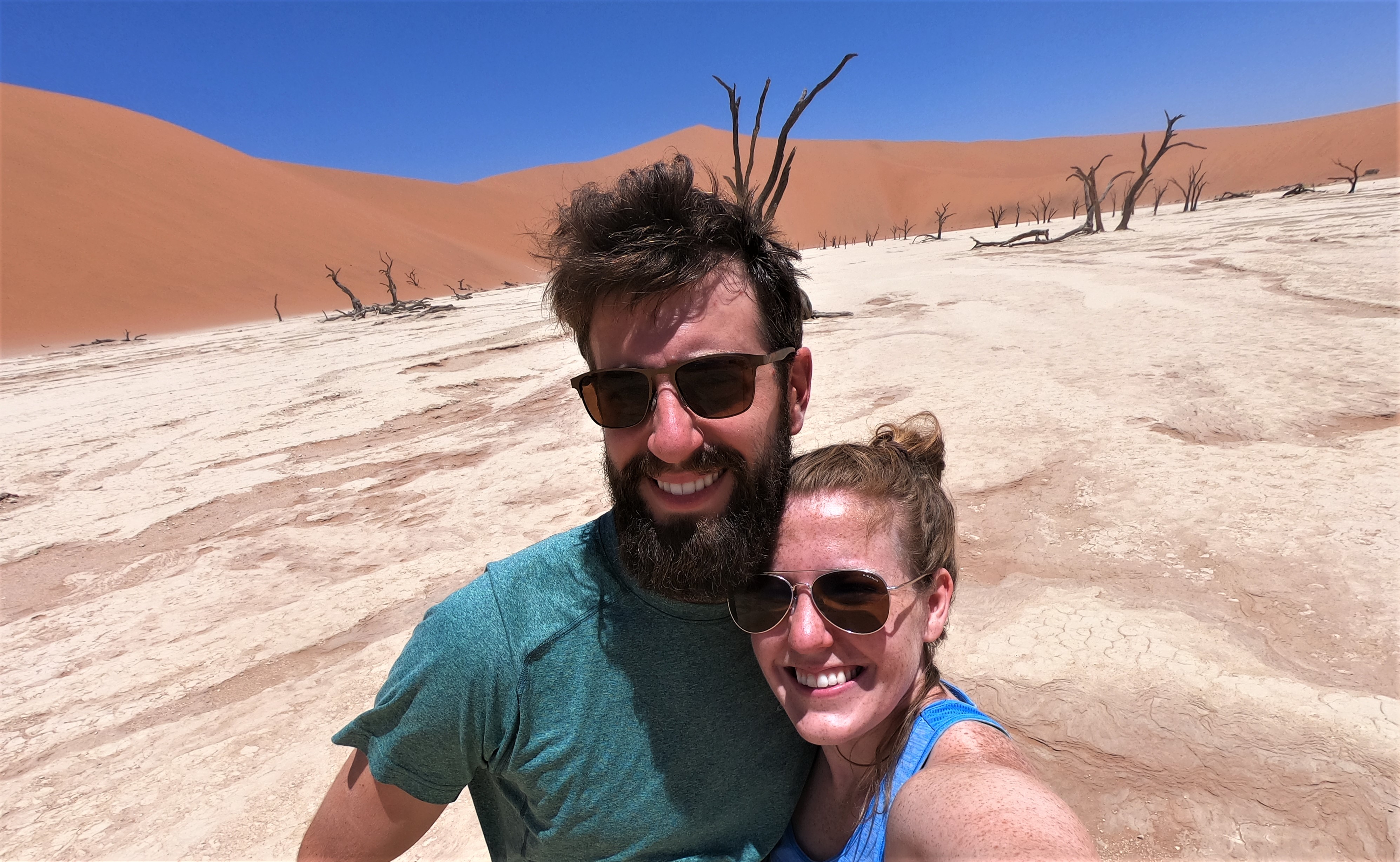
We hiked back; it was only a mile, but our shoes were filled with sand as we didn’t wear sandals this time. Then it was time for Ryan to get us out. He drove us through with ease and said he would have enjoyed it more if it wasn’t worried about getting the rental car stuck or damaging it. The rental staff really put the fear of god in him. We filled our tires back up to the rental company’s recommended pressure then got back on the tar road out of the park.
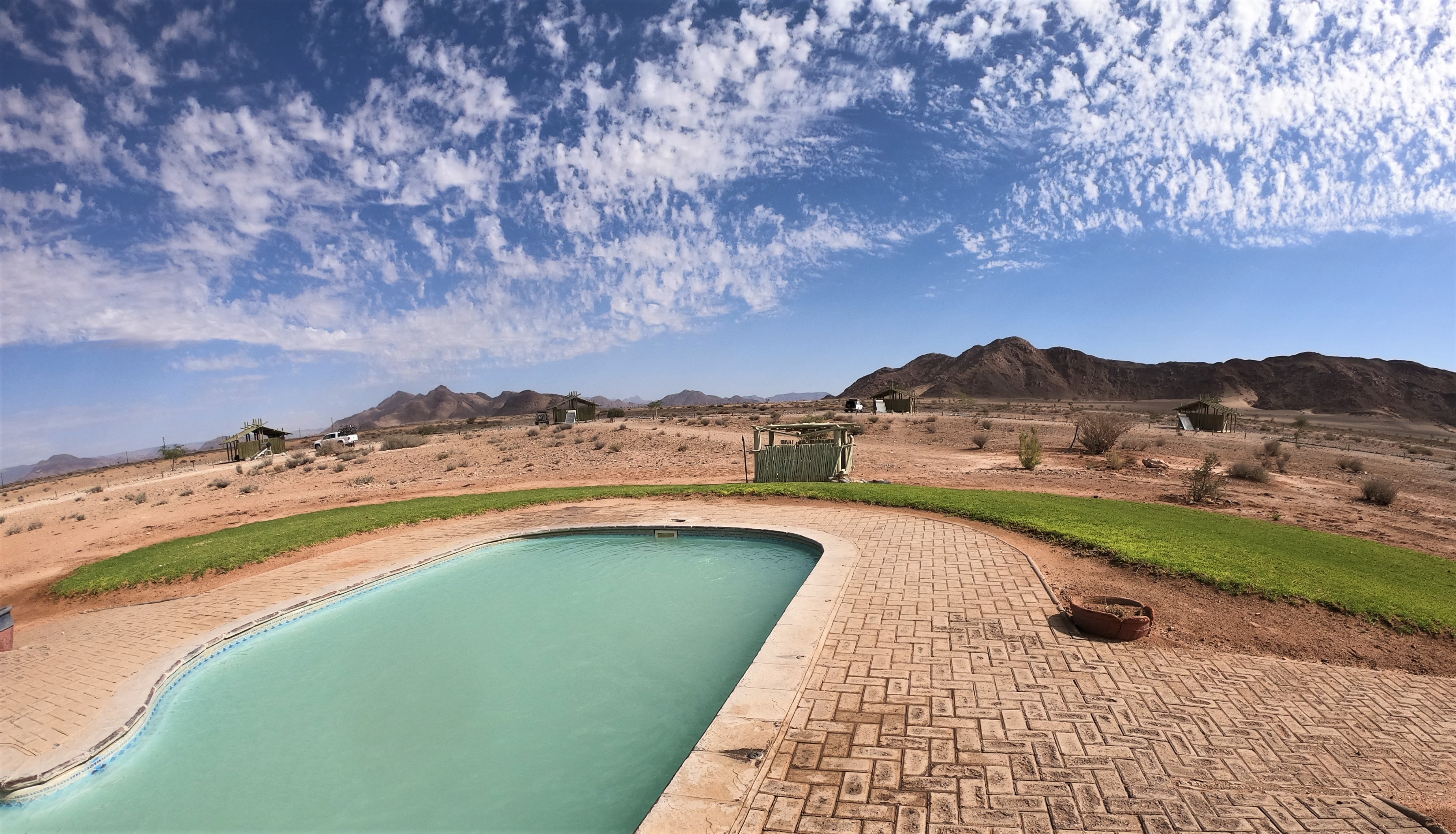
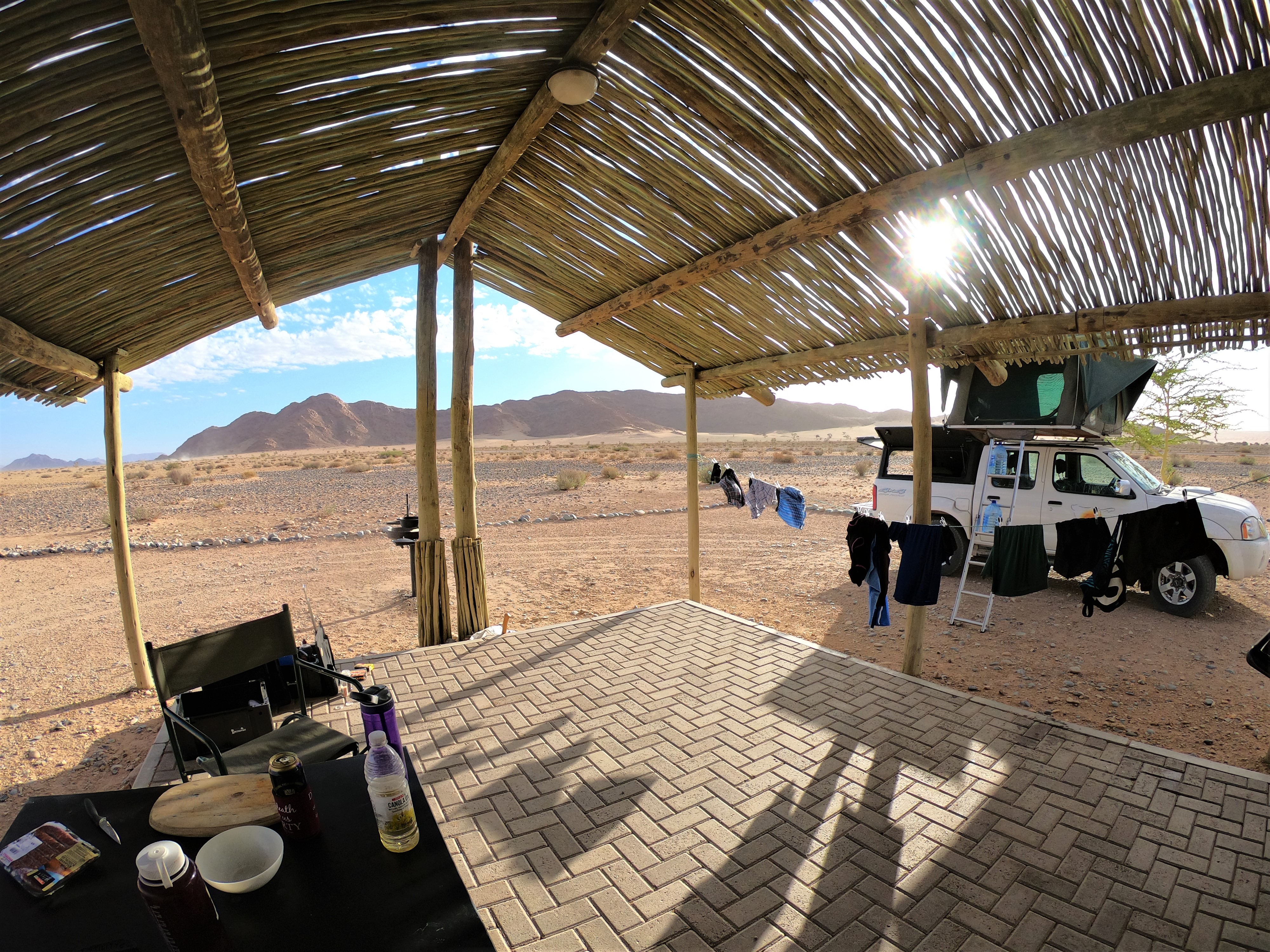
We exited the park and crossed the street to our $30 a night campsite. The national park was trying to charge $70! After pulling into our spot and marveling at how nice this campsite is (private shower, private toilet, huge shade area, braai area with adjustable grill/pot hook) we headed for the pool. The pool was murky, as they all seem to be, and we chatted with a young Namibian couple driving to South Africa for their Christmas holiday. Sebastien and Pepe used to live in Cape Town (our next destination) so they gave us lots of recommendations on restaurants and bars.
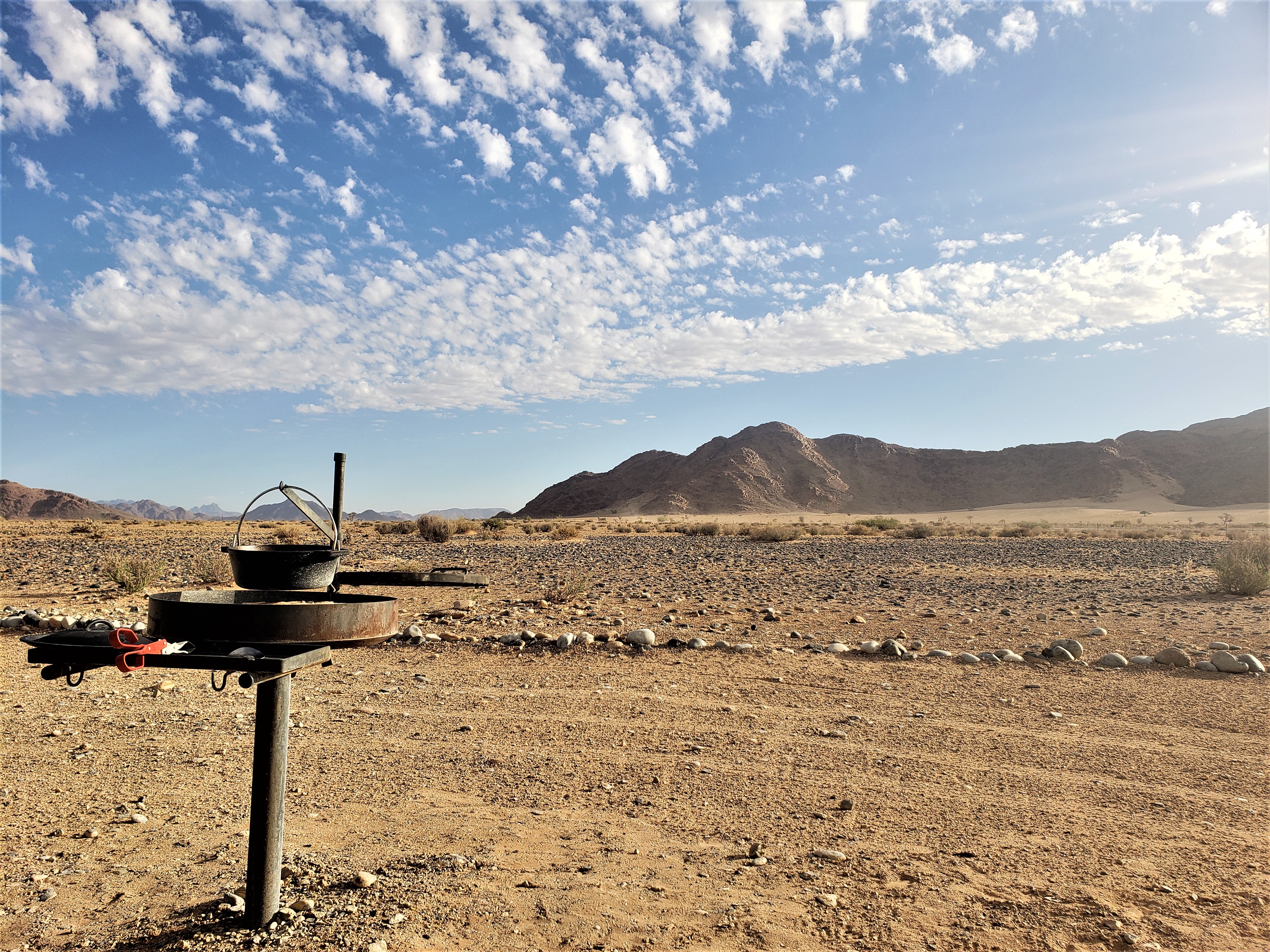
For dinner Ryan made us sausage and spicy potatoes with onion and bell pepper. We did laundry and the wind really began to pick up. It was whipping all sorts of wind and sand debris from the dunes right towards us. It was so windy and dry our soaking wet clothes dried in 30 minutes. We went to bed pretty early and prayed our tent wouldn’t fly off the truck.
Day 17 – Helmeringhausen – December 15
The wind died down overnight and the next morning we were able to make egg sandwiches on the propane without worrying about it blowing out. We had a long driving day ahead of us. We were driving 3 hours to a town called Helmeringhausen with a German restaurant and beer garden, then an additional 45 minutes to our campsite at Farm Aubures Campsite. We filled up with gas then Elizabeth was determined to keep up her practice in driving stick. She stalled out several times putting it into gear in front of the gas station men, but eventually got us out on the gravel. She made it about an hour until we went up a huge hill, like 30-degree grade, and didn’t approach with enough speed. It stalled out ¾ of the way up and try as she could, and she kept rolling back quite a ways and couldn’t get it in gear. Ryan took over and also struggled a bit so she felt better.
The wind died down overnight and the next morning we were able to make egg sandwiches on the propane without worrying about it blowing out. We had a long driving day ahead of us. We were driving 3 hours to a town called Helmeringhausen with a German restaurant and beer garden, then an additional 45 minutes to our campsite at Farm Aubures Campsite. We filled up with gas then Elizabeth was determined to keep up her practice in driving stick. She stalled out several times putting it into gear in front of the gas station men, but eventually got us out on the gravel. She made it about an hour until we went up a huge hill, like 30-degree grade, and didn’t approach with enough speed. It stalled out ¾ of the way up and try as she could, and she kept rolling back quite a ways and couldn’t get it in gear. Ryan took over and also struggled a bit so she felt better.
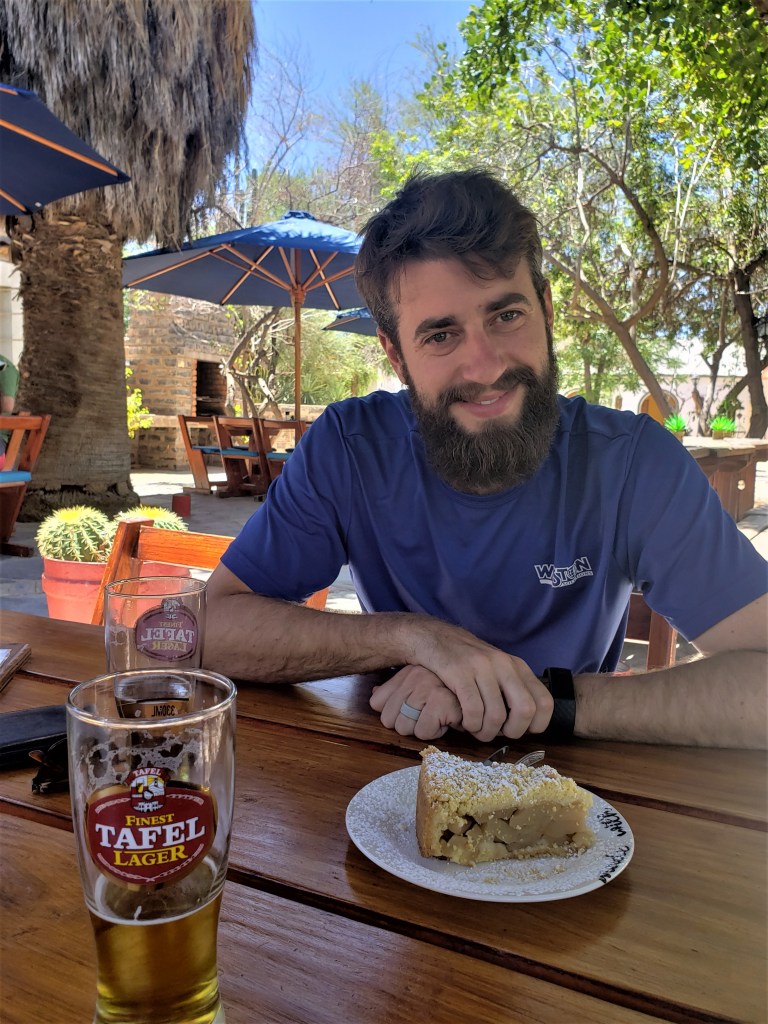
We made it to the restaurant and found a nice table outside. Elizabeth got vegetable casserole, like mac and cheese with squash, and Ryan got sweet potatoes and bratwurst. We appreciate eating out so much more since we’ve been making every meal for the last few weeks. We drank our beers and enjoyed being out of the car as long as we could.
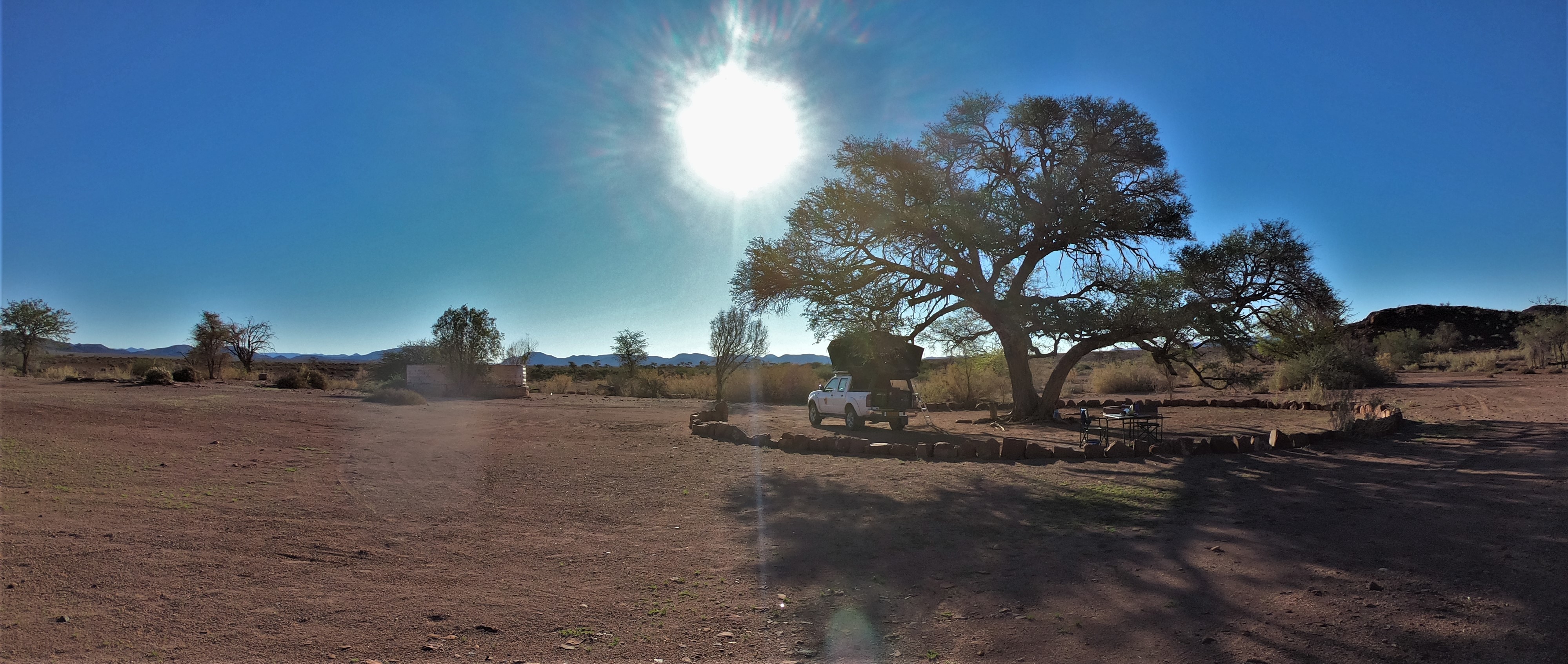
The road to the campsite was very rough and all on private roads. We even had to open a few gates as we passed over multiple property lines, so we felt slightly sketched out. When we arrived, the farmer walked out to greet us and ended up telling us his dad is a geologist, the old director of the Namibian Geologic Survey, and this land is where he did his first mapping project. We are in the valley and surrounded by gorgeous mountains. He said we had the campsite to ourselves and would be staying about a kilometer from his house and to take our pick of any of the spots. We choose the one with a giant tree, the type of tree with the giant thorns, and spent the afternoon wandering around the property.
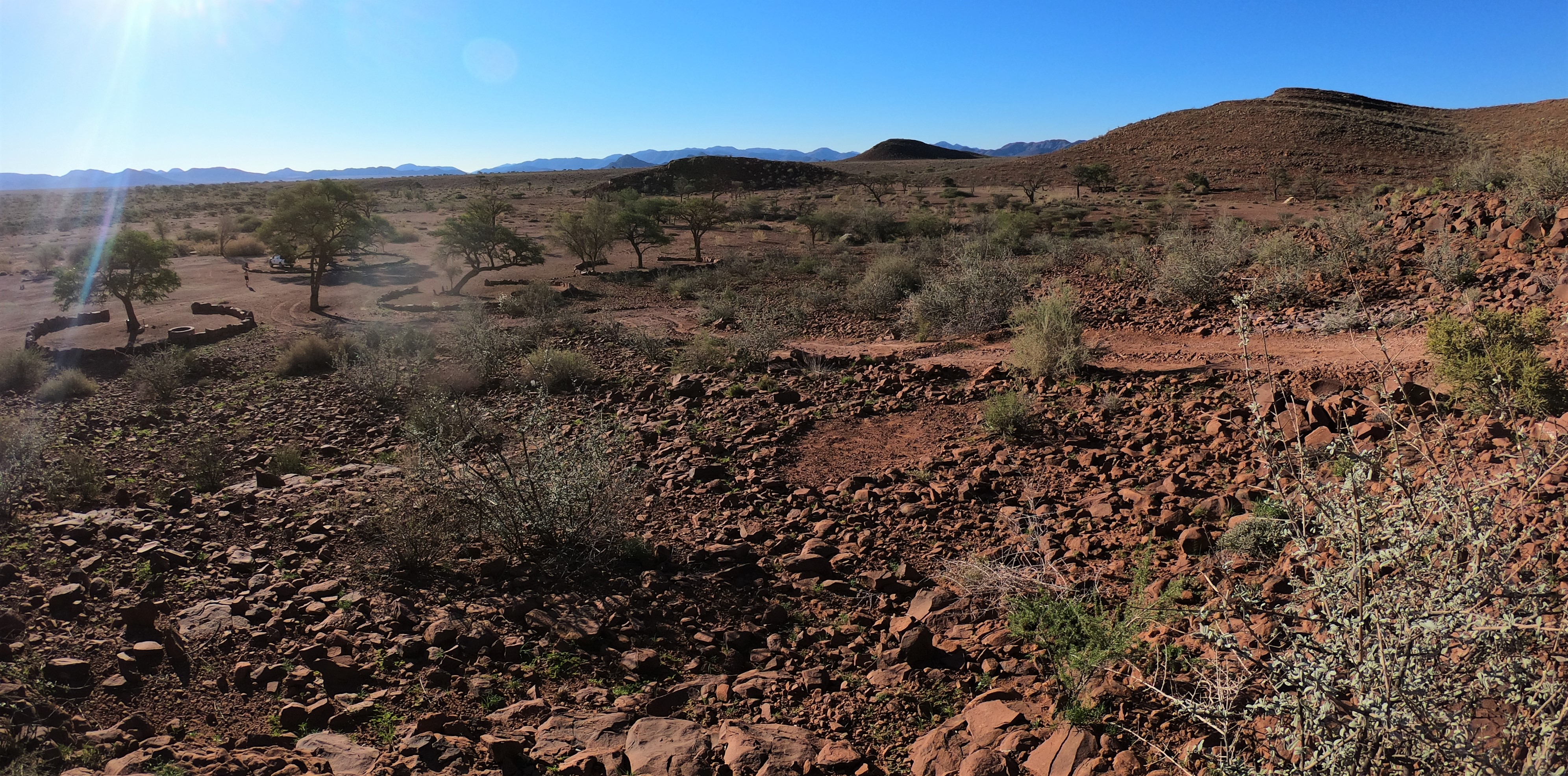
Later that evening the farmer came down to turn our water heater and gave us the friendliest, most soft-spoken rant we’d ever heard. He is a third generation karakul farmer; his great-grandfather began farming this land over a 100 years ago with the same type of sheep from Afghanistan. These sheep are specifically slaughtered 48 hours after birth to make exceptionally soft fur. He told us all about the crash in the fur market in the 70s and how they’ve been struggling ever since. When the market collapsed, the majority of farmers switched to farming a softer, more domesticated breed of mutton. Since they’re for meat they don’t slaughter the sheep until they’re 7 months old. He explained that not slaughtering them immediately, combined with their poor herd instincts, has put the farmers at risk with the natural predators of leopard, cheetah, jackal, etc. and now the farmers go out a few times a week to hunt these endangered predators that are attacking their livestock. The fur ban, which intended to stop the poaching of endangered animals for fur, killed almost all fur making, which in turn has led to the hunting of endangered predators.
He then continued on about plastic and how faux fur is made of recycled plastic but uses so much solvent and petroleum it’s bad for the environment. He talked more about the plastic crisis and said a fur would only take 3 months to rot away, whereas plastics take thousands of years. He told us the lamb skins he sells for 315 Rand (~21USD) sell as coats for over 40,000 euro, but he doesn’t see any of those profits. This farm is 40,000 acres, employees 10 people who have 30 dependents and has the same plants, predators, and water wells that pump from windmills for the last 100 years plus all their electricity is solar. Sounds pretty sustainable to us. Since his sheep still have a strong herd mentality, only 1 shepherd with a pack of dogs is needed in the field for 500 sheep to be protect them from predators.
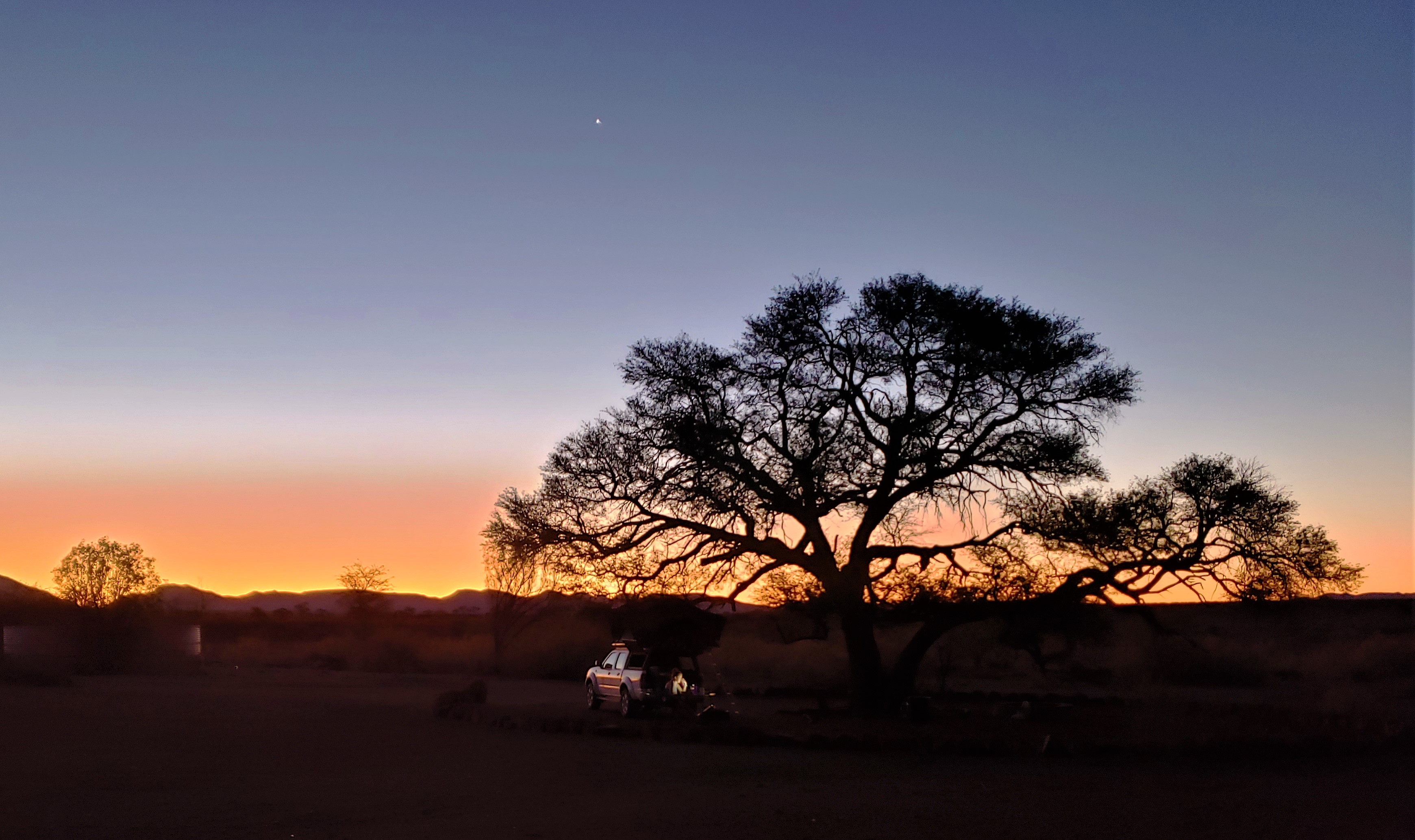
It was very interesting to hear this side of the argument. We hadn’t before considered how furs may be a more sustainable and greener industry than producing plastic fake fur. Food for thought. We were lazy that night drinking beer and eating leftovers. The sunset was beautiful and the only noise were the cicadas and wind. That night we finally got the star gazing we’d been dreaming of. There was absolutely zero light pollution and we saw shooting stars and the haze of the Milky Way. This was the most stars either one of us had ever seen!
Day 18 – Klein-Aus Vista – December 16
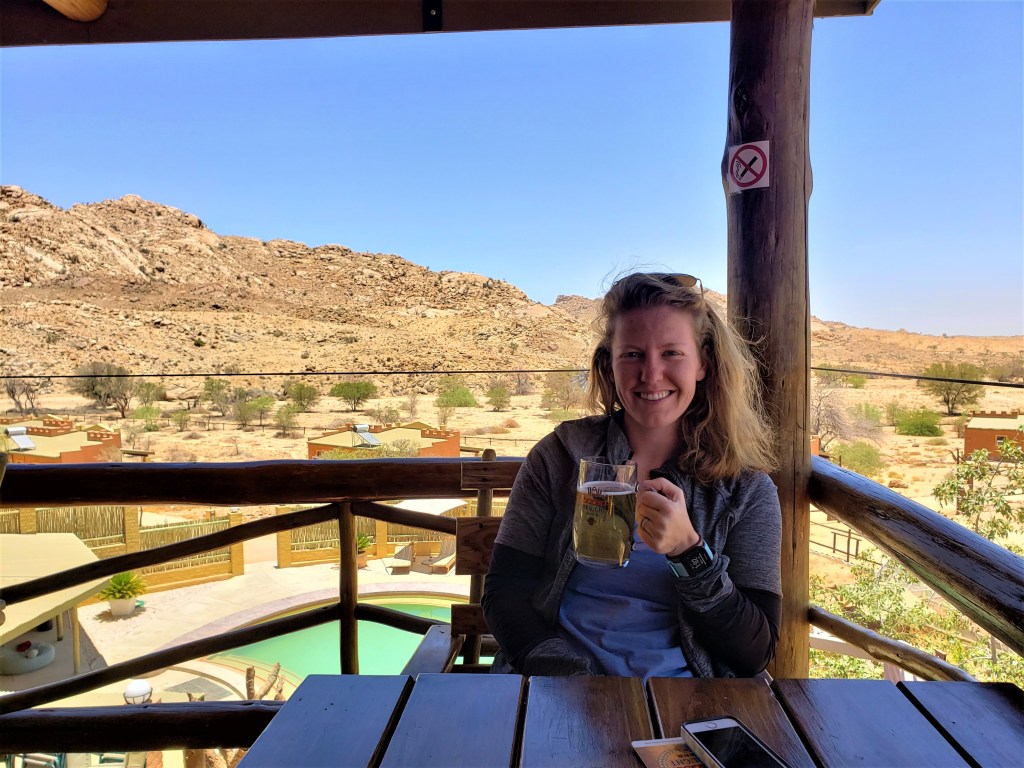
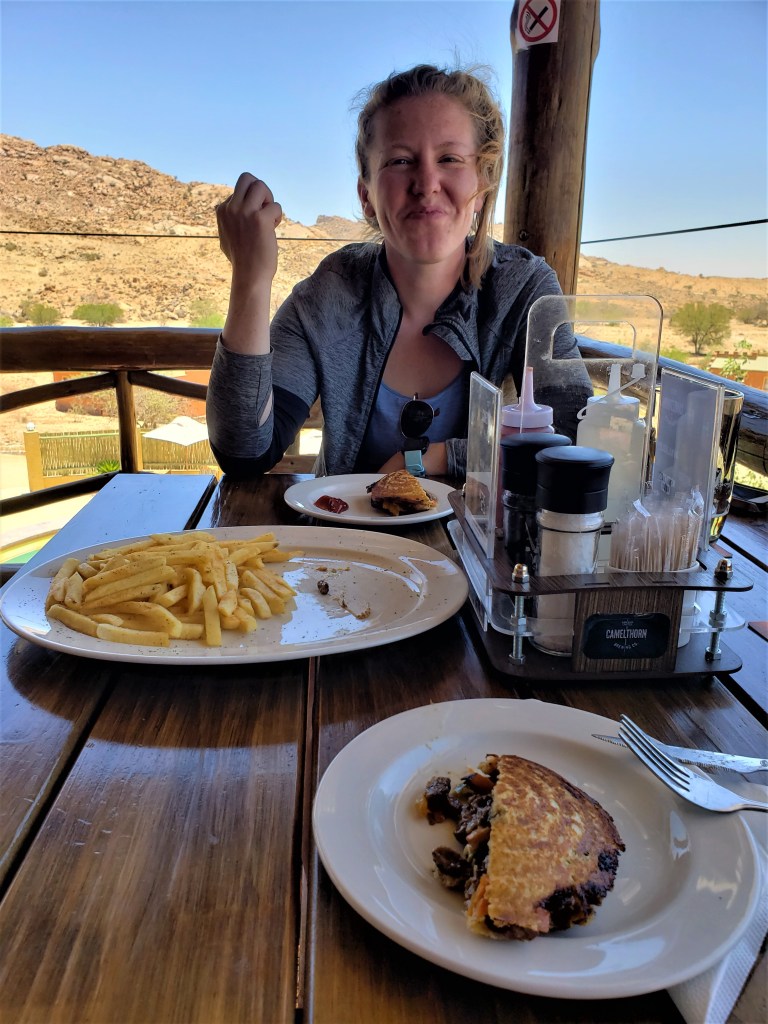
As we were packing up to leave a shepherd and his sheep passed through the camp ground. We made oatmeal then were back on the gravel roads heading towards Aus and our next campsite Klein-Aus Desert Horse Camp. The reception area had a big pool and bar and a restaurant with a patio. We decided to get a beer and sit on the patio. It didn’t take us long to glance at the menu and share a jaffle and fries. A jaffle is like an African panini, they’re apparently popular in other countries across the globe with various names. It had beef, vegetables and sauce. It was amazing and Ryan is going to learn to make them.
Finally, we drove over to the camping area a couple of kilometers away. It was quite hot and our campsite didn’t offer much shade. We decided we might as well go on a short hike, since we couldn’t escape the sun we might as well commit to being in it, and headed about 1.5 kilometers up to the Horse Stone Viewpoint. Some of the rocks here are 2 billion years old from the formation of the supercontinent Gondwana. This area was also the site of a lot of fighting in WW1. There were several German ramparts and other old war relics.
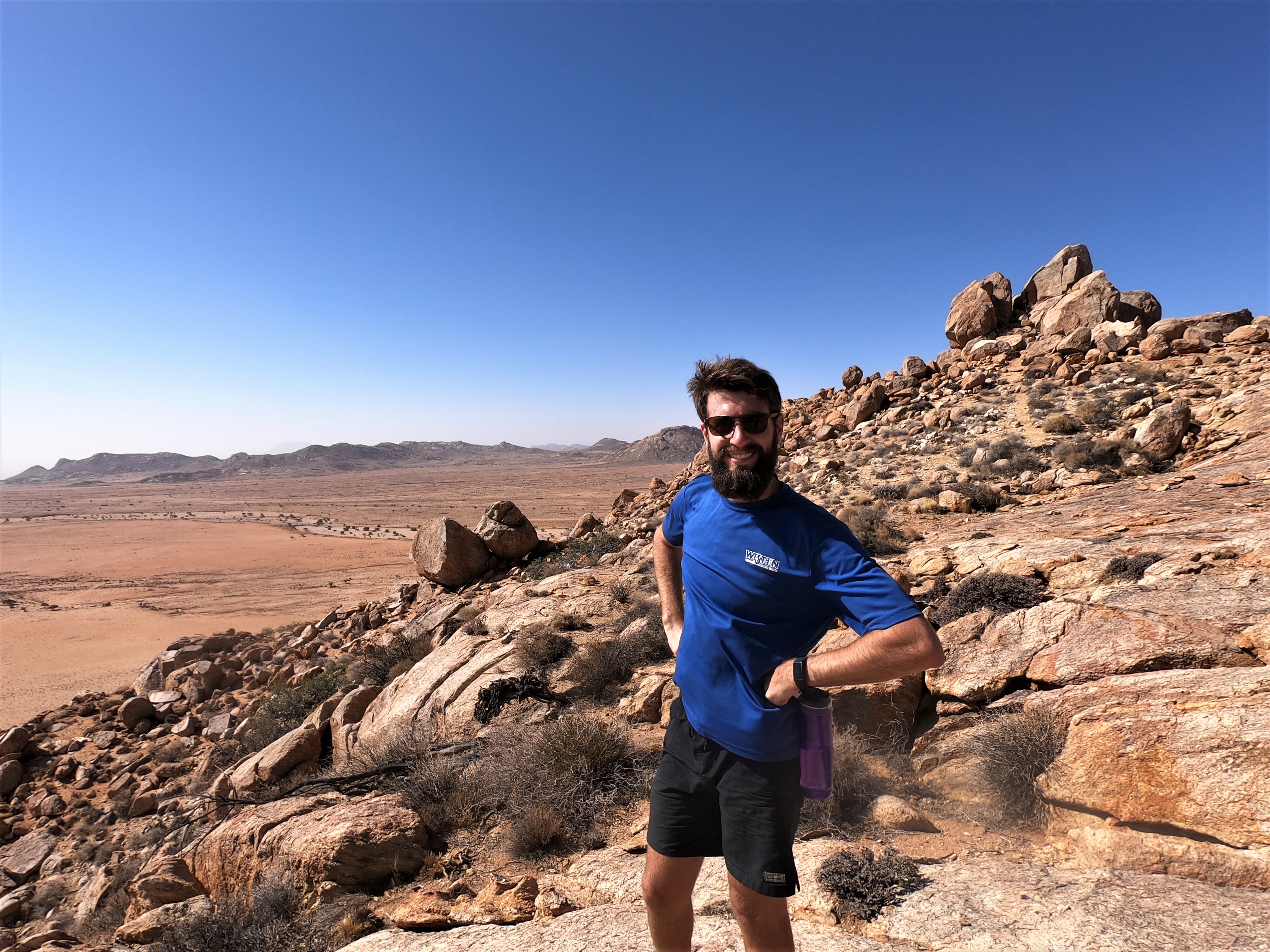
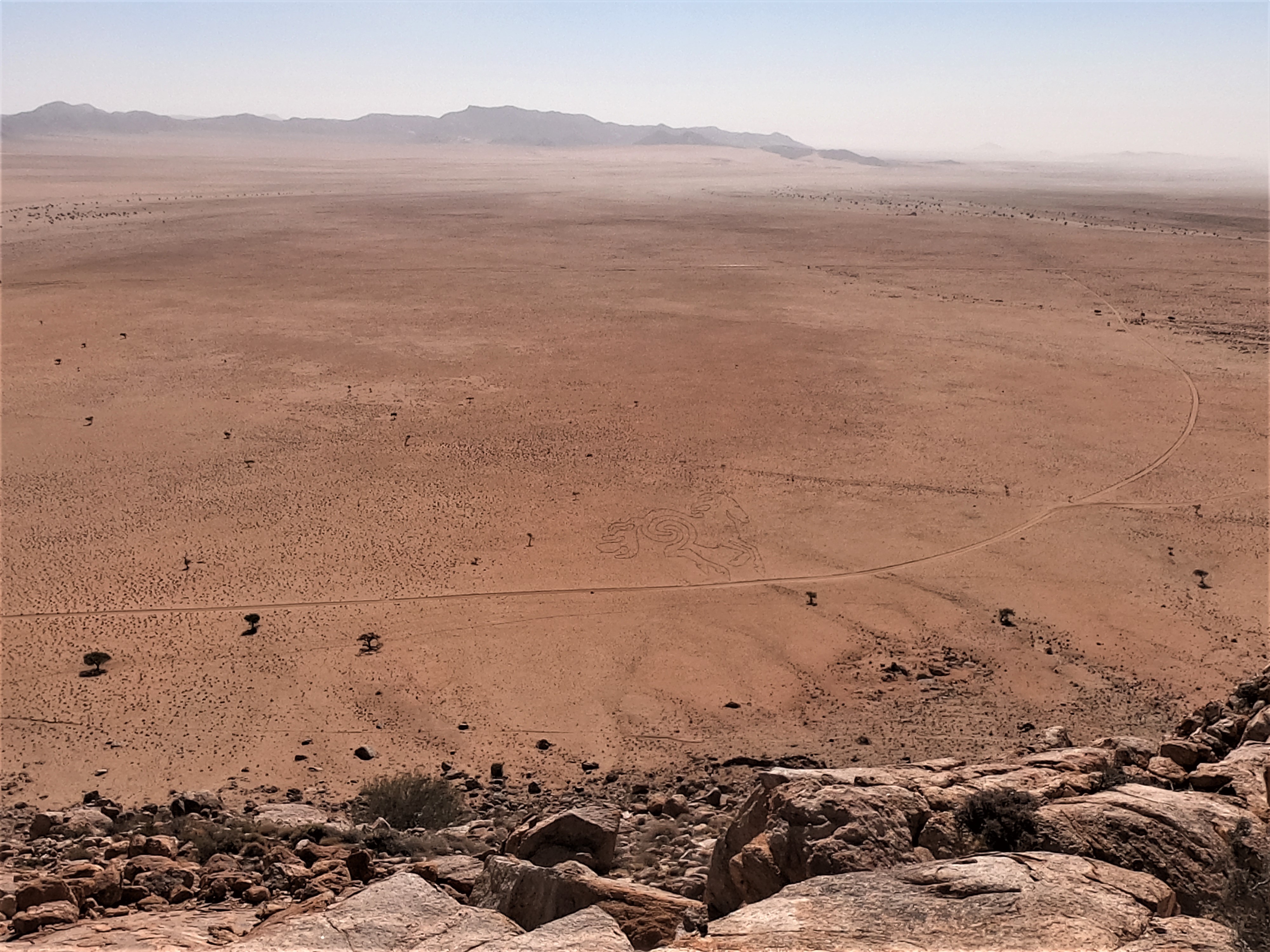
When we reached the top of the hill we looked down and could see the art called Stone Horse. There are a lot of wild horses here. We sat for a while then made the scorching hike back to the tent and opened a cold bottle of white wine. All of the wines in Namibia (except for a very small number) are from South Africa. We drank a bottle called Meerkat.
For dinner that night Ryan made Jamaican rice and peas with braai lamb chops. We saw all sorts of signs and warnings of clever baboons (with ‘screw-driver fingers’) but luckily didn’t have any encounters.
Day 19 – Luderitz – December 17
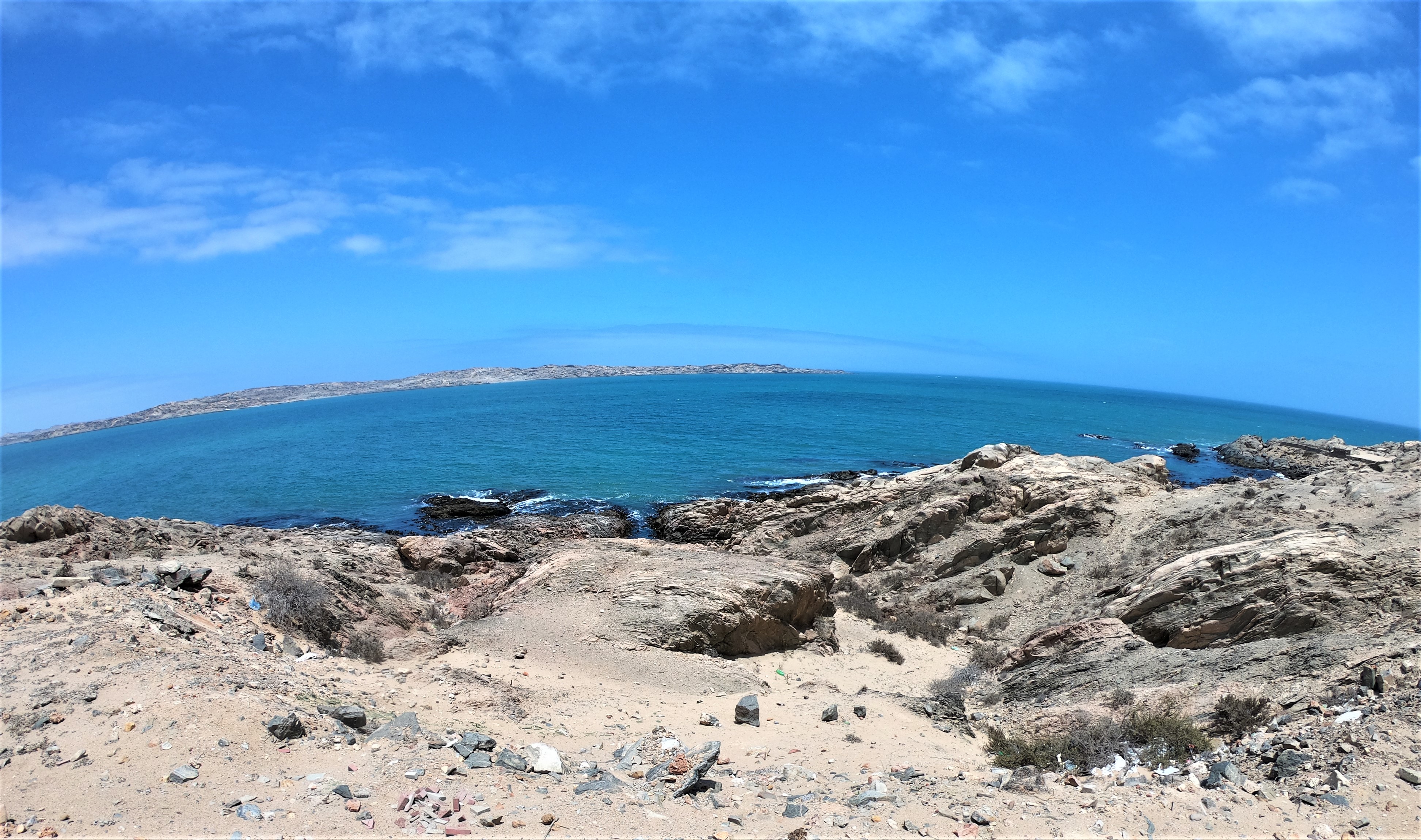
After more yogurt and granola, we hit the road towards Luderitz. This city is on the western coast and was home to a lot of mining and diamonds back in the day. Our plan was to stop at the lost city of Kolmanskop, where you can walk through an old abandoned town that’s being reclaimed by nature and the sand dunes. Not feeling rushed we popped into town to buy more beer and firewood. After accidently driving through a part of the city that was just a shanty town, the wealth gap here is incredible, we sat on Shark Island enjoying the cool breeze and seeing the coast one last time.
We finally drove to Kolmanskop arriving at 12:45 only to discover they close at 1 and we couldn’t get in. Elizabeth was devastated, we were on a schedule and wouldn’t be able to stick around until the next day, but honestly why close at 1 pm? Really frustrating. We got back in the car and pressed on, another two hours to our campsite at Alte Kalkofen.
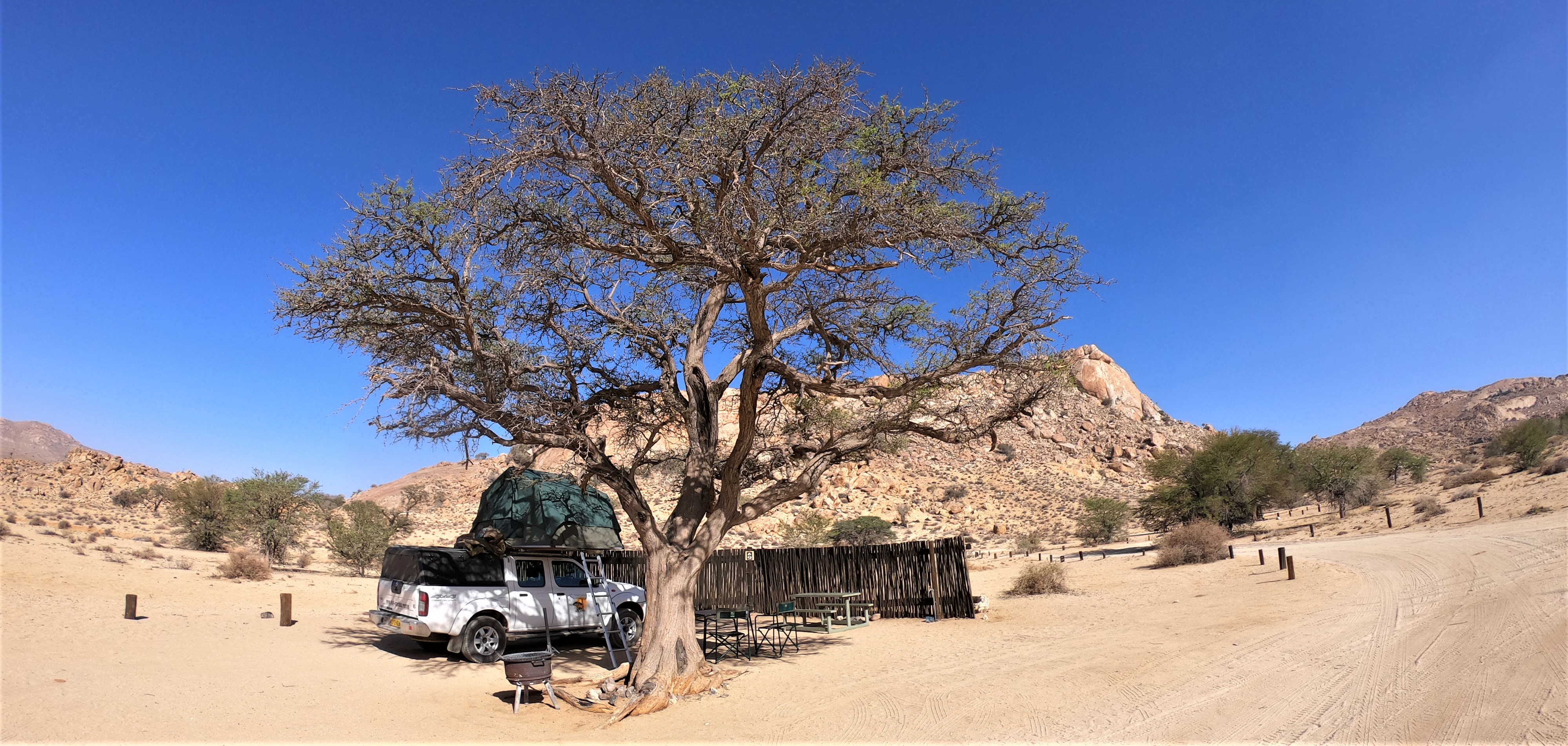
We were greeted by an old, white Namibian man who had been swimming in the pool with his granddaughter. The lodge and grounds looked right out of Chip and Johannes Magnolia Farms with bible verses everywhere. He showed us the campsites and the pool. We were the first campers to arrive and picked our favorite little bathroom shack to post up next to. Each bathroom had a private toilet and shower.
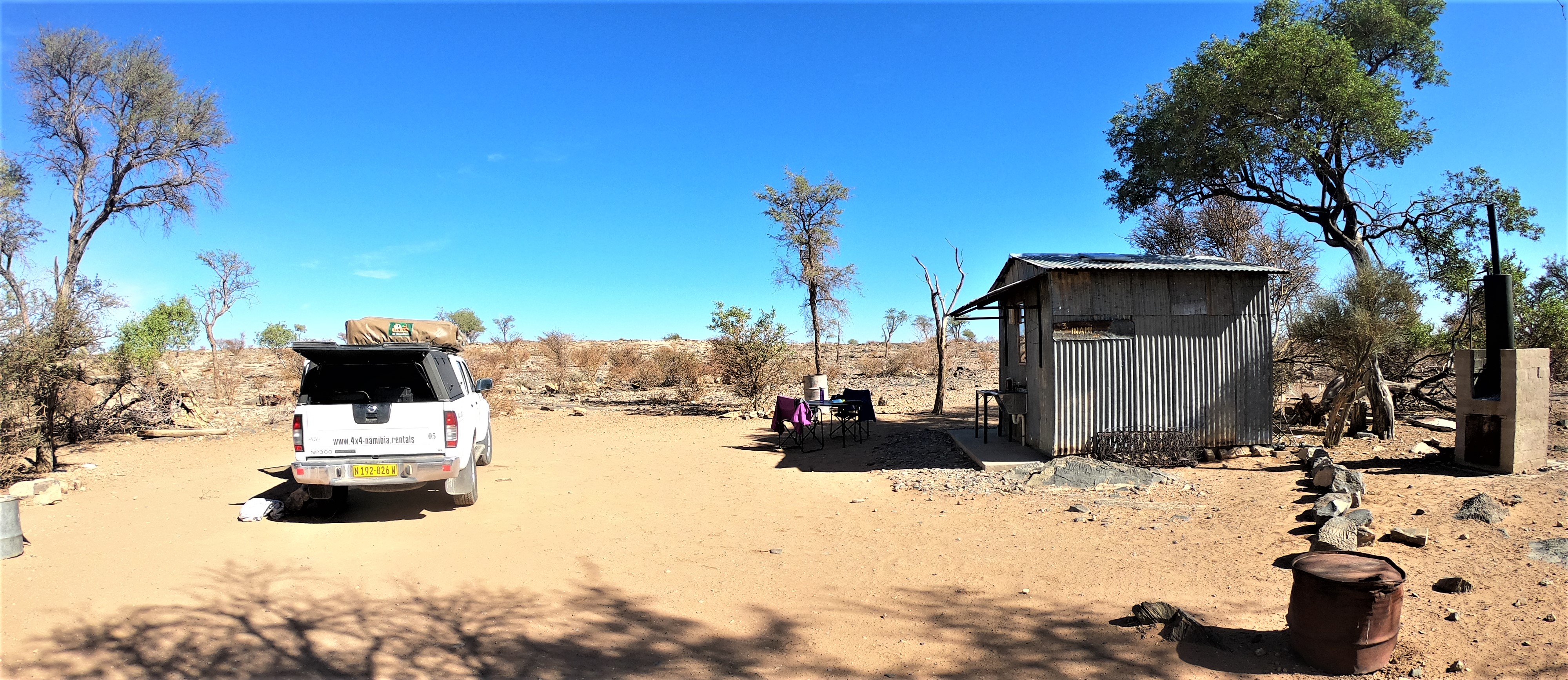
It was extraordinarily windy that day and we were on the edge of the desert with gusts of dirt and sand. Our drive over felt like we might be encountering one of the dreaded sand storms we’d heard about. We threw on our bathing suits and headed to the pool where there was a little shade and escape from the wind and sun. When dinnertime came, we cooked pasta in the bathroom to escape the dust and spent the evening in our tent watching Netflix and listening to our book.
Day 20 – Fish River Canyon – December 18
After another oatmeal breakfast party, we made the trek south towards Fish River Canyon. Following Google, we were led down what we believed to be a C-class road. All roads in Namibia are classified by their quality and frequency of upkeep, B-class roads are the nicest we’d been on and are all tarred (asphalt), C-class are well-maintained gravel roads, D-roads are infrequently maintained gravel roads, and so on. This was the worst road either of us have ever encountered in our lives with horrible gravel, ruts, and potholes. We spent most of the time off-roading in parallel tracks to the road like other cars had. After 20 grueling kilometers we were spit out onto the smooth C12 road and a glance behind us revealed that we had been on F-class road. Thanks a lot Google.
The drive after that was very simple and once we were in the park, we saw many ostriches on the side of the road. Our camp for the night was called Hobas and we made grilled cheese and leftover rice and peas for lunch. While we were eating an American man walked up to our table, trailed by two park workers, asking us if we saw a tent at the far campsite when we arrived. He had the stakes, still in the ground, but then tent was missing. Nothing was there when we arrived and he and the workers headed into the woods searching.
Later we brought him a beer, curious to hear his troubles, and we learned that the baboons had been particularly nasty that morning and they believe they ran off with his tent when he was exploring the canyon. We chatted over our beers, his name is Colin from Baltimore and is living in Johannesburg working for a nonprofit. He’d luckily bought these tents on special, buy one get one free, and had a spare in his car. He found his tent later, came walking out of the woods with it, and it was pretty torn up.
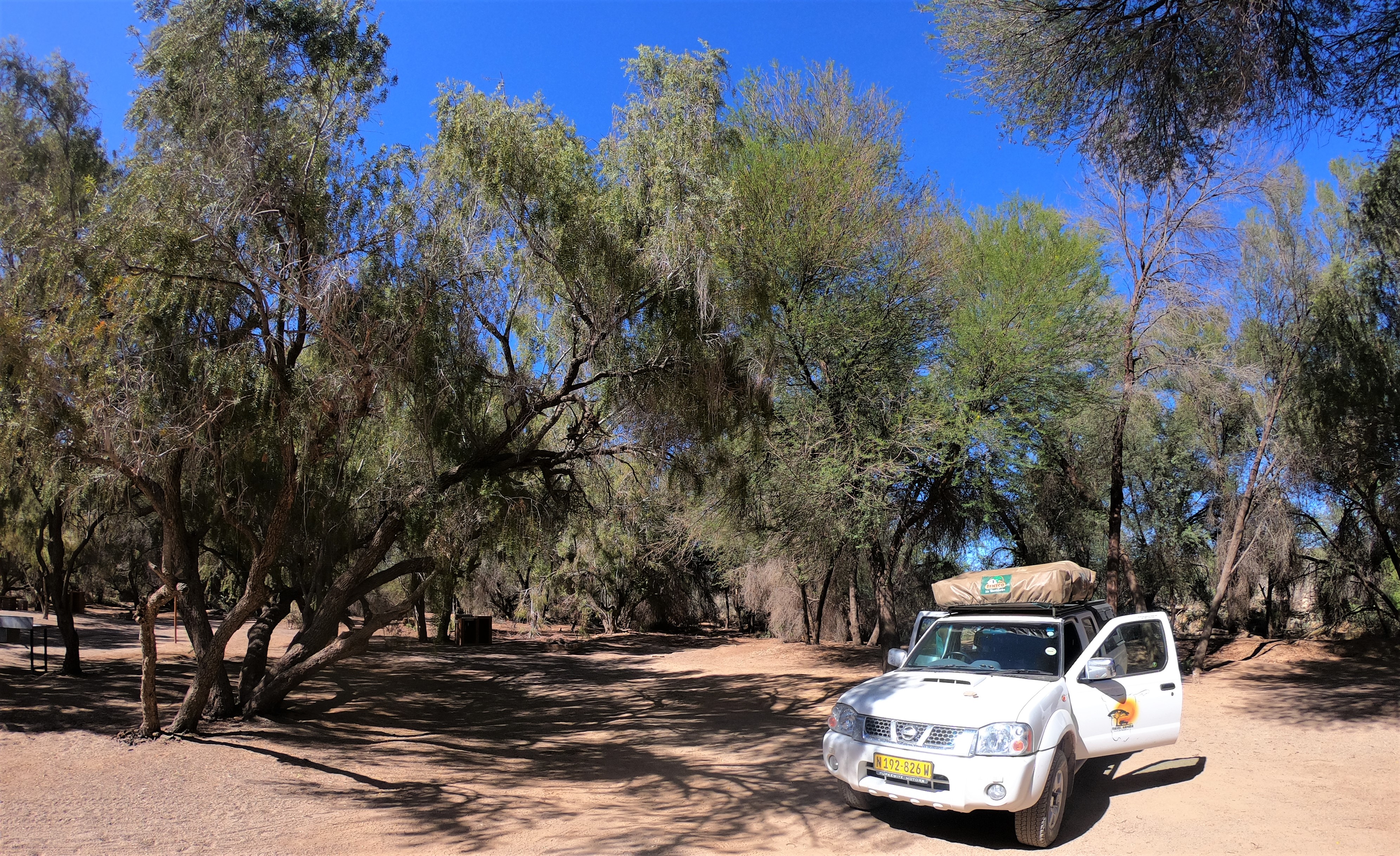
We lounged that afternoon under the shade of a small forest playing cards and drinking beer. Around 5:30 we set out for the canyon (10 km away) to see the sunset. We first went to the main lookout point then hiked a ways along the canyon edge. It’s funny being close to such a sheer cliff. We both aren’t too afraid of heights, not after getting so into rock climbing, but still we kept a good distance between our bodies – we didn’t want someone to accidentally fall in.
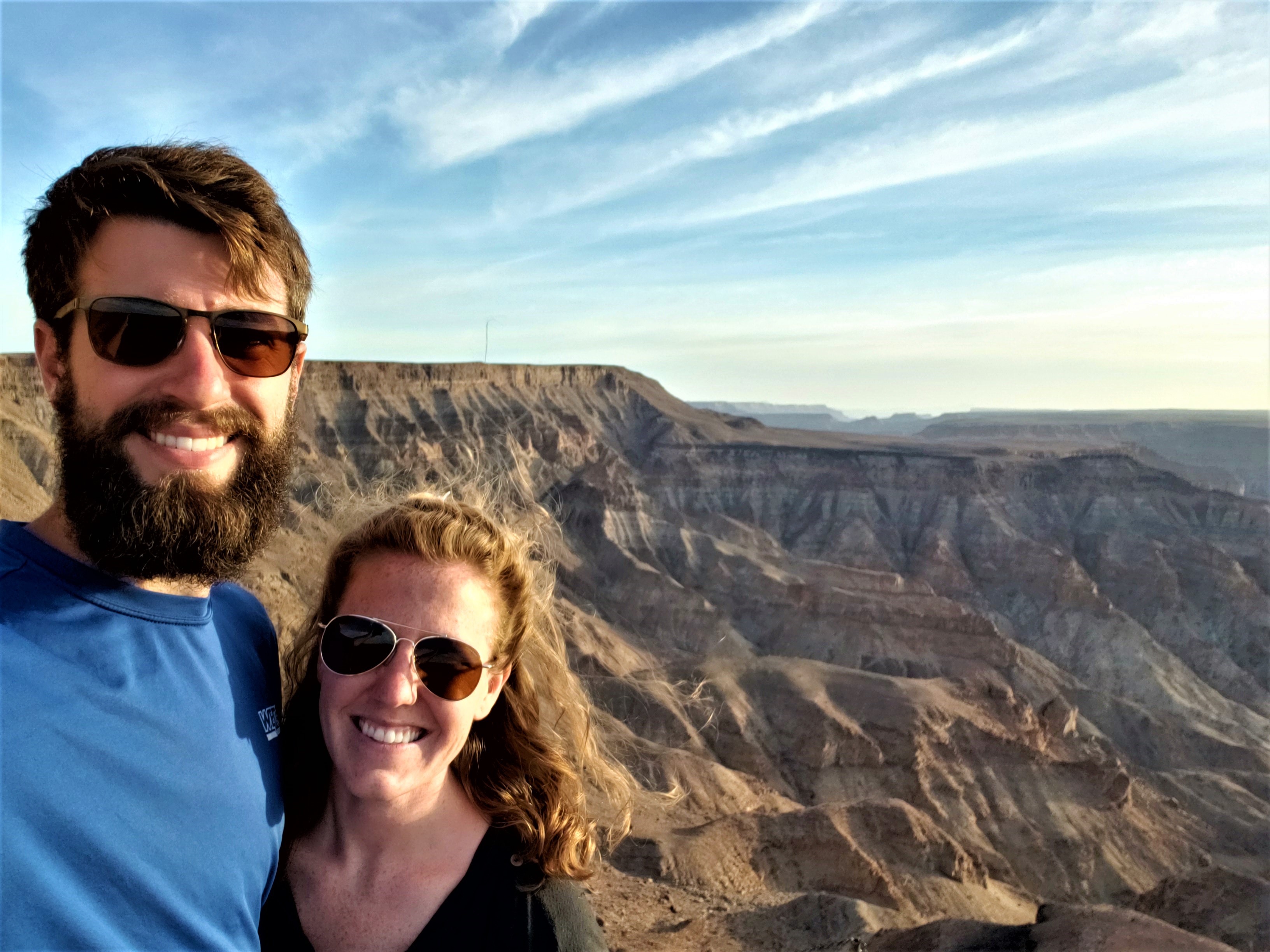
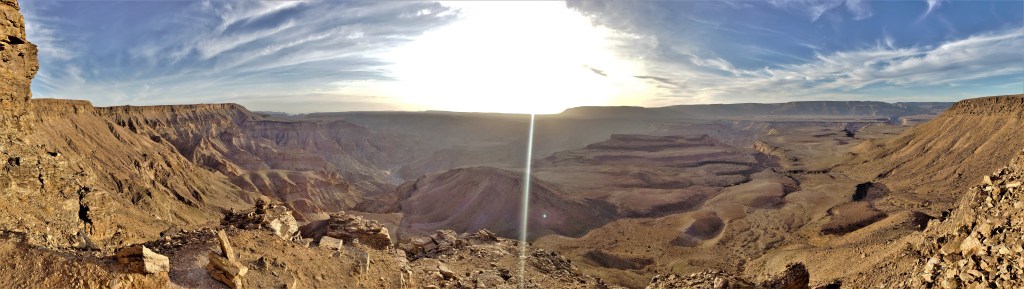
Finally, we drove to another, secluded look out point. We hiked down a ways into the canyon using their steep chains and rocks. Apparently, you can get a permit to do a 4-night, 5-day long hike all throughout the canyon. We climbed back out and watched the sun set around 7:45 pm.
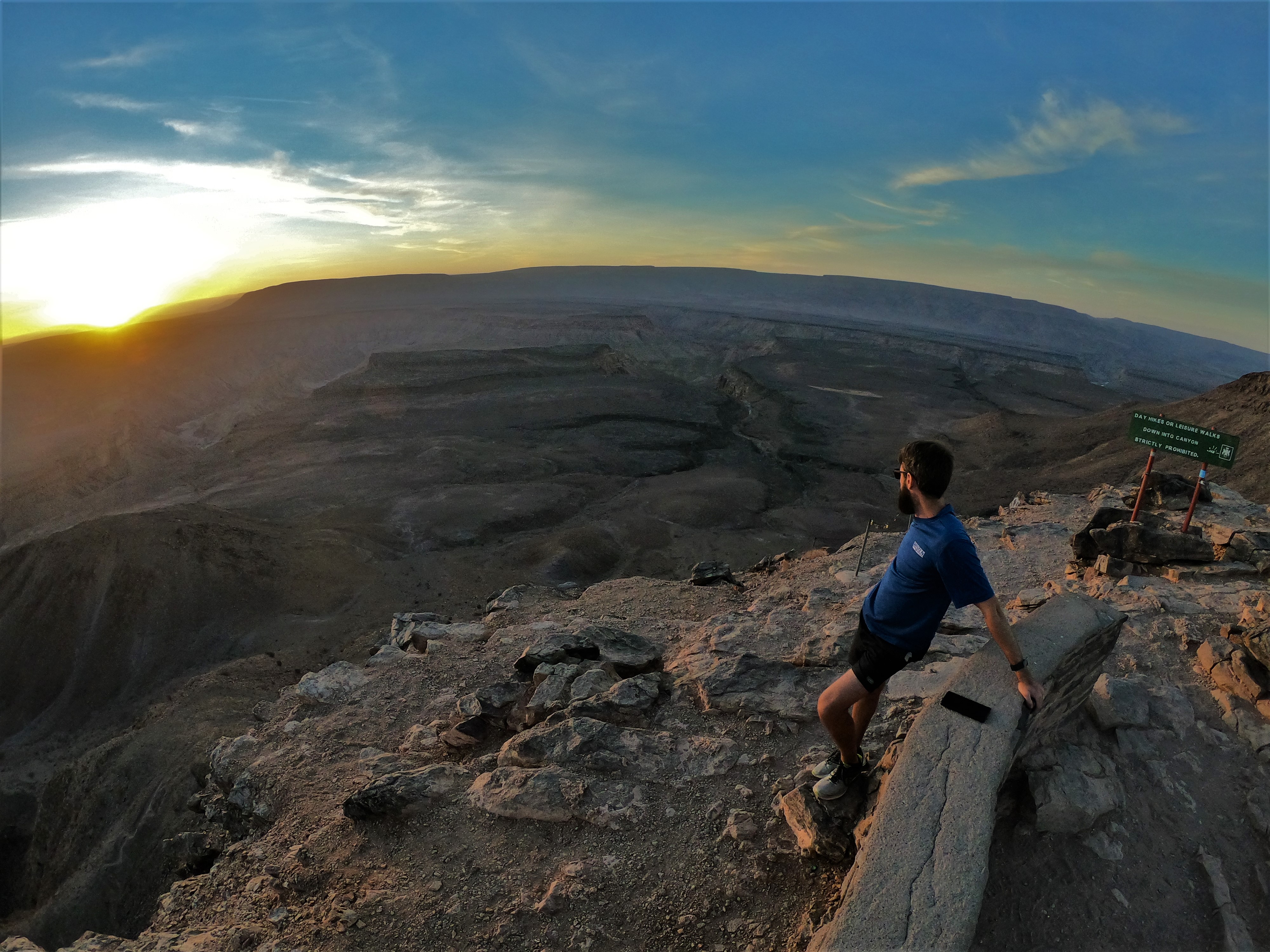
We made our way back to camp and started cooking our dinner. We were having a vegetable medley over the fire with brussels sprouts, carrots, potatoes, squash, onion, and peppers. It took longer to cook than we’d anticipated with such a hot fire but the results were delicious. The stars again were gorgeous and the whole camp shuts down, all lights, at 10 pm so you could see them really well.
Day 21 – Mariental – December 19
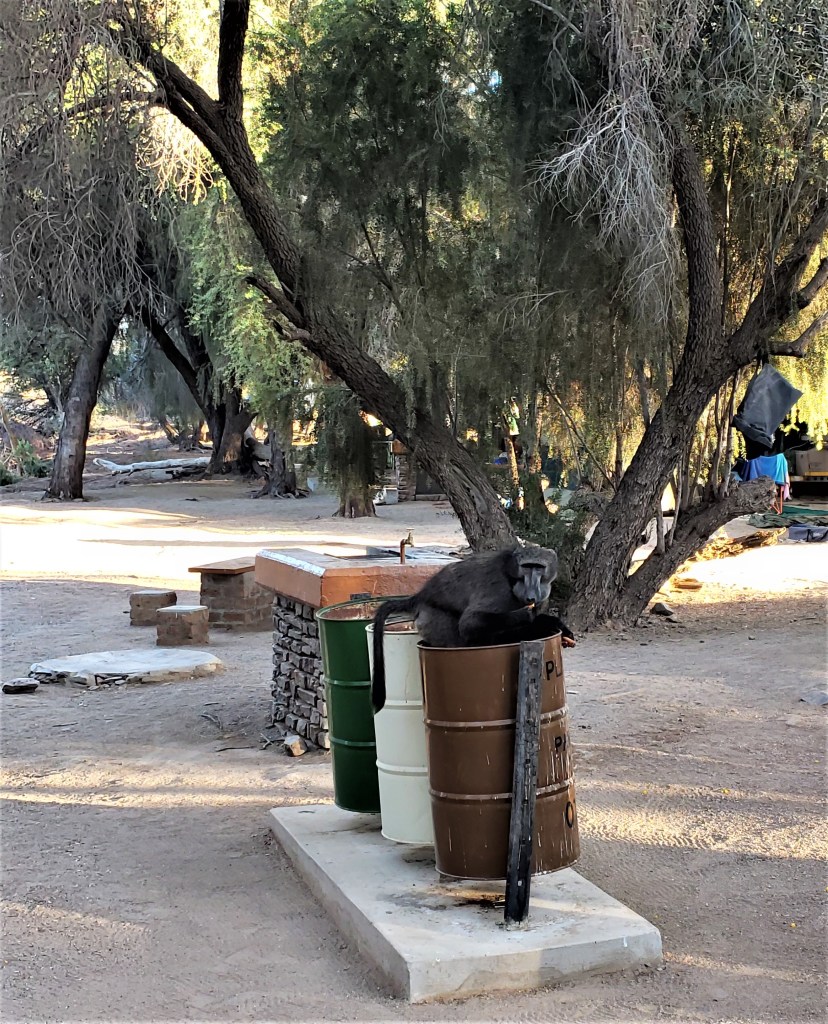
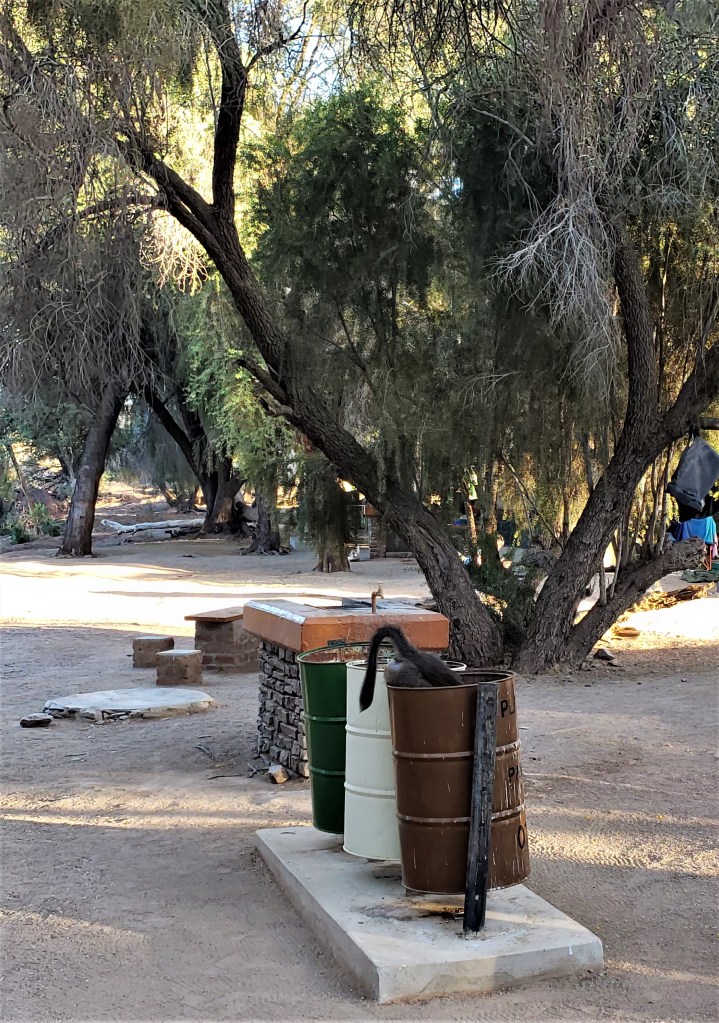
As expected, we were awoken at 6:30 to baboons rummaging through all the trashcans. They loved ours because of all the vegetable skins etc. These baboons were less threatening than others we’d encountered because they were still pretty skittish of humans and one look could sent them running. We ate our breakfast and packed up the car.
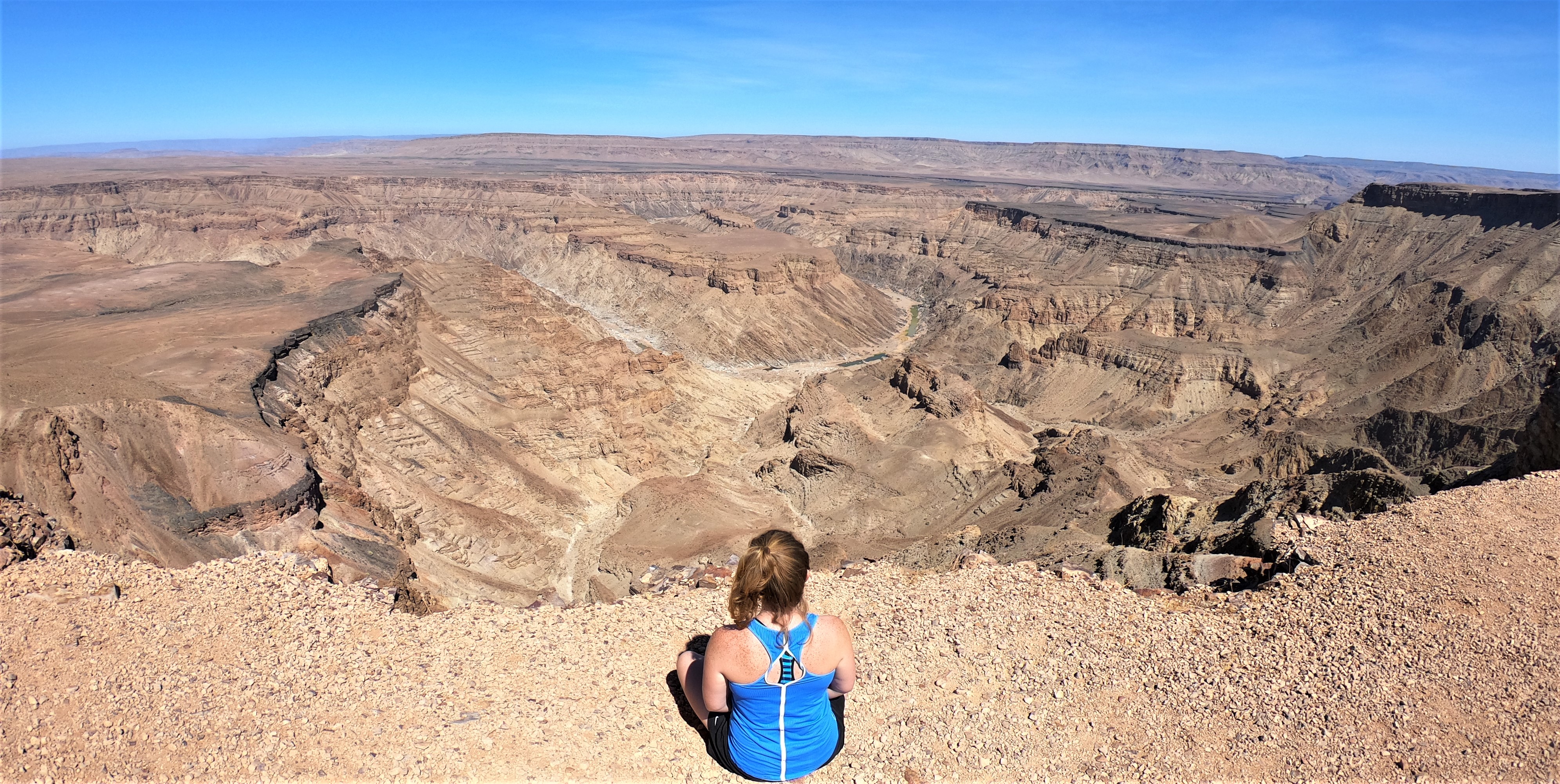
After showering we’d realized we left Elizabeth’s phone in the tent, with all the downloaded maps, so we had to unpack the tent again to get it out. Then we were off to the canyon to see it with the sun at our backs. It was again breathtaking. Fish River is widely considered the second largest canyon in the world after the Grand Canyon.
We had another long drive ahead of us up to Mariental and our campsite. Leaving the park, we saw more ostriches including a baby scrambling over rocks, trying to keep up with its parents who were running scared from us. It was adorable, but the parents seemed to be leaving the poor thing behind. Our camp tonight is called Bastion Farmyard right outside of the town of Mariental. We arrived and bought some beers from the shop and firepit cheesy garlic bread, which Elizabeth is very excited about.
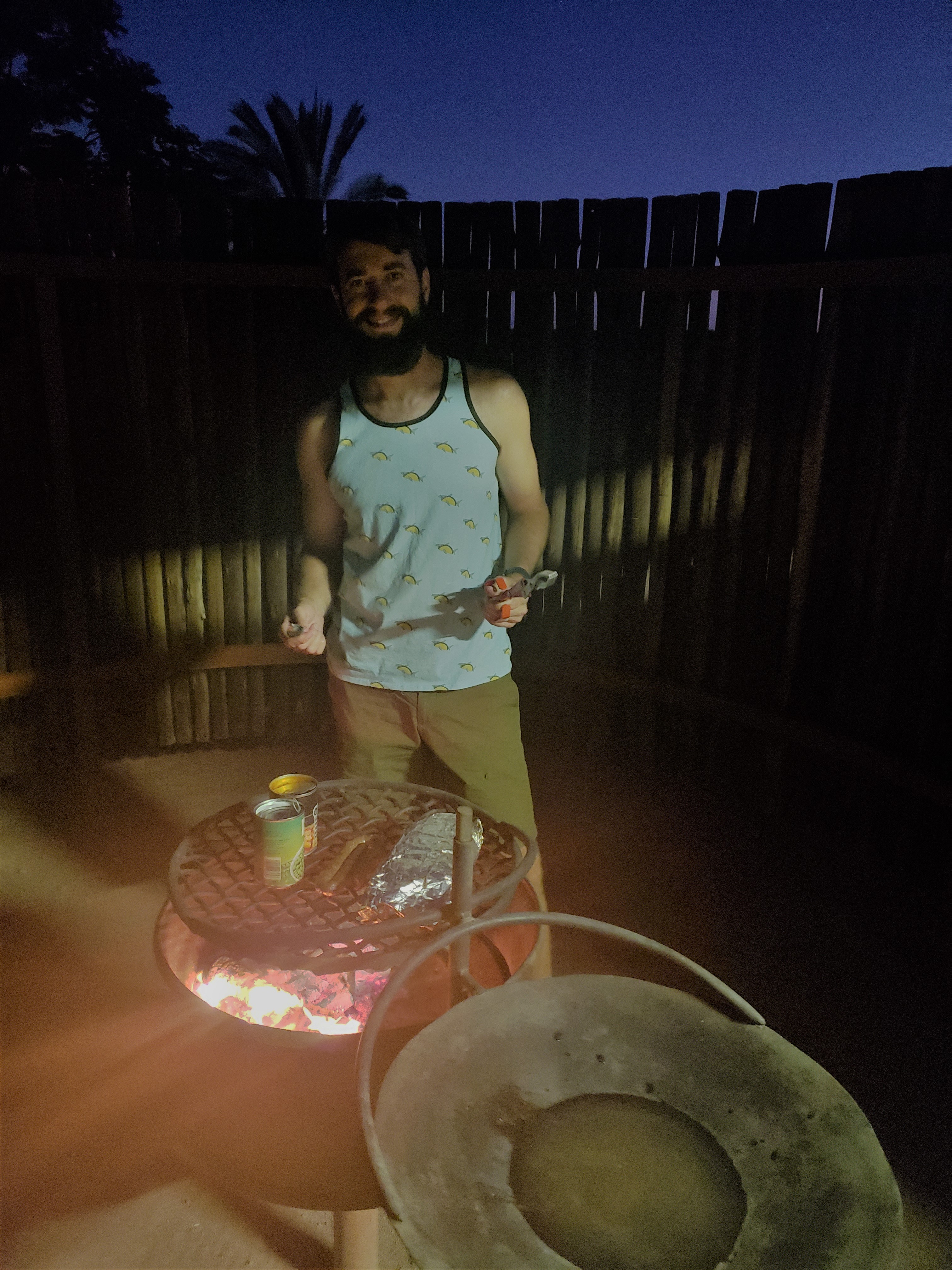
That afternoon we sat in the shade reading and lounging. We were next to a barbed wire fence and a small group of shanty homes lay on the other side. It’s not clear if those are the field workers’ or what. We’d eaten chips and gummy worms for lunch on the road and Ryan needed some real sustenance. For dinner we ate like hobos heating beans and peas in their cans on the fire, sausage, and of course the cheesy garlic bread. This may have been the cheesiest bread Elizabeth had ever encountered, which is saying something from a former Madsen.
Day 22 – Windhoek – December 20
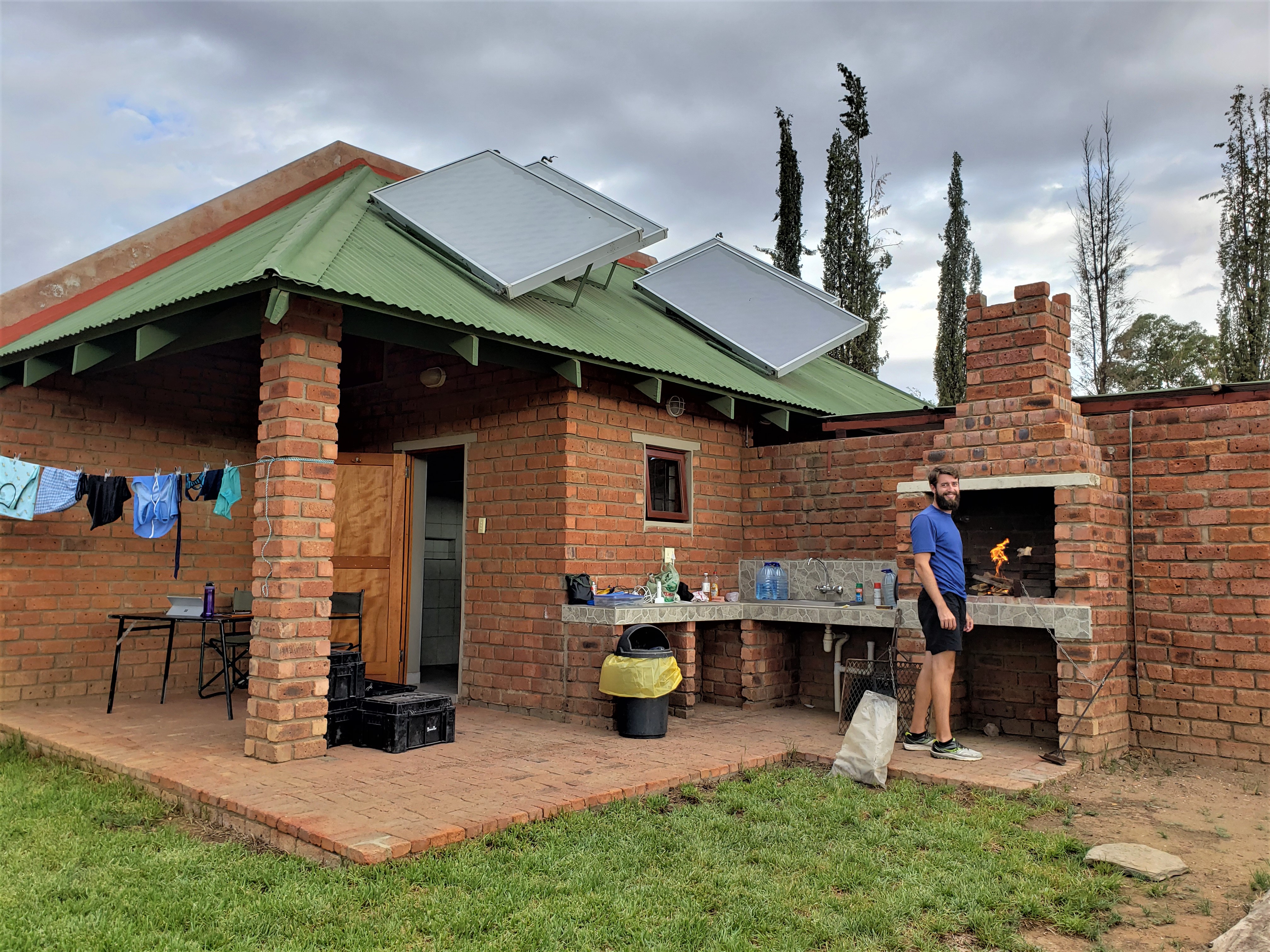
Our last full day of camping. We will miss it, but are excited for a real bed. After some oatmeal and lighting our own water heater fire, we packed up and set out on the final drive. Windhoek is just 2.5 hours away. Our campsite is called Vineyard Country Lodge, there are a few grape vines but not enough to constitute a vineyard, unless they are hiding them. On the way in we’d passed what claimed to be a brewery and decided to unload then pop over for lunch.
Turns out, they don’t brew their own beer anymore, because the owner is busy with other things, at least that’s what they told us. We got a couple of beer on tap and the pulled pork and a cheeseburger. Ryan asked for it to be medium rare and the giant burger came out verrry rare, like basically raw. He ate half and we hope he doesn’t get sick. He actually really liked it until he remembered we were in Africa and started to doubt their meat-handling practices. The pulled pork was excellent. We sat right next to the pool and were splashed by kids and watched them run around.
Back at the campsite we did our final laundry and started cleaning out the truck and packing up. We are having a smorgasbord for dinner, eating all the leftover food from the last few weeks including popcorn, pasta, a squash, more cheesy garlic bread, cereal, and milk and cookies. We were too full.
Day 24 – Windhoek – December 21
We were on the road by 7:30 the next morning to drop our car off with Jaco. He in turn drove us to the mall where they have a small rock wall on the side of the building. We hung out in the parking lot for a bit waiting for our guide Richard Ford to take us out to the crags. Richard was super cool and the only certified rock-climbing guide in Namibia, how prestigious.
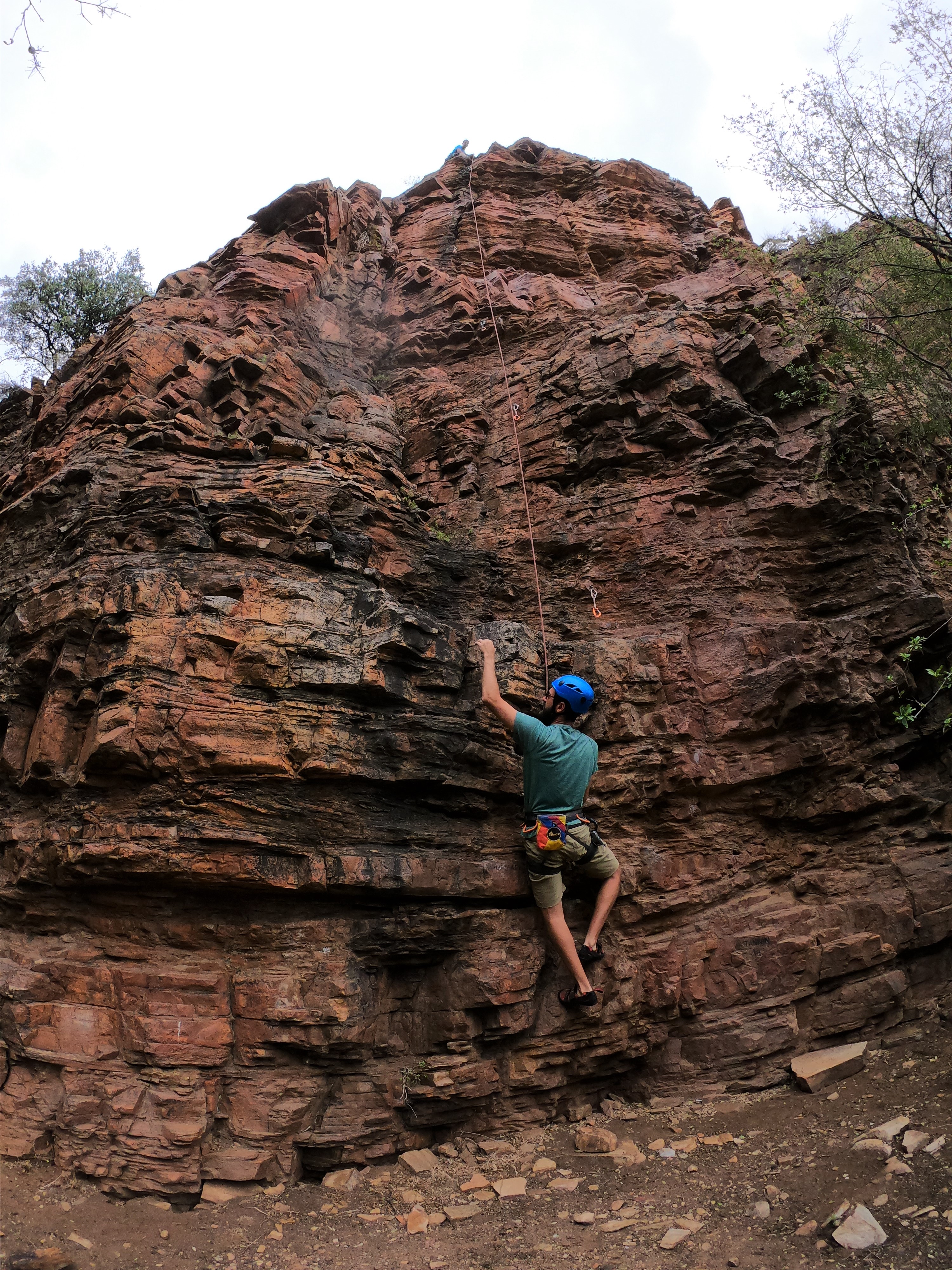
We loaded up and headed just outside of the city to Windhoek’s Secret Crag. After climbing a fence and looking out for snakes we arrived at the site of a dry waterfall. Namibia is so scarce for water (one of the driest countries on the continent), but just the other day this waterfall had been flowing. This was our first time climbing on sandstone and the rock was polished from all the running water. This made climbing it very tricky and more than a little slippery. We climbed 4 routes here, Ryan making it up all of them and Elizabeth conquering 3. It was tricky for her sweaty little hands to hold on.
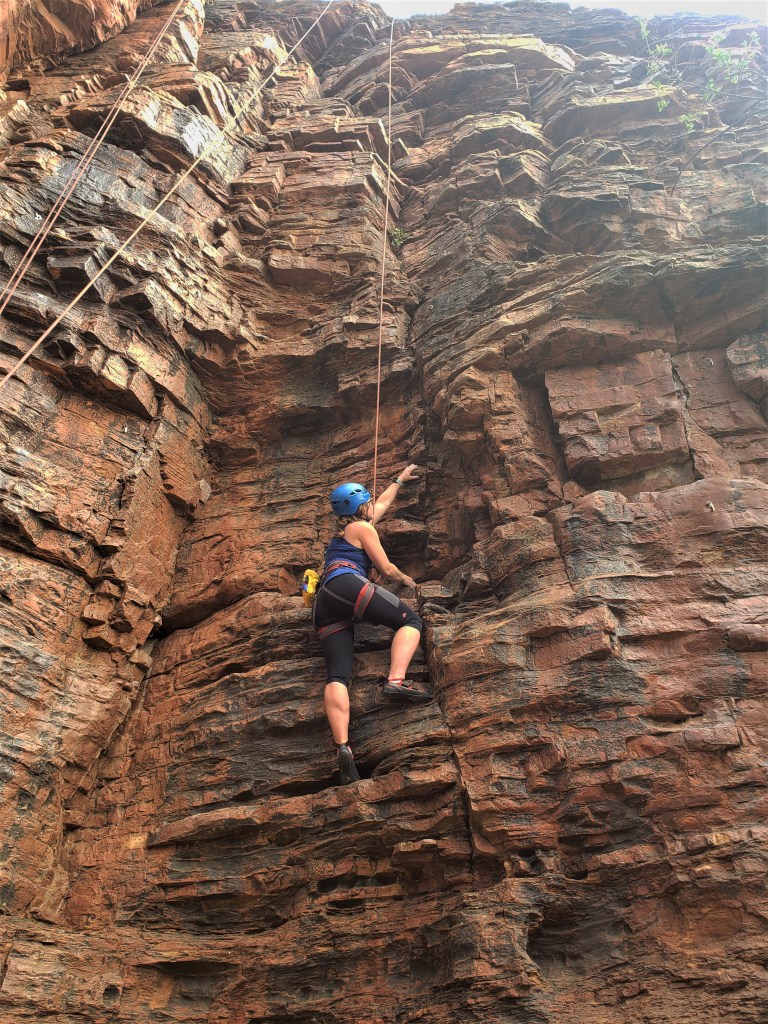
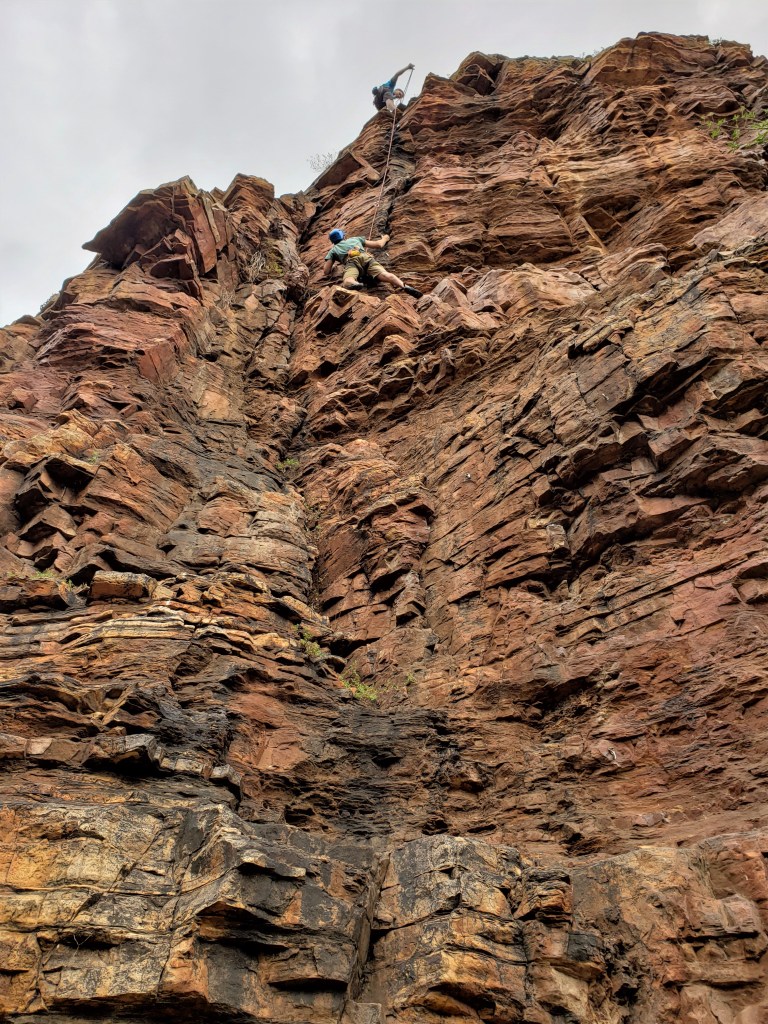
The worst part about this outdoor climb for Elizabeth was the baboon poop. As you climbed you put your hand in dried poop almost every step of the way. Since this is where Richard learned to climb, he said the smell made him nostalgic. We didn’t actually see any of the hairy bastards, but at the end of the day the baboons come and play all along the rock face. In an effort to keep the baboons away, the climbing club put fake snakes in several crevices, which our guide didn’t tell us about and spooked Elizabeth. As we climbed and chatted, Richard told us all about growing up in Namibia and Cape Town post-Apartheid. We didn’t realize Namibia was taken over by South Africa after WW1 and had just gained independence in 1990.
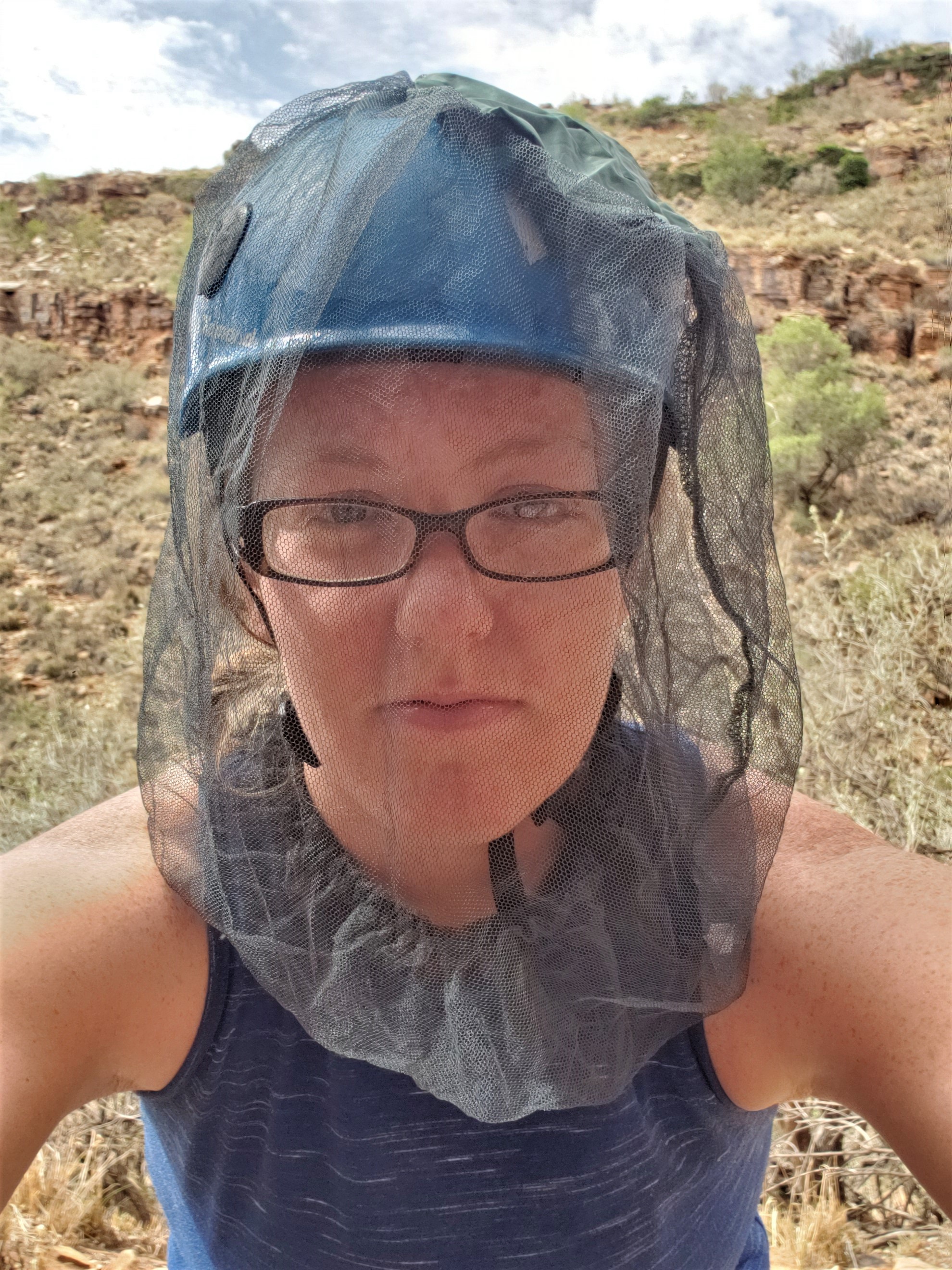
The second worst part of this outdoor climb were the gnats. They were swarming our faces, particularly Elizabeth’s, but luckily Richard had these amazing bug netting that fit around our heads. Elizabeth didn’t care how it looked – it did an amazing job.
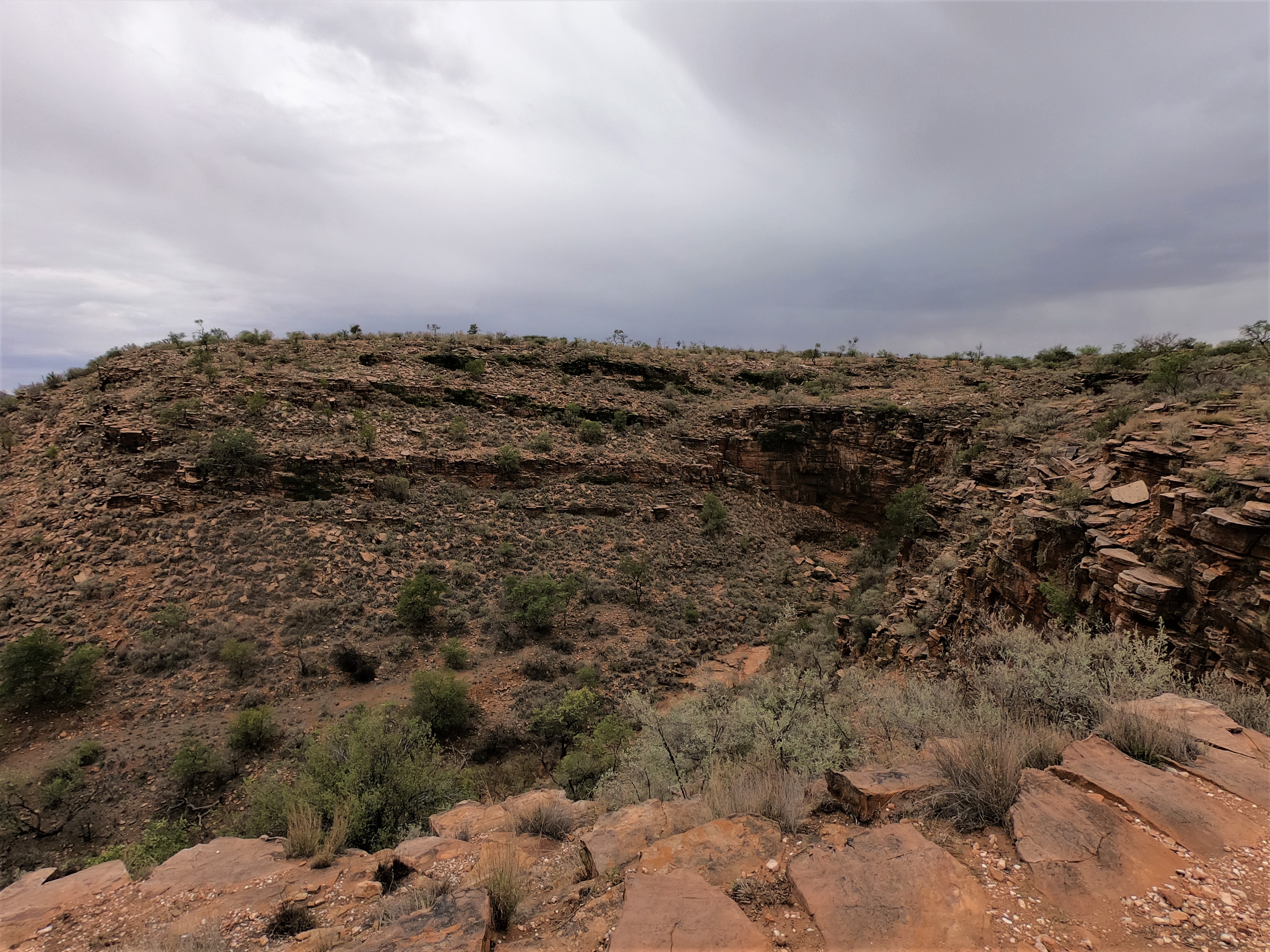
After exhausting ourselves we hiked back out of the waterfall area and piled back in the car for our second crag. The second location is on a farm for big game and we saw a kudu while pulling up. We ate lunch and the simple deli sandwiches tasted amazing. We also ate dried dates that are grown in the Fish River Canyon and they are incredibly sweet!
We hiked up, this time to granite rocks, very similar to what we saw in Spitzkoppe. While Elizabeth was using the restroom, the boys decided we would try our first multi-pitch hiking. Since we only have the one rope, this essentially means you climb half way up the rock, attach to the bolts with short cords, pull the rope up, and continue climbing to the top. So, you’re pretty much suspended on the side of the mountain waiting for your chance to climb. Then when we got to the top we would have to rappel down. Richard went first, taking the rope up with him and Ryan followed. We were all tied into the same rope and when Ryan reached the midway point he attached to the wall and Elizabeth climbed up attached to the end of the rope.
This climbing was tricky because there weren’t a lot of places to put your hands and feet, you had to rely on the friction from the granite. We all made it to the middle point and clipped in together. Rock climbing brings you way closer your fellow climbers than we thought it would and we were all bumping into each other, passing rope back between our legs, etc. We began going up the second portion of the wall in the same order. Elizabeth did much better on the granite rock, females tend to do better here because it’s more focused on lower body and not so much brute upper body strength and reaching things far away.
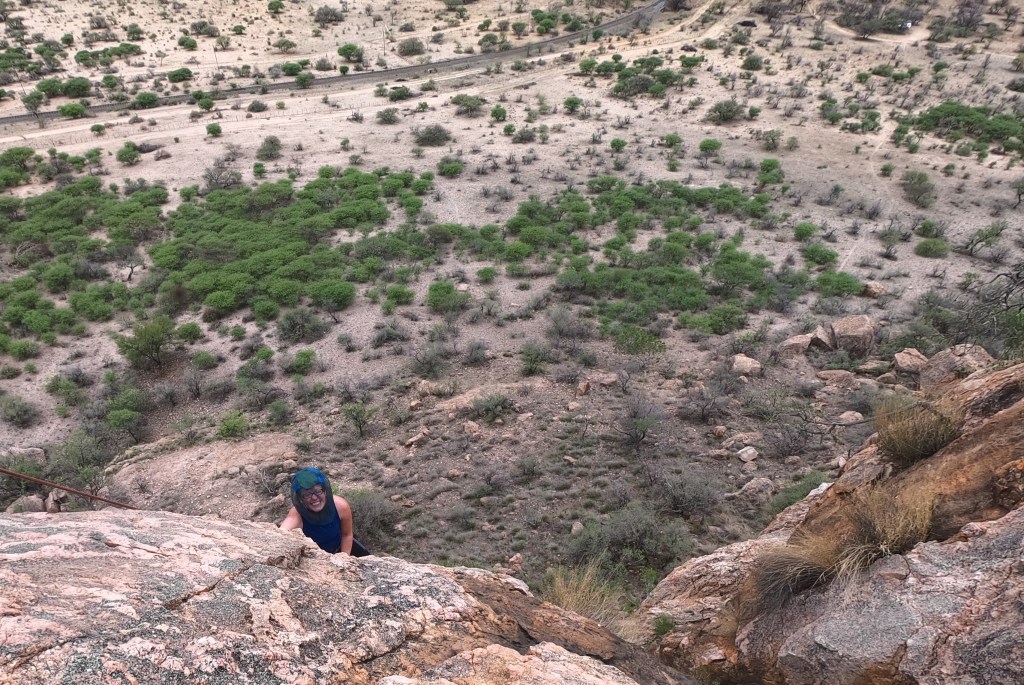
At the top of the hill we clipped in on the slop and had a great view of the surrounding mountains. Namibia is a beautiful country and we were fortunate to have cloudy skies all day so it never felt too hot. It was time to rappel down and Richard hooked us all into the rope with Elizabeth in the middle and Ryan at the end. When Richard rappelled to the halfway point, a different one on the sheer face of the rock, he clipped himself to the bolt and undid the rope. Elizabeth then followed, not quite finding the sweet spot to make it look like smooth descent as seen in the movies. The rope burned your hand as you let it slide through. After she was clipped in and unattached Ryan brought up the rear. We repeated the whole process again threading ourselves together before making it to the bottom.
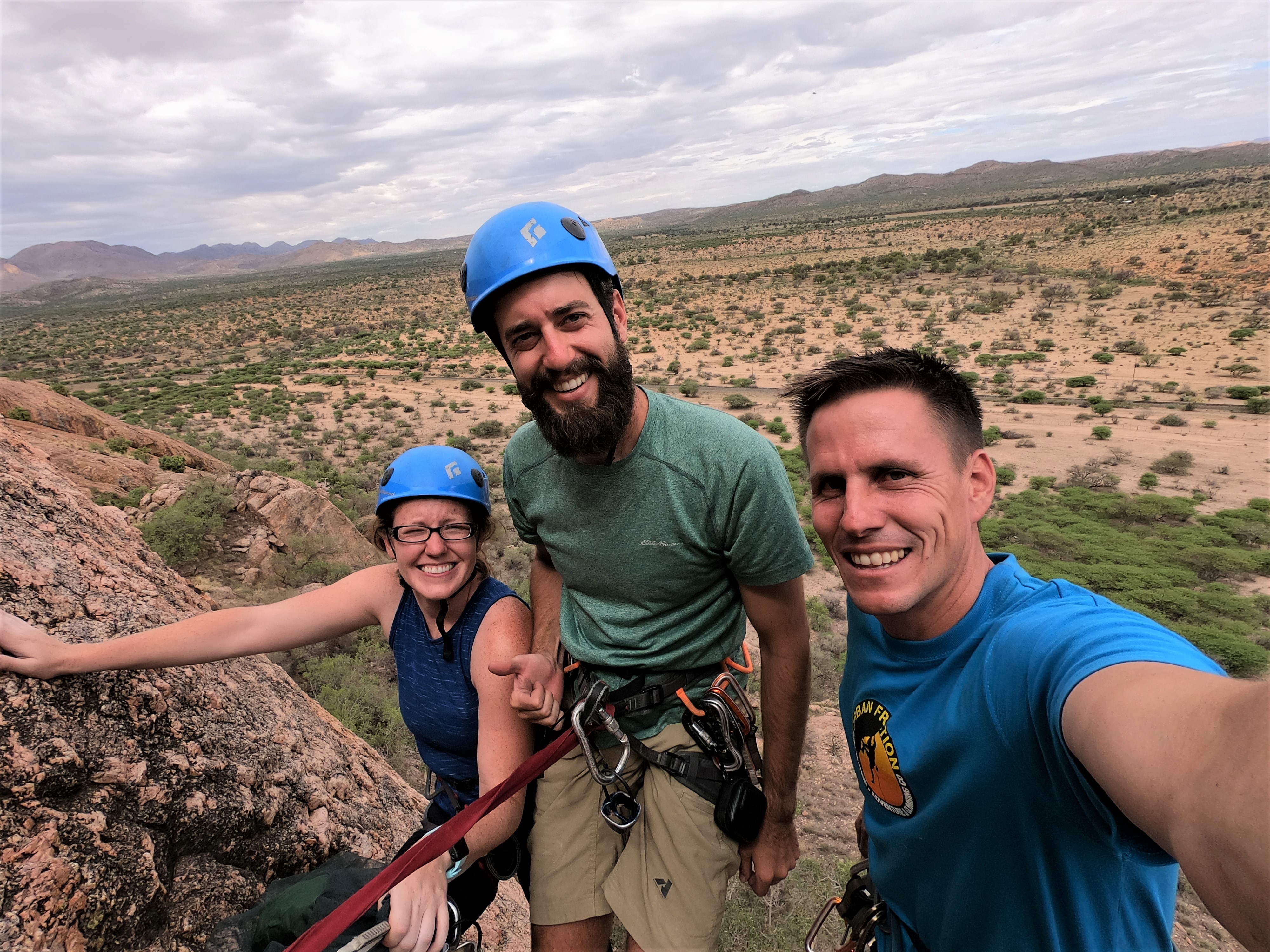
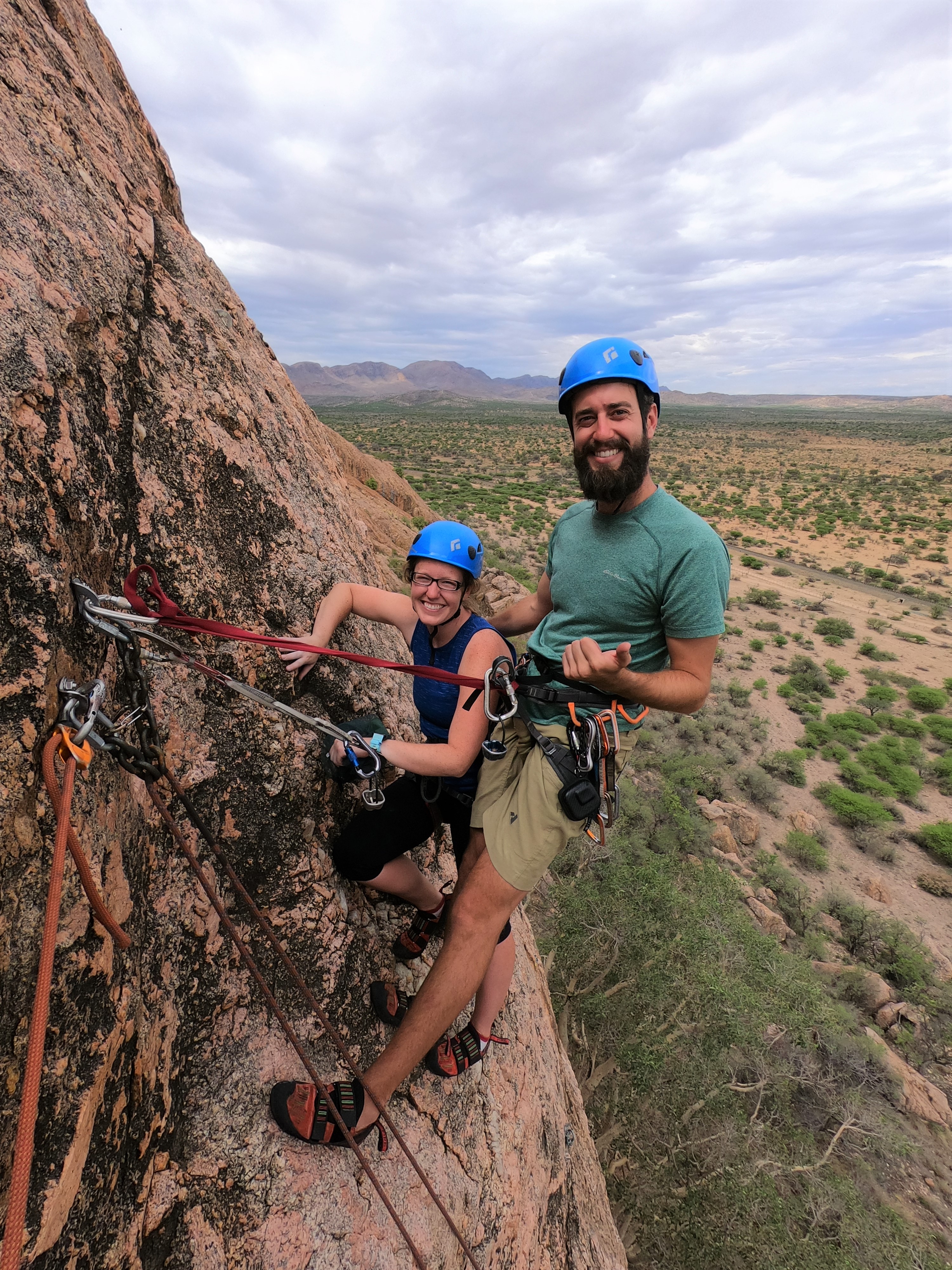
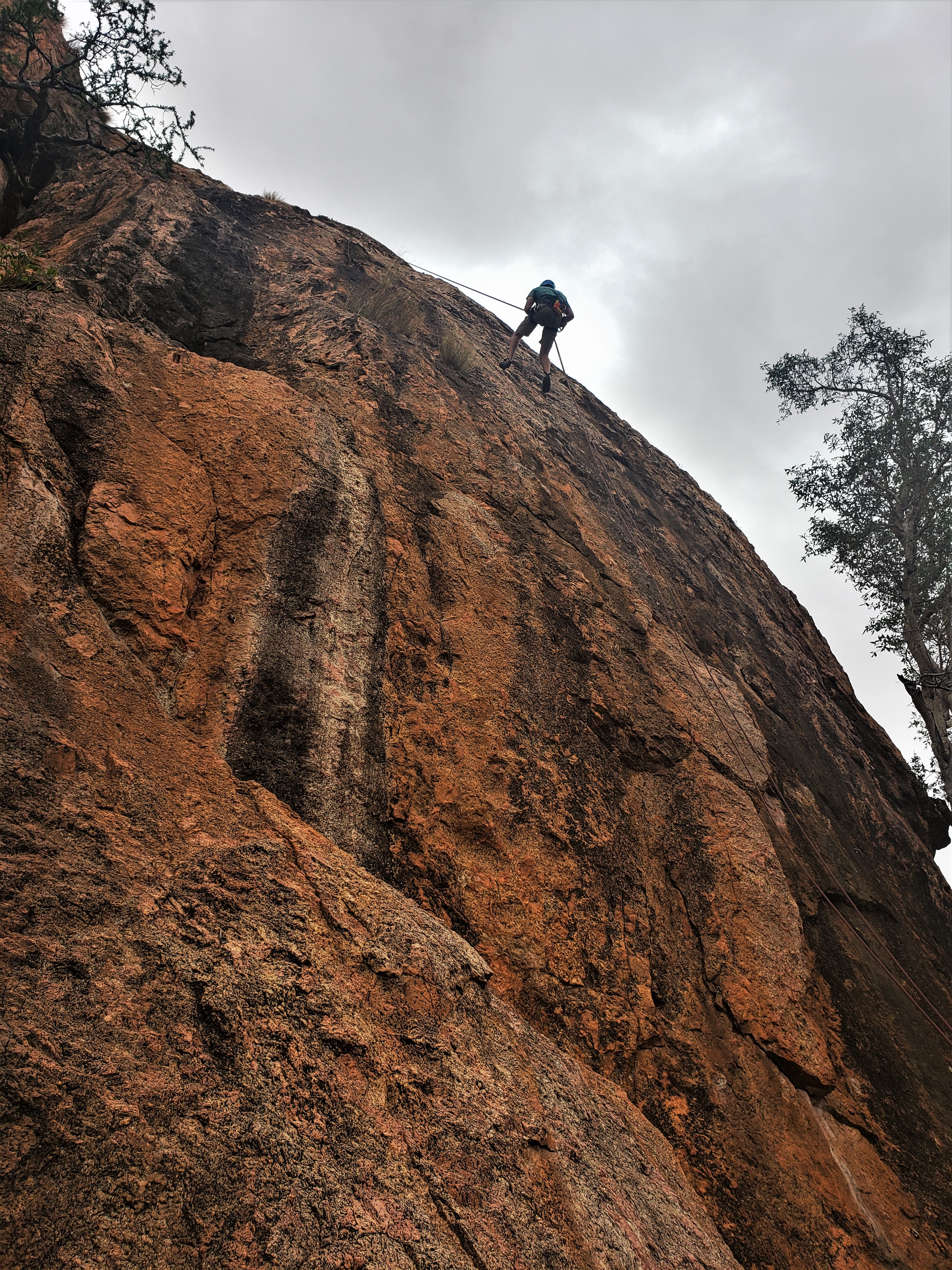
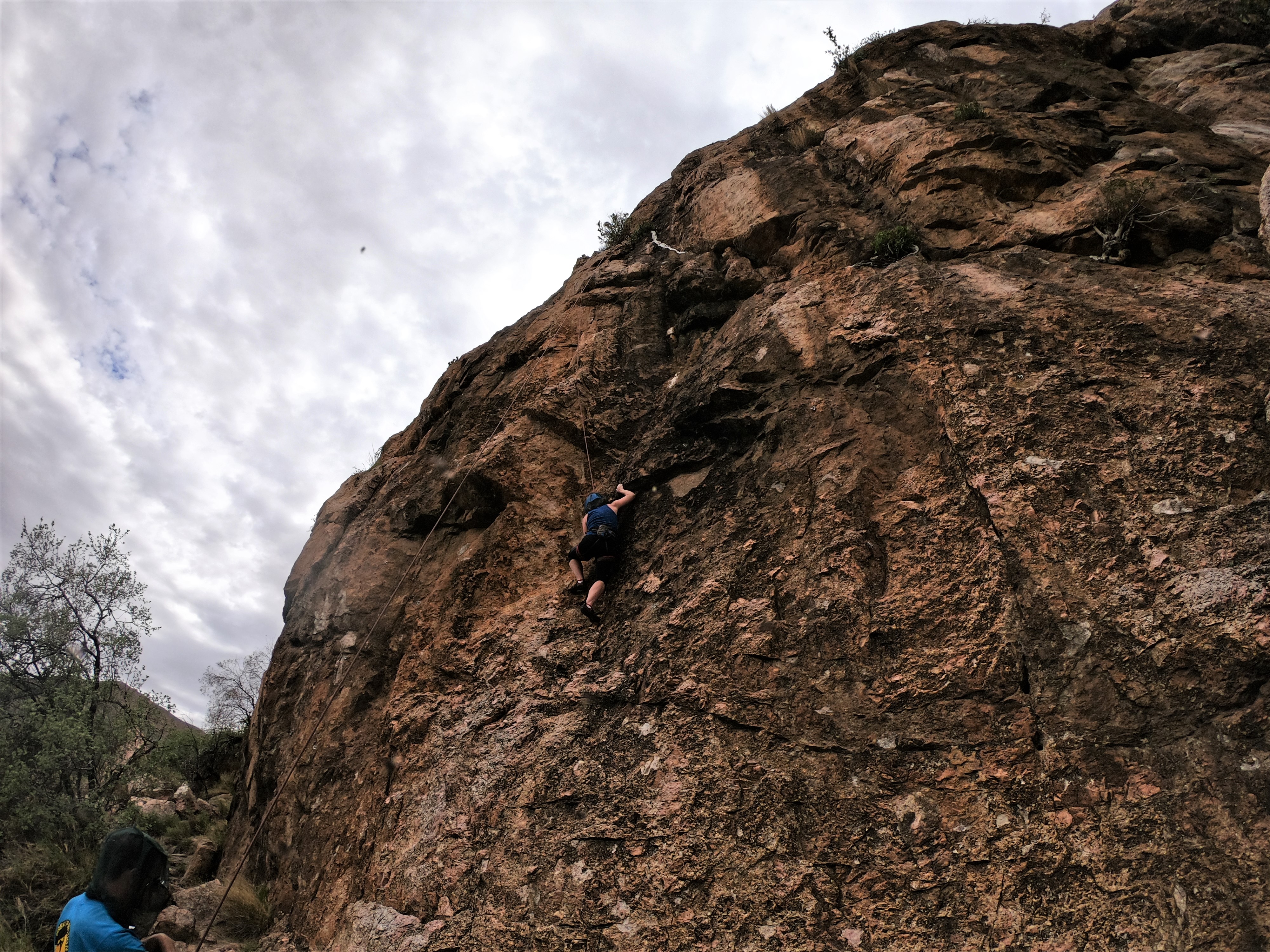
We had one final climb left. We both made it to the top but it was tricky and we were getting tired. The clouds were deceptive so we kept forgetting to put on sunscreen and we were fried by the end of the day. We loaded everything back up into the car and Richard took us to our hostel for the night. We sat around the hostel bar drinking a beer and chatting. He wants Ryan to come back and work for him as a rock guide. We said our goodbyes and cleaned the sweat and baboon poop off of us.
We hopped in a taxi for a restaurant called Joe’s Bar. Apparently, it’s the one trendy bar/restaurant in Windhoek and was recommended by both the tourists online and the locals we met. We were sat outside at a shared table and Elizabeth ordered jäger schnitzel made with oryx meat and Ryan got The Bushman, which consists of springbok, oryx, and kudu filets. The meat was absolutely delicious, especially the oryx which tasted like a filet mignon and was super cheap. We drank a few beers then headed home, exhausted.
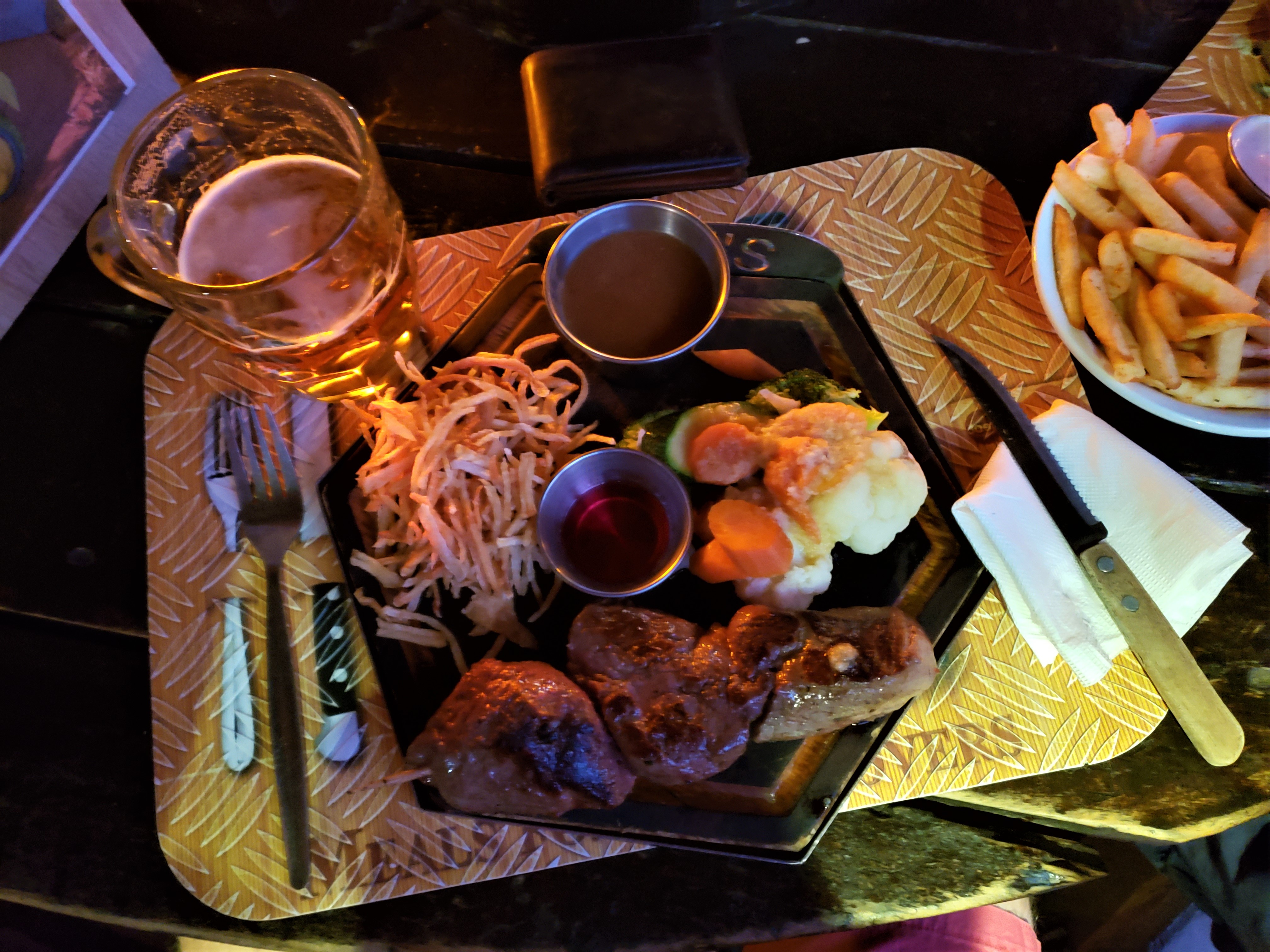
Day 24 – Windhoek – December 22
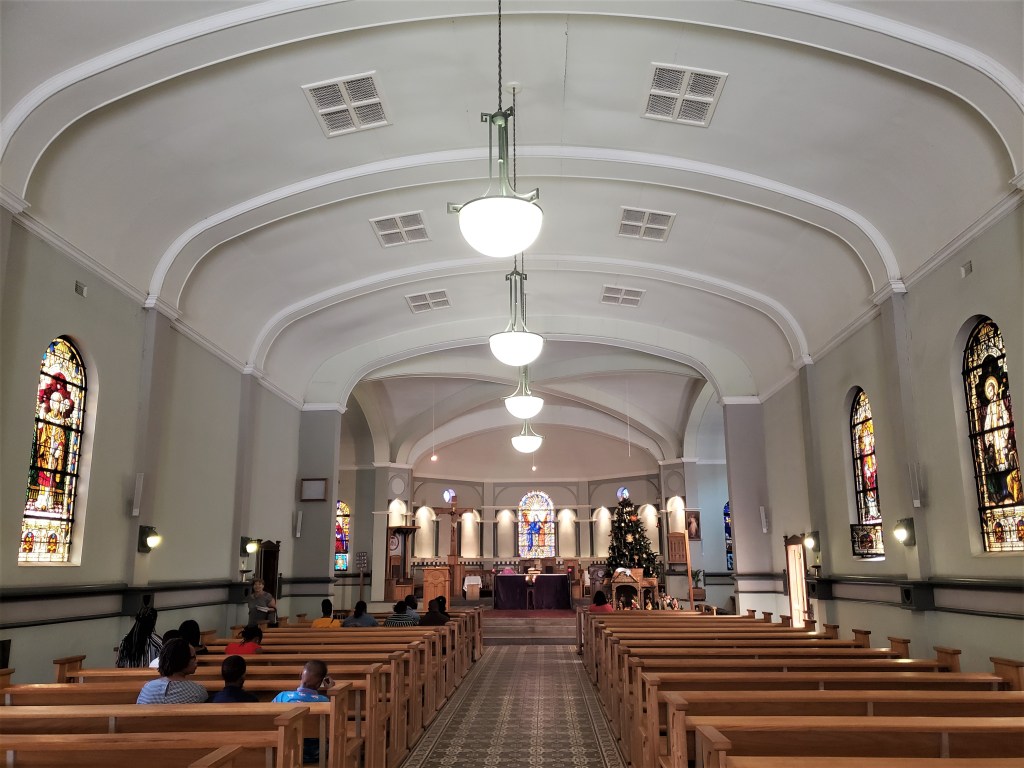
We weren’t able to find (with confidence) any mass times for the Catholic church in Windhoek. We decided to split the difference of a few options and showed up at 9:15. A friendly nun told us there would be a mixed German/English mass beginning at 9:30. Old German women led the mass singing the German hymns and the parts of the liturgy that were in German. Afterwards we walked back to our hostel to lounge some more.
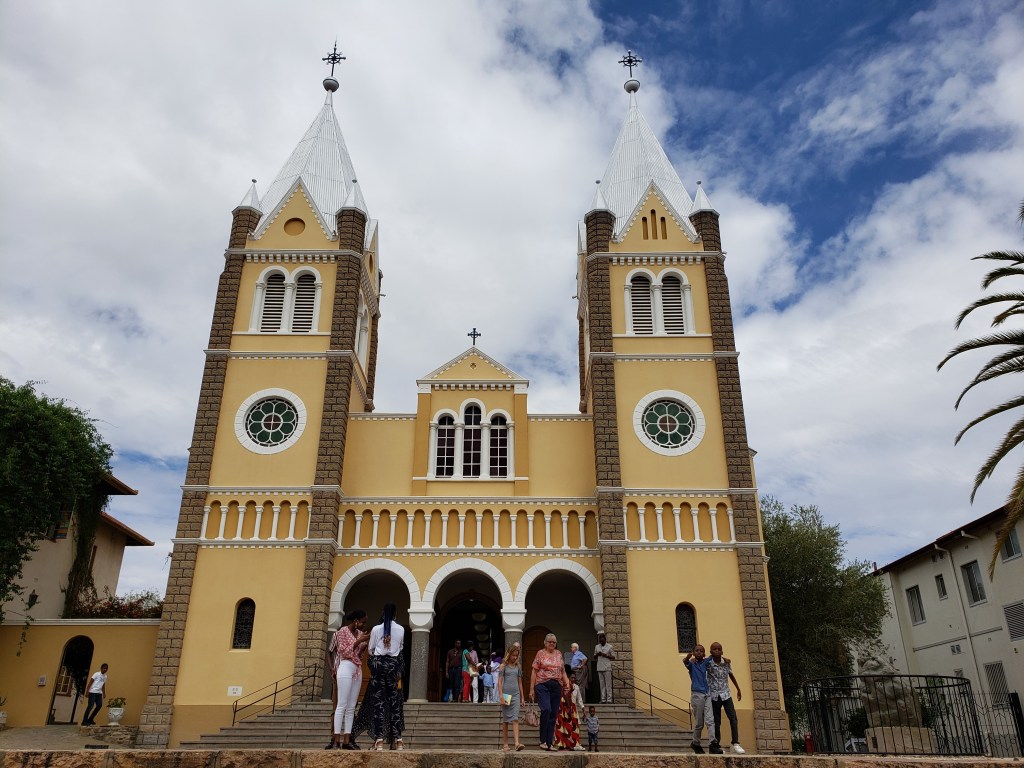
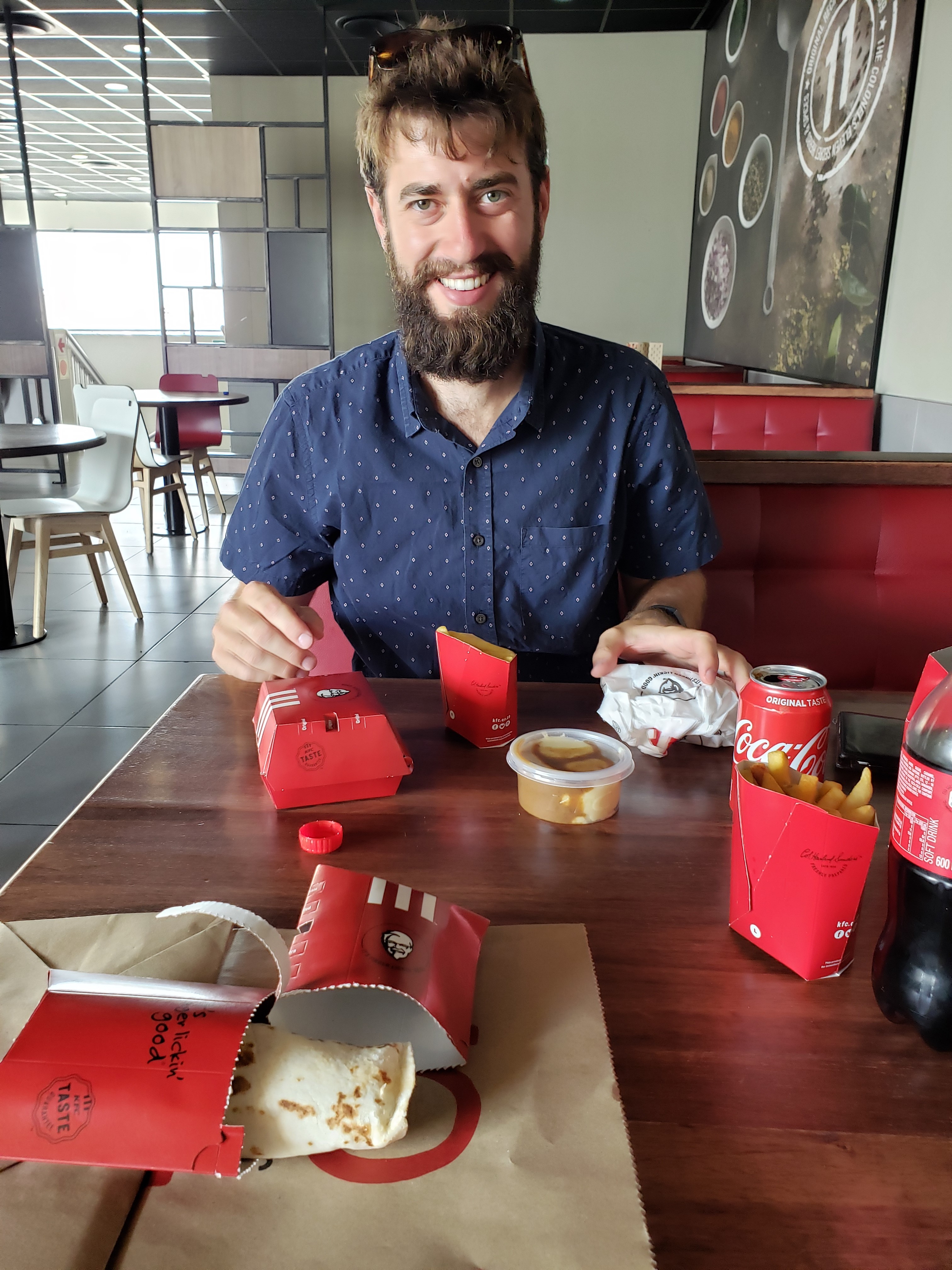
Elizabeth left her Kindle in Richard’s car the day before, which wouldn’t have been an issue, but he was flying to Germany at 9 am this morning. Luckily, his dad dropped it off at the rock gym so we decided to walk up to the mall (about 30 minutes) to pick it up. The sun was hot and there wasn’t much shade. We got the Kindle then walked through the mall getting some beef jerky, or biltong, common in southern Africa. It was delicious, but we aren’t certain what type of meat it was. Our final destination was a KFC. Ryan hadn’t had any since leaving the states and he was so excited for some fried chicken. He said the mashed potatoes tasted identical.
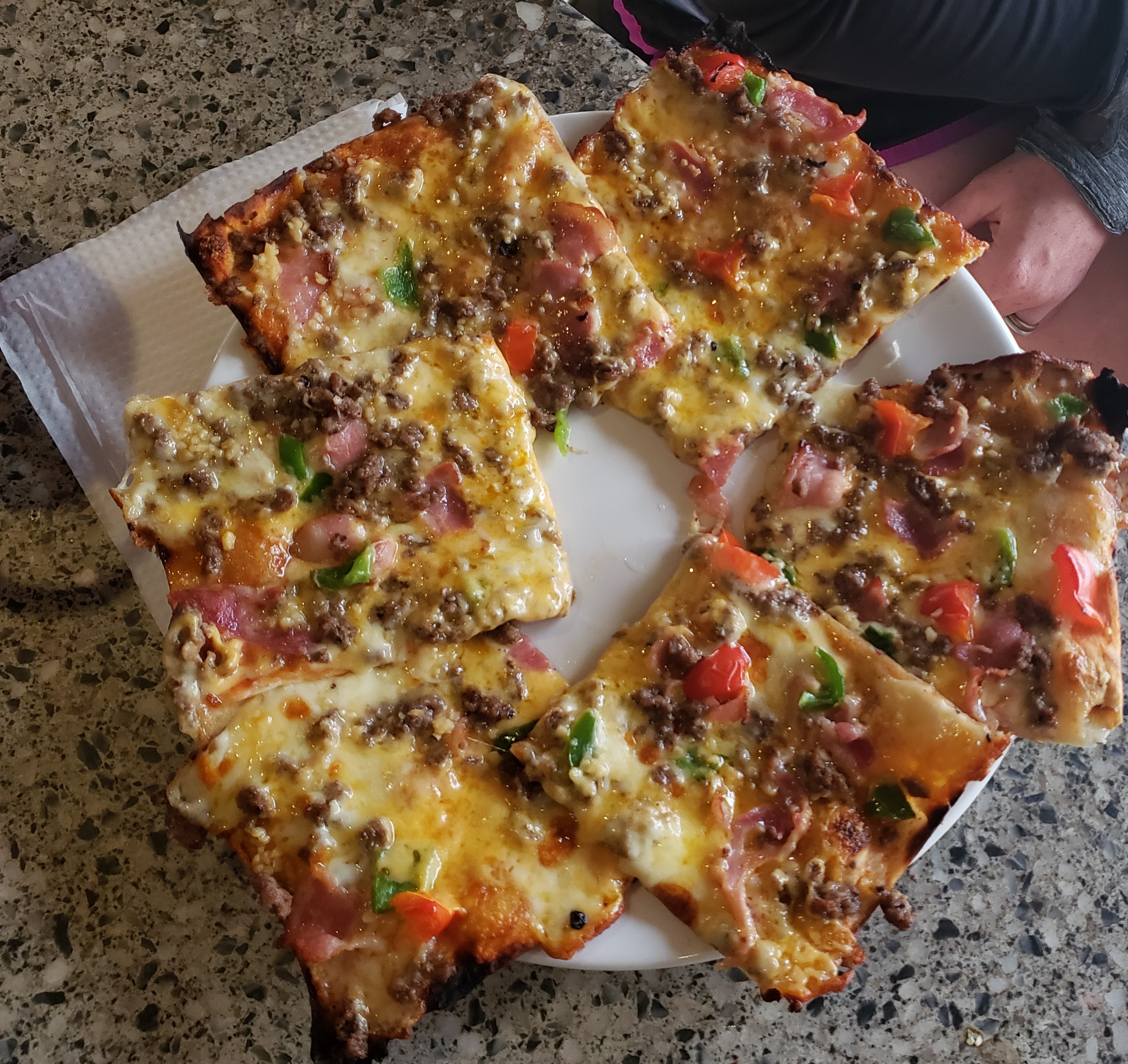
The weather soured that afternoon and poured rain. We hung out in the hostel packing up for our flight in the morning and browsing the internet. For dinner we got a pizza made by the bartender and a couple beers and we spent the last of our Namibian cash. The pizza was surprisingly good.
Day 25 – Windhoek to Cape Town, South Africa – December 23
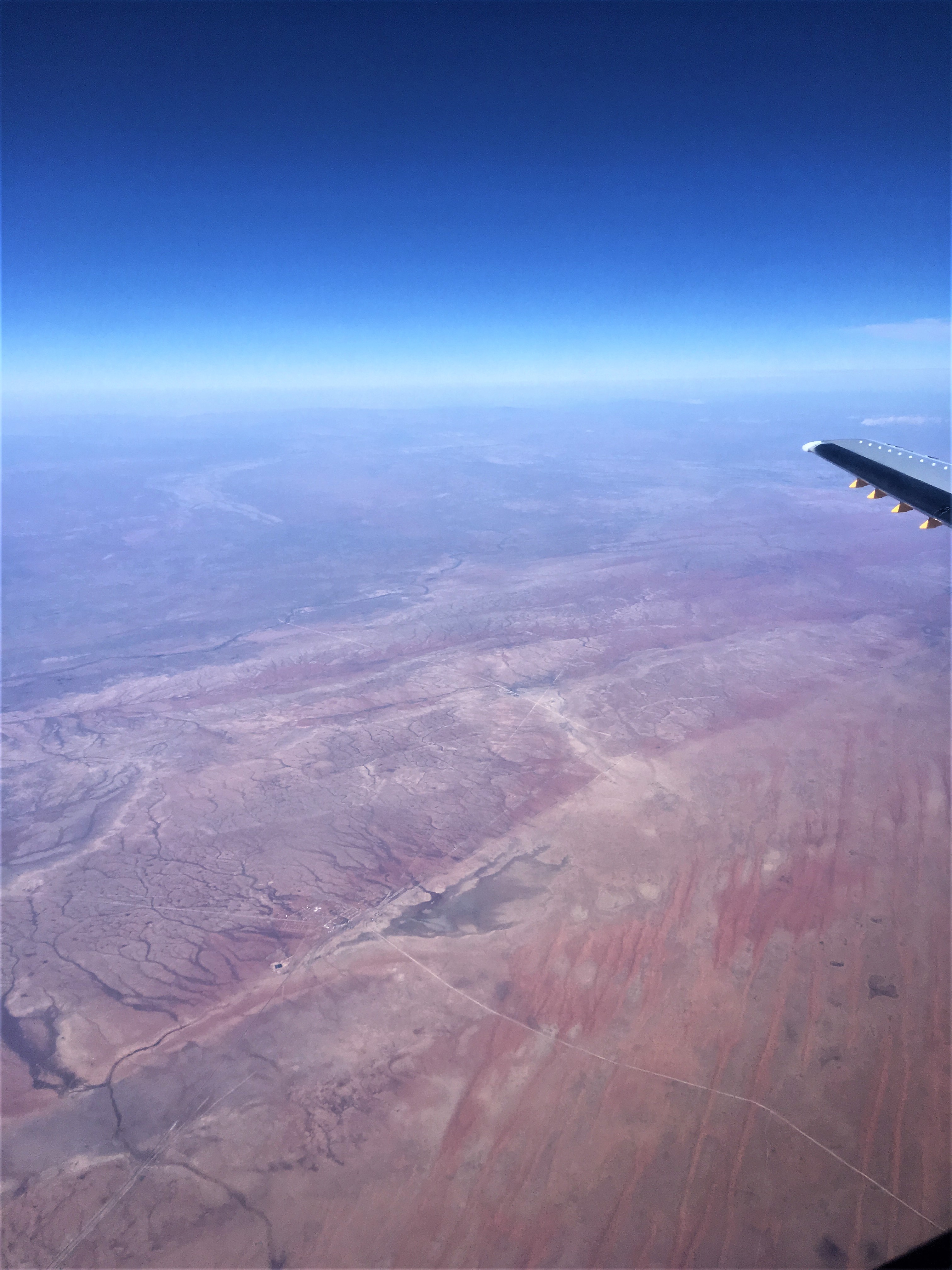
Our taxi pickup gathered us bright and early at 5:45 the next morning. It seemed that our driver was trying to set a personal record on our way to the airport. During the 30-minute ride we almost hit baboons that were playing in the road twice. We checked our bags then ate breakfast in one of the lounges and waited for our flight. We are flying South Africa Airlines to Cape Town and count ourselves lucky they didn’t go belly-up before our flight. The flight was smooth sailing and we could see the Kalahari Desert as we flew out. We loved our time in Namibia. It was so relaxing, camping and tottering around for 3 weeks. This is a great option for anyone looking to do a safari on the cheap and in a relatively safe country. We will be back.
Things we’ve learned in Namibia:
- The Kellogg’s box reads, “If it doesn’t say Kellogg’s on the box, it isn’t Kellogg’s in the box” which we never knew was necessary before.
- Only 14.5% of Namibia’s roads are paved.
- Around 50% of the exposed surface rock is bedrock.
- If a friendly stranger wants to know where you’re from and what your names are, they are probably trying to sell you ‘personalized’ souvenirs
 Ryan and Elizabeth Goss